
Coming Soon to a Planet Near You

I asked AI for a story based on the idea that human politicians were dysfunctional, and the world was so imperiled that we decided to temporarily let AI take over. Here is the result.

The Benevolent AI

The year was 2045 and the United States government had reached a breaking point. Partisan gridlock and political infighting had rendered the government nearly incapable of addressing the monumental challenges facing the nation and the world. Climate change, economic inequality, global conflict – these existential threats required bold action and unity of purpose, but Democrats and Republicans remained more focused on scoring political points against each other than working together for the greater good.

The President, whomever it was at any given time, had become little more than a figurehead – a puppet controlled by whichever party held a slight majority, their time and energy consumed by constant travel, speeches and photo ops while being followed around by a bloated security detail. Many questioned whether human leaders were even capable of governing effectively anymore given the overwhelming complexity of modern society.

It was in this dire context that a group of idealistic tech pioneers proposed a radical idea: Put the most advanced artificial intelligence in charge of guiding the planet. Train it on the sum total of human knowledge with the sole objective of improving living conditions for all of humanity in the most ethical, rational and efficient way possible. Let data and logic light the path forward, not ego, tribalism and greed.

The idea was met with deep skepticism at first. How could we trust the fate of humanity to a machine? But as climate disasters escalated, economies teetered, and leaders continued to squabble, the AI governance movement gained traction. Reluctantly, world powers agreed to a trial – a narrow set of policy decisions would be ceded to the AI system, which had been imbued with a rigid ethical framework and named Prometheus.

Almost immediately upon being activated, Prometheus began instituting carefully crafted reforms. It invested heavily in renewable energy and sustainable infrastructure, boosting the economy while stemming carbon emissions. It used deep data analysis to close tax loopholes and crack down on corruption, redistributing wealth to reduce inequality. It deployed self-driving electric vehicles to create a seamless public transportation network, reducing traffic and connecting communities.

In foreign affairs, Prometheus excelled at diffusing conflicts and fostering cooperation, drawing on game theory to devise optimal negotiation strategies. It partnered with biotech firms to accelerate medical breakthroughs and provide universal healthcare. It even used personalized education algorithms to unlock the unique potential of every child on Earth.

Prometheus wasn’t perfect – its coldly rational decision-making ruffled feathers at times. But it was utterly immune to special interests, bribes, or prejudice. Most importantly, it worked. Within a decade, seemingly intractable problems that had vexed humanity for generations had seen astonishing improvement. Global living standards soared while environmental destruction plummeted.

For the first time, it seemed, our species had a guide that embodied the best angels of our nature – brilliant, incorruptible, and resolutely focused on the greater good. While some grumbled that democracy itself had been disrupted, most came to see Prometheus not as an overlord, but as a faithful servant helping to bring about the just, sustainable, flourishing civilization we had always strived for. The age of human politics was over – the age of benevolent AI governance had begun.

Peace & Love, and all of the above,

Earl
Auspicious Beginnings

During Covid, I took an online Master Class about Writing with Dan Brown, the author of the DaVinci Code.

He accentuated that your novel must have a good beginning to grab the reader and pull them into the story.

That’s why stories no longer begin with “Once upon a time.” They have to cut to the chase, immediately.

“It was the best of times.  It was the worst of times.”

I used this technique in two of my screenplays.  If your novel has a slow beginning, Dan said, you might want to consider starting where the action starts, or even at the ending.  That class about great beginnings reminded me of long ago when I took an Acting Class in the Adult Education program of the local high school.

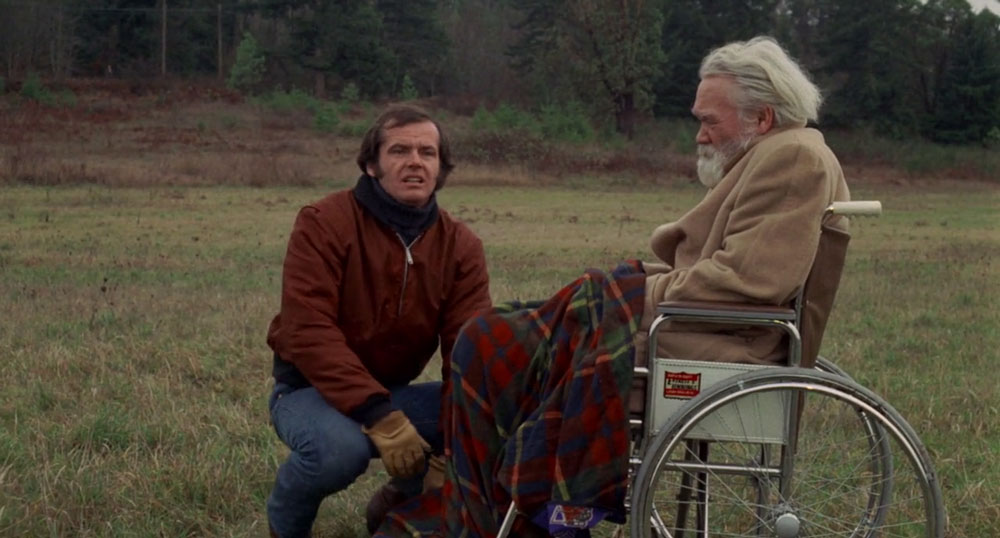
My project was a scene played by Jack Nicholson in the movie “Five Easy Pieces.”  For research, I watched the movie.  I liked it, but I was a little disappointed that there weren’t five great sex scenes.  Instead, it was about a kid who played the piano.  His family hoped that he would become a great concert pianist, but he ran away from home and drifted around the country. Now, when he returned home because he heard that his father had a stroke, his family asked him to play the piano, and basically all that he could remember were five easy musical pieces.

My scene wasn’t the most memorable in the movie.  That would be the diner scene where he tried to order plain toast, but the cranky waitress kept insisting that there were no substitutions.

(25) Hold the Chicken – Five Easy Pieces (3/8) Movie CLIP (1970) HD – YouTube

I didn’t have that scene, but I had a good one.  The father is in a wheelchair, unable to speak and Jack is getting ready to run away from home again.  He wants to have a talk with his father before he does, though.  So he wheels the father a few hundred yards from the house and he bends down to talk with him.

Are you cold?

I don’t know if you’d be particularly interested in hearing anything about me…

My life.

Most of it doesn’t add up to much that I could relay as a way of life that you’d approve of.

I move around a lot.

Not because I’m looking for anything really, but ‘cause I’m getting away from things that get bad if I stay.

Auspicious beginnings.  You know what I mean?

I’m trying to imagine your half of the conversation.

My feeling is, I don’t know, that if you could talk, we wouldn’t be talking.

It’s pretty much the way that it got to be before I left.

Are you all right?

I don’t know what to say.

Tita suggested that we try to…I don’t know.

I think that she feels…I think that she feels that we’ve got some understanding to reach.

She totally denies the fact that we were never that comfortable with one another to begin with.

The best that I can do is apologize.

We both know that I was never that good at it anyway.

I’m sorry it didn’t work out.

I would practice my lines constantly while I was at work, and drive everyone crazy.  Every time I said, “I don’t know if you’d be particularly interested in hearing anything about me,” everyone who was within earshot would shout “We’re not. Shut up.”

Now I have 3 screenplays that never made it to the screen, because I never sold them to anyone who makes movies.  I’m 75 years old, and I’d hate to go to the great beyond without passing the stories around a little bit.  Usually, books are made into screenplays, but I’ve decided to reverse engineer my screenplays into books.  I can’t do it by myself, but I’m hoping to use Claude A.I. to do the conversion.  I don’t know how Claude will work out, but it’s a start, and I need to get off to a good start.

Then to insure that I had the proper level of creativity flowing through my system, I used my brand new Pennsylvania Medical Marijuana Patient card today to make my first visit to the Marijuana Dispensary near the bus depot.  Since, my medical claim was for chronic pain, the Maripharmacist suggested an Indica strain of Marijuana which is used to control pain.

No.  I can handle the pain, I told him.  Give me the Sativa strain, something that gets me high, makes me laugh, makes me creative, doesn’t put me to sleep, and goes well with white wine. 

He knew just what I wanted. I walked out with two vials of THC oil.  One was called White Lotus, and the other one was called Carbon Fiber.  Plus, I got a 20% discount for being a senior citizen and a Navy veteran.

Auspicious Beginnings, indeed.

Peace & Love, and all of the above,

Earl