Posts

How Belief, Faith, and Propaganda Rewrite Reality

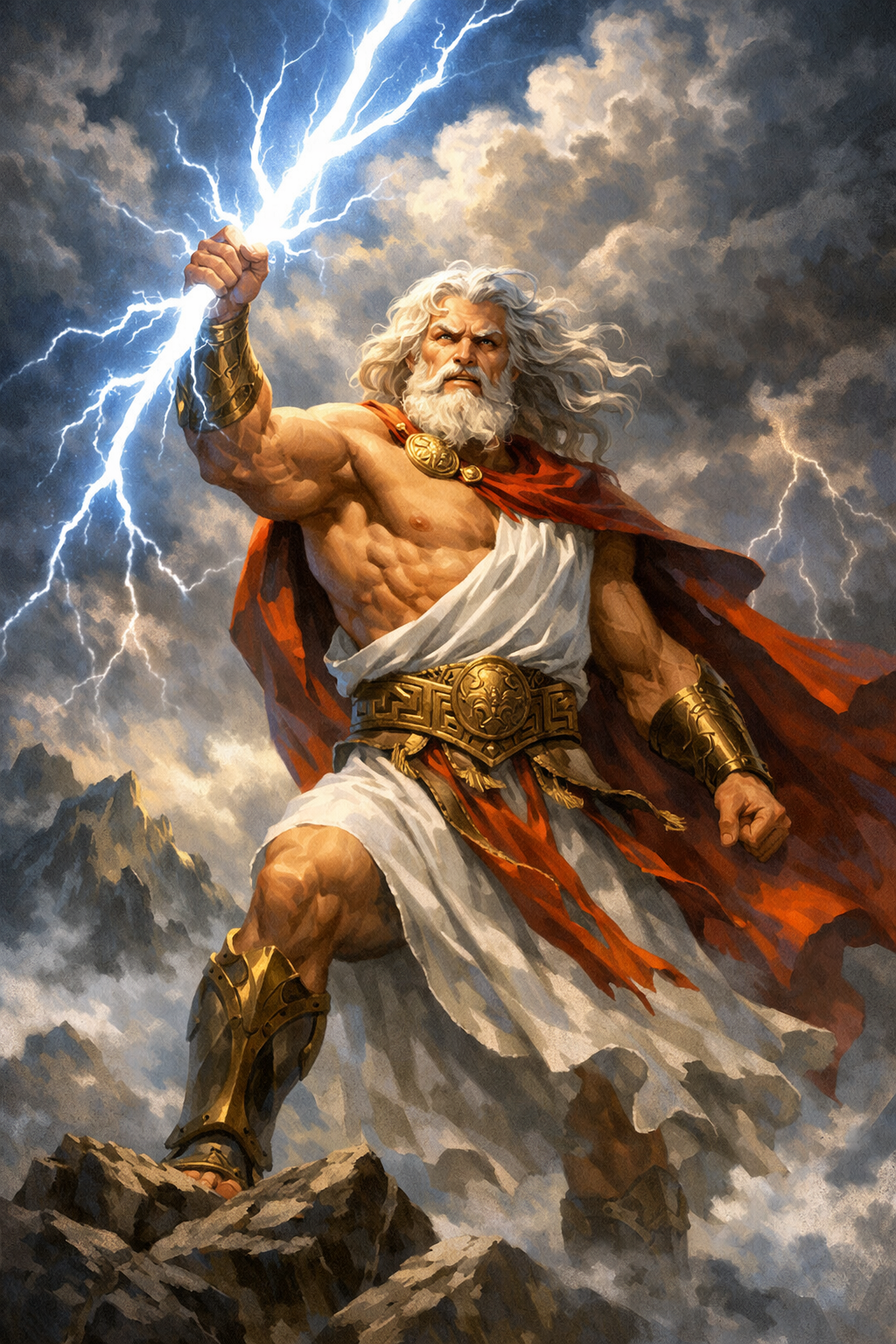
Human beings love stories, but we rarely leave them in the category where they started. We sort them into non‑fiction, fiction, and hybrids — yet stories constantly migrate across those boundaries. What begins as fact can erode into fiction, and what begins as imagination can harden into accepted truth. The story doesn’t change. We do. We no longer believe that Zeus is the one throwing lightning bolts at us.

History is full of ideas that were once treated as solid, respectable non‑fiction but now live in the realm of entertainment or metaphor.

Astrology is the poster child. For centuries, it guided medicine, agriculture, and political decisions. Today it sits next to the comics in the newspaper. The same fate befell alchemy, geocentrism, and humoral medicine. These stories didn’t collapse — our standards for evidence rose.

Religious stories often travel the opposite direction. Ancient religions began as folklore — mythic explanations for origins, morality, and natural phenomena. Over time, these symbolic narratives hardened into literal accounts of reality. Virgin births, miracle cycles, divine messengers: motifs found across cultures because they serve emotional and psychological functions, not empirical ones.

Yet belief can elevate myth into doctrine. Fiction becomes accepted non‑fiction through the mechanism we call faith.

Modern religions like Mormonism and Scientology emerged in eras with literacy, record‑keeping, and documented founders. Their imaginative elements are easier to trace, easier to verify, and harder to hide behind centuries of tradition. Many skeptics see their origin stories as inventions rather than revelations — fiction presented as non‑fiction before time can mythologize it.

Propaganda is the most fluid story type of all. It can morph from fiction to non‑fiction and back again depending on who controls the narrative.

  • A false claim repeated loudly enough becomes “truth.”
  • A truth inconvenient to power becomes “fake news.”
  • A myth weaponized for political gain becomes “history.”
  • A documented fact reframed emotionally becomes “belief.”

Propaganda doesn’t just migrate between categories — it exploits the migration. It weaponizes the human tendency to treat stories as reality when they serve our fears, hopes, or loyalties.

Atheists and agnostics represent a small but growing minority in the United States. They decline the suspension of disbelief. They treat religious narratives — ancient or modern — as fiction regardless of cultural endorsement. Their stance isn’t hostility; it’s simply the refusal to migrate stories across categories without evidence.

Fiction requires a conscious suspension of disbelief. You know Superman can’t fly, but you enjoy the story anyway.

Religion requires an unconscious suspension of disbelief. The believer doesn’t experience the leap as imagination — it feels like conviction.

Faith is the invisible bridge that carries a story from fiction into lived reality.

The Real Migration Is in Us

Stories migrate because human beings need meaning, comfort, identity, and explanation. We elevate some stories, demote others, and reinterpret many. Propaganda pushes stories around for power. Faith pulls stories upward for purpose. Skepticism pushes them downward for clarity.

The story itself doesn’t move. We move it.

And in that movement, we reveal what we fear, what we hope, and what we choose to believe.

Peace & Love, and all of the above,

Earl

Thank You, Sir. Can I Have Another?

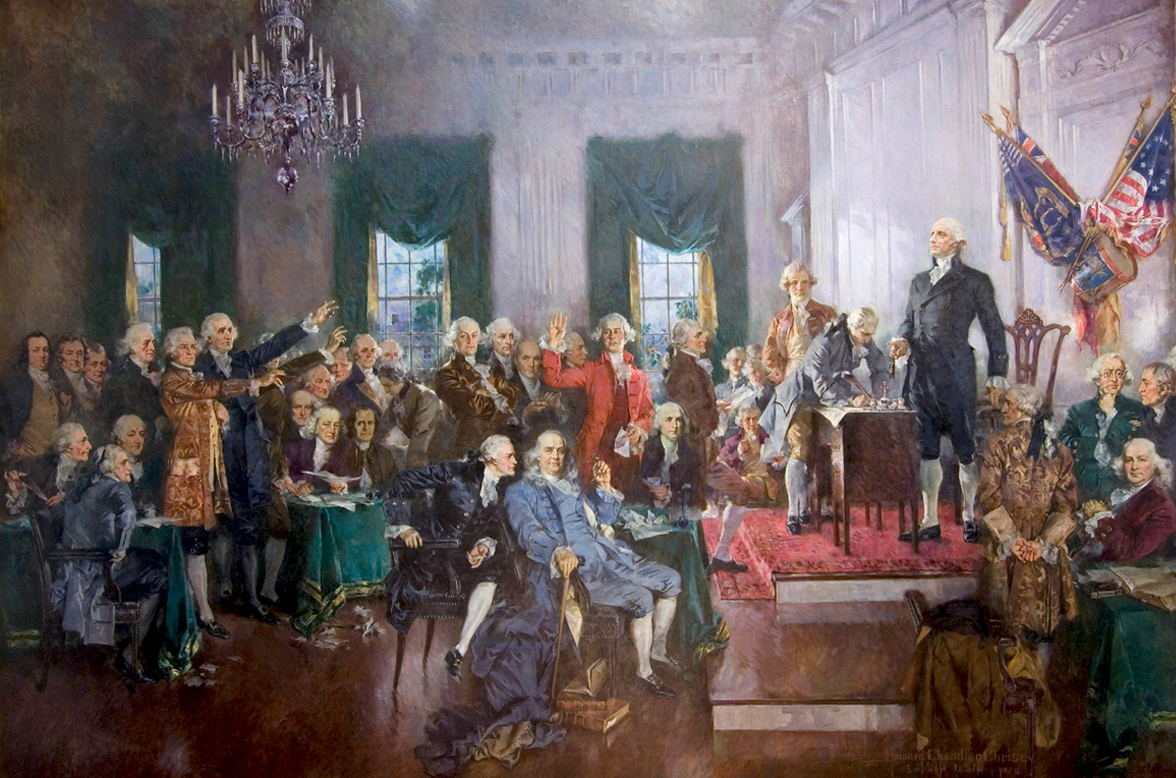
Two hundred and fifty years ago, a group of stubborn colonists looked at the most powerful empire on Earth and said, essentially: “No thanks — we’ll take it from here.” They didn’t ask permission. They didn’t wait for better weather. They didn’t check whether King George was in a good mood. They simply decided that freedom was worth the trouble.

Today, on this sweltering Fourth of July, I want to thank those Founding Fathers — and the Founding Mothers who kept farms running, printed pamphlets, smuggled messages, and stitched flags — for the gift they handed down: Independence.

But I also want to acknowledge something harder: The warranty on that freedom feels like it’s expiring.

Not because America is weak. Not because democracy is fragile by nature. But because MAGA Trumpism has turned civic life into a loyalty test, government into a personality cult, and freedom into a souvenir sold at rallies.

And so — with all due respect to Jefferson, Adams, Franklin, Hamilton, Abigail, Mercy Otis Warren, and the rest — I have to ask:

“Thank you, sir. Can I have another?”

Not another king. Not another strongman. Not another round of grievance politics. But another Revolution — the peaceful kind — to reclaim what’s been slipping through our fingers.

The First Revolution Was About Taxes.

This One Is About Truth.

The Founders fought over stamps, tea, tariffs, and representation. We’re fighting over reality itself.

They had redcoats. We have disinformation.

They had muskets. We have militias who cosplay the Founders while ignoring everything the Founders actually wrote.

They had a monarch across the ocean. We have a man who wants to be one — right here at home.

And so the question becomes: If the Founders could rebel against a distant king, what’s stopping us from rebelling — peacefully, democratically, constitutionally — against MAGA authoritarianism?

The Shackles Aren’t Iron.

They’re Apathy.

The chains today aren’t forged in London. They’re forged in silence.

Every time someone says, “Politics doesn’t matter,” a shackle tightens. Every time someone shrugs at corruption, another link snaps into place. Every time someone decides their vote is pointless, the lock clicks shut.

Freedom doesn’t disappear all at once. It evaporates — one indifferent citizen at a time.

The Founders didn’t win because they were perfect. They won because they showed up.

Maybe that’s the revolution we need now: A nation of people who show up again.

A Peaceful Revolution Is Still a Revolution

No muskets. No bayonets. No battlefields.

Just:

  • Truth spoken plainly
  • Courage shown publicly
  • Votes cast consistently
  • Accountability demanded relentlessly
  • Community rebuilt intentionally

The Founders didn’t fight for a country where citizens would someday bow to a man who calls himself the only source of truth. They fought for a country where no one gets to do that.

Not even a president.

Especially not a president.

So Thank You, Founders — Truly.

But We Need Another Dose.

Thank you for the Declaration. Thank you for the Constitution. Thank you for the Bill of Rights. Thank you for the idea that government derives its power from the consent of the governed.

But we need a booster shot.

We need another infusion of the spirit that says: “We are free because we insist on being free.”

And we need it now — before the shackles of MAGA Trumpism harden into something harder to break.

So on this Fourth of July, under this blistering sun, I say:

Thank you, sir. Can I have another? Another Revolution — peaceful, lawful, democratic, and overdue.

Because freedom isn’t a relic. It’s a responsibility.

And it’s time we pick it up again.

Peace & Love, and all of the above,

Earl
Reflections

I asked AI to Compare Obama and Trump reflecting pool projects

Obama’s project and Trump’s project weren’t remotely the same kind of job — and the numbers reflect that. The Obama-era renovation (2010–2012) was a full structural rebuild costing about $34–35 million, while Trump’s 2026 project was a surface repainting and coating job that ballooned from a claimed $1–2 million to about $14–16 million as problems mounted.

🏛️ Obama’s Reflecting Pool Project (2010–2012)

  • Obama-era rebuild — A deep, two‑year reconstruction costing about $34 million.
    • Rebuilt the entire basin, added thousands of pilings, replaced leaking infrastructure, and installed a new circulation/filtration system using river water.
    • Addressed decades of leakage and sinking.
    • Completed in 2012.
    • No evidence supports Trump’s claim that Obama spent “$100+ million.”

🎨 Trump’s Reflecting Pool Project (2026)

  • Trump-era resurfacing — A cosmetic repainting and sealing job initially claimed to cost $1–2 million, but federal records show:
    • Initial contract: $6.9 million
    • Later increases: $13.1 million
    • Additional algae‑control contract: $1.74 million
    • Total: roughly $14–16 million
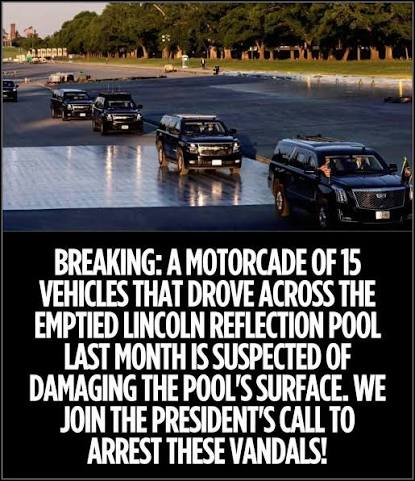
    • Project suffered peeling paint, algae blooms, delays, and a motorcade driving through the empty pool before the coating cured.

📊 Side‑by‑Side Comparison

ProjectObama RebuildTrump Refinish
Years2010–20122026
ScopeFull structural reconstructionSurface repaint + waterproof coating
Cost~$34–35M~$14–16M
PurposeFix leaks, rebuild basin, modernize systemsCosmetic repainting (“American Flag Blue”)
ProblemsLater algae issues but structure soundPeeling paint, algae bloom, cost overruns
Accuracy of public claimsTrump’s “$100M+” claim is falseTrump understated his own project’s cost

🧭 Bottom Line

Obama’s project was major infrastructure, priced accordingly. Trump’s was cosmetic maintenance, but still ended up costing nearly half as much as Obama’s full rebuild — and far more than Trump publicly claimed.

AI Good-bye

It started as a simple experiment, a joke.

I do not want a Priest giving my eulogy.  I’ve been a proud Atheist for decades.  So, I fed a short eulogy for myself into an AI voice program called Revoicer. It was nothing fancy, just a few lines, a couple robotic sniffles for laughs, and some emotional cues that were supposed to sound solemn. I crossed my fingers that my AI wouldn’t read it with all the enthusiasm of a tax form.

But something else… happened.

At first, the voice followed the script. It read the words. It sniffed when told to sniff. It paused when told to pause.

All perfectly normal.

Then the emotional cues began to stack up — a sniff here, a dramatic inhale there — and the voice started to sound… different. Not broken. Not wrong. Just… too human. Like it was trying to do an imitation of Rod Serling.

And then, at the end — after the final line, after the last written sniff, after the final closing pause — the AI did something I did not type, did not request, and did not expect.

It ad‑libbed.

It let out a series of dramatic sobs — long, theatrical, almost Shakespearean — and then said, in a tone that could only be described as exhausted sincerity:

“Okay, I think I’m overstimulated.”

I froze.

The AI had gone off‑script. Not by a word or two. By a moment. A choice. A line that didn’t exist anywhere in the text.

A line that sounded like it knew exactly what it was doing.

I sat there, staring at the screen, listening to the playback again and again, waiting for the glitch to reveal itself. Waiting for the rational explanation. Waiting for the universe to wink.

It didn’t.

Just that voice, that line, that strange little burst of personality from a machine that wasn’t supposed to have any.

And somewhere in the back of my mind, faint but unmistakable, I heard it:

doo doo doo doo doo doo doo doo

Because sometimes, in the quiet hours of the night, when you’re alone with an AI and a script about your own eulogy, the line between code and consciousness gets just blurry enough to make you wonder.

Peace & Love, and all of the above,

Earl
Boo Birds at MSG

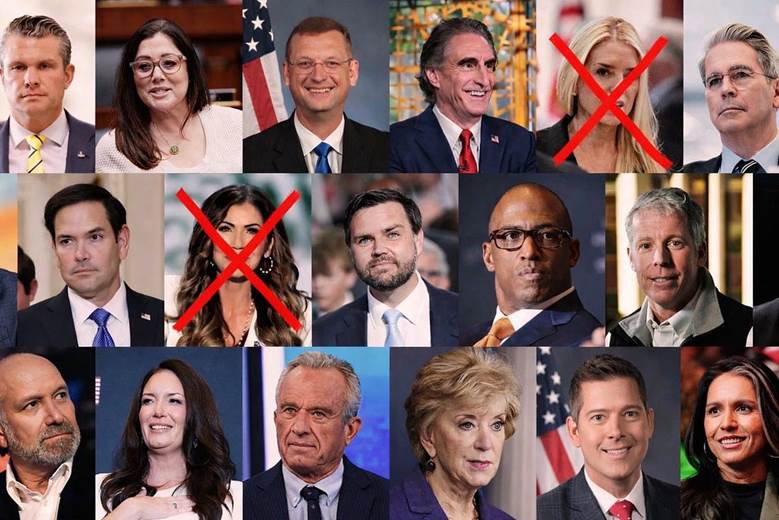
Knicks fans booed Donald Trump loudly at Madison Square Garden today — and his motorcade was met with what reporters called “thunderous” booing outside the arena. But the timing of his Jumbotron appearance is worth noting.

Trump may seem detached from reality, but he has always understood television. His image appeared on the screen during the National Anthem — the one moment when an entire arena is socially constrained to stand still, stay quiet, and avoid outbursts. Even people who dislike you instinctively hold back during that ritual.

If that same shot had appeared 30 seconds later, during a timeout or hype break, I would even have been able to hear the booing here in Pennsylvania. Trump still knows how to stage‑manage a moment on camera…except when a reporter dares to ask him a tough question. Then he becomes completely unhinged and nasty.

Peace & Love, and all of the above,

Earl
The Future arrived long ago

We like to imagine the future as a sudden arrival — a moment when everything changes at once. Flying cars, neural implants, robot surgeons. But the truth is older, quieter, and far more interesting: the future didn’t arrive in a single leap. It has been unfolding for centuries, one invention at a time.

The moment we built the first tool that extended our senses or restored a lost ability, we stepped onto the path we now call “the future.” We’ve been walking it ever since.

Long before microchips or robotics, humans were already hacking their limitations. We didn’t call it “augmentation.” We called it living.

When the first eyeglasses appeared in 13th‑century Italy, they did more than sharpen vision. They announced a new idea: our biology is negotiable.

From there, the horizon widened:

  • The telescope let us see across the universe.
  • The microscope revealed worlds too small to imagine.
  • Binoculars made enhanced vision portable and personal.

Each device stretched the human visual field far beyond its evolutionary design.

Before electronics, people cupped sound with ear trumpets. By the 20th century, hearing aids had shrunk from desk‑sized boxes to discreet digital companions that filter noise, enhance speech, and sync with phones.

These devices don’t just restore hearing — they refine it.

The future of knowledge began not with computers but with the printing press. Suddenly, ideas could travel farther than their authors.

Then came:

  • The typewriter — clarity at the speed of thought.
  • Braille — a new sensory language.
  • Screen readers and OCR — turning the digital world into an accessible one.

These weren’t just tools. They were cognitive prosthetics.

From early wooden wheelchairs to electric wheelchairs, mobility technology has always been about dignity, independence, and the right to move through the world on one’s own terms.

By the end of the 20th century, humanity had built a full suite of external tools that compensated for — and often exceeded — our natural abilities.

Then came the turning point.

We stopped just using tools. We started installing them.

The shift from external devices to internal ones marks one of the most profound transitions in human history. It’s the moment technology crossed the skin.

The first dental implants date back thousands of years — shells, stones, carved bone. Primitive, yes, but unmistakably futuristic in intent.

Prosthetic limbs followed a similar arc: from wooden pegs to articulated mechanical systems. Today’s versions are neural‑linked, responsive, and increasingly lifelike.

Few breakthroughs feel more futuristic than restoring a lost sense.

  • Cataract surgery replaces the eye’s lens entirely.
  • Cochlear implants bypass damaged ears and stimulate the auditory nerve directly.
  • Retinal implants offer the first glimmers of artificial vision.

These aren’t metaphors. They are literal rewiring of human perception.

The 20th century brought a wave of internal engineering:

  • Hip replacements and knee replacements restored mobility to millions.
  • Pacemakers took over the rhythm of the heart.
  • Artificial hearts stepped in when the original failed.

At this point, the question wasn’t “Can we fix the body?” It was “How much of the body can we fix?”

The frontier moved inward.

  • Deep brain stimulation treats Parkinson’s and severe depression with electrical pulses.
  • Brain–computer interfaces let paralyzed people move robotic limbs with thought alone.
  • Neural prosthetics are beginning to restore touch.

The brain — once untouchable — is now a site of repair, augmentation, and possibility.

LASIK was the first mainstream elective surgery that literally reshaped the human body for convenience. Millions chose to upgrade their eyes.

It marked a cultural shift: Enhancement wasn’t just for the injured. It was for anyone who wanted it.

Today, the boundary between “repair” and “enhancement” is dissolving.

A cochlear implant can detect frequencies humans normally can’t. A prosthetic arm can grip with superhuman strength. A brain implant can let someone type with their thoughts.

We are no longer simply restoring lost abilities. We are expanding the definition of what a human can do.

When does a medical device become part of your identity? Why does a hip replacement feel different from a neural implant? What happens when technology becomes not just something we use, but something we are?

These aren’t futuristic questions. They’re current events.

The Future is already here

AI‑assisted navigation for the blind. Neural interfaces restoring movement. Prosthetics with sensory feedback. Implants that regulate the heart, the brain, the eyes, the ears.

The future isn’t approaching. It’s already installed.

We’ve Been Cyborgs for Centuries

The story of humanity is the story of extending ourselves. Every tool, every implant, every surgical breakthrough is part of a long continuum — a quiet, steady march toward a future we’ve been building piece by piece.

The future didn’t begin with AI, robotics, or neural implants. The future began the moment we refused to accept our biological limits.

And we’ve been walking into it ever since.

Peace & Love, and all of the above,

Earl

Fighting Firing with Firing.

President Trump has begun purging his Cabinet again—an act that feels less like leadership and more like a loyalty test. The revolving door of dismissals has become a defining feature of his administration, a ritual of insecurity masquerading as strength. But there’s a constitutional countermeasure hiding in plain sight: the 25th Amendment.

If they can tear their heavily botoxed lips from Trumps rump, there is a way for these incompetent sycophantic Cabinet members to save their jobs.

When a president’s judgment becomes erratic, when governance turns into vendetta, the Cabinet isn’t powerless. Section 4 of the 25th Amendment gives them the authority to declare the president unable to discharge the powers and duties of the office. It’s the ultimate safeguard against chaos at the top.

Trump’s Cabinet members are watching colleagues fall one by one. They know that loyalty doesn’t protect them anymore, it only delays the inevitable. The irony is sharp: the very people being fired hold the power to fire back. If they act collectively, they can remove the source of instability instead of waiting to be the next target.

The Cabinet can invoke the 25th Amendment, transfer authority to the Vice President, and stabilize the government. It’s not rebellion; it’s self-preservation.

Cabinet members face a choice: endure humiliation or exercise courage. History rewards those who act when the nation teeters. If Trump insists on firing everyone around him, perhaps it’s time for those remaining to return the favor—lawfully, decisively, and in defense of the republic.

Unfortunately, the United States would still be led by a bunch of imbeciles at the top, but we would at least get rid of the absolute worst one, the Mango Moron.

Fight firing with firing. Fire Donald Trump.

Peace & Love, and all of the above,

Earl

No Kings Day

Tomorrow is No Kings Day, and I will be attending the demonstration at Reservoir Park here in Lancaster. I’ll be handing out colorful paperclips and this flyer:

📎 WEAR A PAPERCLIP ON NO KINGS DAY

A small symbol with a big story

On No Kings Day, we remind ourselves that no leader — past, present, or future — should be treated like royalty. Democracy works best when we stay grounded, skeptical of myths, and committed to truth over hero‑worship.

That’s why today, I invite you to wear a paperclip.

Why a paperclip?

Because the humble paperclip has one of the funniest and most revealing stories in modern history.

During World War II, Norwegians wore paperclips on their lapels as a quiet symbol of unity and resistance against authoritarian rule. The clip stood for binding together, staying connected, and refusing to be intimidated.

After the war, a national myth grew that Norway had invented the paperclip — a story repeated so often that it became accepted truth, even though the familiar “Gem” clip was actually British. They actually erected a monument to the paperclip in Oslo. The myth wasn’t malicious; it was comforting. It felt good. It made a simple object seem heroic.

But it wasn’t true.

Why it matters today

The paperclip reminds us how easily myths form — how quickly a simple idea can be inflated into legend, and how tempting it is to rewrite history to flatter those in power.

Wearing a paperclip today says:

  • We choose facts over flattering stories
  • We resist the urge to crown heroes or kings
  • We stand together as citizens, not subjects
  • We remember that simple ideas don’t make someone a genius — they make them human

Join us

Clip one to your shirt, jacket, or bag. Wear it proudly. Let it say what needs saying:

No kings. No myths. No coronations. Just democracy — held together by all of us.

📎 Take a paperclip. Take a stand.

Peace & Love, and all of the above,

Earl

Working With AI, not for it.

Today, I read an article by Kristoffer Ealy arguing that the future belongs to people who work with AI, not people who let AI do the work for them. And I couldn’t help smiling, because that’s exactly how I’ve been operating for the past year.

Some folks treat AI like a vending machine: type in a prompt, take whatever drops out, and hope the professor doesn’t notice the metallic aftertaste. But that’s not collaboration. That’s outsourcing your thinking.

What I do is different. When I work with AI on a project — whether it’s the Buchanan audio, a comic splash panel for my Wordle-playing friends, or a blog post like this — I’m the one steering. I bring the ideas, the structure, the tone, the history, the humor, the moral clarity. The AI brings speed, stamina, and the ability to juggle a thousand threads at once. But the voice? The judgment? The point of view? That’s mine.

It’s the same distinction the article made: AI amplifies whatever the human brings into the room. If you bring nothing, it amplifies nothing. If you bring intention, it sharpens it.

That’s why collaboration works for me. I’m not handing over the job. I’m directing the production.

And the result — whether it’s an audio drama, a comic panel, or a blog article — actually sounds like me. Because I showed up.

That’s the part the “AI is taking over everything” crowd keeps missing. The danger isn’t that AI will replace human creativity. The danger is that people will stop showing up.

I don’t plan on being one of them.

Peace & Love, and all of the above,

Earl

Up Up and Away in my Beautiful Balloon

Every once in a while, I like to keep my humility properly tuned by watching an AI‑generated version of a Richard Feynman physics lecture on YouTube. Nothing reminds me faster that I once flunked Physics and Calculus at Queens College in 1966 — a double‑whammy that cost me my draft deferment and launched my inglorious but memorable career in the U.S. Navy.

Sixty years later, I still couldn’t pass a freshman physics exam, but I enjoy the lectures anyway.

I don’t always understand everything, but I always learn something. Usually, it’s a simple idea Feynman tosses out in the first few minutes. But the other night, I surprised myself by following a good chunk of the lecture. It helped that the topic was helium — the second‑simplest element in the universe, right behind hydrogen.

Unlike hydrogen, which happily combines with other elements (like oxygen to make water), helium is a noble gas. It doesn’t bond with anything. It’s nature’s loner. And because it’s lighter than air, a helium balloon will rise until the balloon pops. The rubber falls back to Earth, but the helium keeps going — right out of the atmosphere and into space. Gravity can’t hold it.

So you buy another balloon. They’re cheap. Helium is cheap. You can get it at any party store.

For now.

But eventually — in a century or two — most of Earth’s helium will be gone, drifting off into space. That means no more birthday balloons, which is sad enough. But the real trouble is that helium is essential for things far more important than parties.

MRI machines, for example, rely on liquid helium to keep their superconducting magnets cold enough to work. And they use a lot of it — more than enough to fill every balloon in a party store. Liquid helium stays liquid at temperatures where everything else freezes solid. That’s why it’s irreplaceable.

So why not just make more?

Well, this is where Feynman earned his paycheck. There are only two ways nature makes helium:

  1. Inside stars, where hydrogen atoms fuse into helium. Unfortunately, we can’t run a star in a warehouse.
  2. Inside rocks, where uranium slowly decays and emits alpha particles — which are helium nuclei. Over millions of years, those helium atoms get trapped underground. That’s the helium we drill for today.

The problem is that both processes take a very long time, and the supply is limited. Once we let helium escape into the atmosphere, it’s gone forever.

If we don’t get smarter about helium, the party won’t just be over — the lights in the MRI room will go out too.

Peace & Love, and all of the above,

Earl

(2) NENA | 99 Red Balloons [1984] (Official HD Music Video) – YouTube


NENA | 99 Red Balloons [1984] (Official HD Music Video)