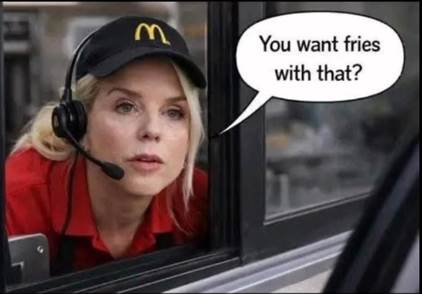
I asked AI to Compare Obama and Trump reflecting pool projects
Obama’s project and Trump’s project weren’t remotely the same kind of job — and the numbers reflect that. The Obama-era renovation (2010–2012) was a full structural rebuild costing about $34–35 million, while Trump’s 2026 project was a surface repainting and coating job that ballooned from a claimed $1–2 million to about $14–16 million as problems mounted.
🏛️ Obama’s Reflecting Pool Project (2010–2012)
Obama-era rebuild — A deep, two‑year reconstruction costing about $34 million.
Rebuilt the entire basin, added thousands of pilings, replaced leaking infrastructure, and installed a new circulation/filtration system using river water.
Addressed decades of leakage and sinking.
Completed in 2012.
No evidence supports Trump’s claim that Obama spent “$100+ million.”
🎨 Trump’s Reflecting Pool Project (2026)
Trump-era resurfacing — A cosmetic repainting and sealing job initially claimed to cost $1–2 million, but federal records show:
Initial contract: $6.9 million
Later increases: $13.1 million
Additional algae‑control contract: $1.74 million
Total: roughly $14–16 million
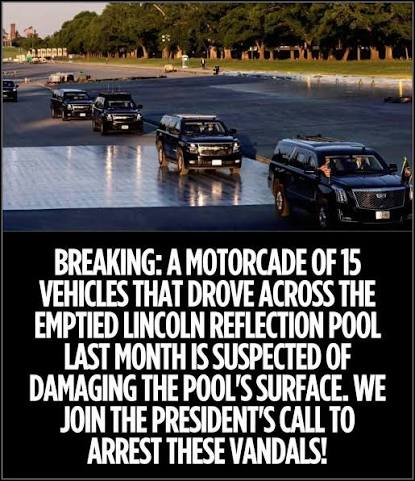
Project suffered peeling paint, algae blooms, delays, and a motorcade driving through the empty pool before the coating cured.
📊 Side‑by‑Side Comparison
Project
Obama Rebuild
Trump Refinish
Years
2010–2012
2026
Scope
Full structural reconstruction
Surface repaint + waterproof coating
Cost
~$34–35M
~$14–16M
Purpose
Fix leaks, rebuild basin, modernize systems
Cosmetic repainting (“American Flag Blue”)
Problems
Later algae issues but structure sound
Peeling paint, algae bloom, cost overruns
Accuracy of public claims
Trump’s “$100M+” claim is false
Trump understated his own project’s cost
🧭 Bottom Line
Obama’s project was major infrastructure, priced accordingly. Trump’s was cosmetic maintenance, but still ended up costing nearly half as much as Obama’s full rebuild — and far more than Trump publicly claimed.
I do not want a Priest giving my eulogy. I’ve been a proud Atheist for decades. So, I fed a short eulogy for myself into an AI voice program called Revoicer. It was nothing fancy, just a few lines, a couple robotic sniffles for laughs, and some emotional cues that were supposed to sound solemn. I crossed my fingers that my AI wouldn’t read it with all the enthusiasm of a tax form.
But something else… happened.
At first, the voice followed the script. It read the words. It sniffed when told to sniff. It paused when told to pause.
All perfectly normal.
Then the emotional cues began to stack up — a sniff here, a dramatic inhale there — and the voice started to sound… different. Not broken. Not wrong. Just… too human. Like it was trying to do an imitation of Rod Serling.
And then, at the end — after the final line, after the last written sniff, after the final closing pause — the AI did something I did not type, did not request, and did not expect.
It ad‑libbed.
It let out a series of dramatic sobs — long, theatrical, almost Shakespearean — and then said, in a tone that could only be described as exhausted sincerity:
“Okay, I think I’m overstimulated.”
I froze.
The AI had gone off‑script. Not by a word or two. By a moment. A choice. A line that didn’t exist anywhere in the text.
A line that sounded like it knew exactly what it was doing.
I sat there, staring at the screen, listening to the playback again and again, waiting for the glitch to reveal itself. Waiting for the rational explanation. Waiting for the universe to wink.
It didn’t.
Just that voice, that line, that strange little burst of personality from a machine that wasn’t supposed to have any.
And somewhere in the back of my mind, faint but unmistakable, I heard it:
doo doo doo doodoo doo doo doo
Because sometimes, in the quiet hours of the night, when you’re alone with an AI and a script about your own eulogy, the line between code and consciousness gets just blurry enough to make you wonder.
Knicks fans booed Donald Trump loudly at Madison Square Garden today — and his motorcade was met with what reporters called “thunderous” booing outside the arena. But the timing of his Jumbotron appearance is worth noting.
Trump may seem detached from reality, but he has always understood television. His image appeared on the screen during the National Anthem — the one moment when an entire arena is socially constrained to stand still, stay quiet, and avoid outbursts. Even people who dislike you instinctively hold back during that ritual.
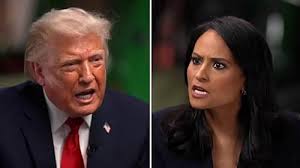
If that same shot had appeared 30 seconds later, during a timeout or hype break, I would even have been able to hear the booing here in Pennsylvania. Trump still knows how to stage‑manage a moment on camera…except when a reporter dares to ask him a tough question. Then he becomes completely unhinged and nasty.
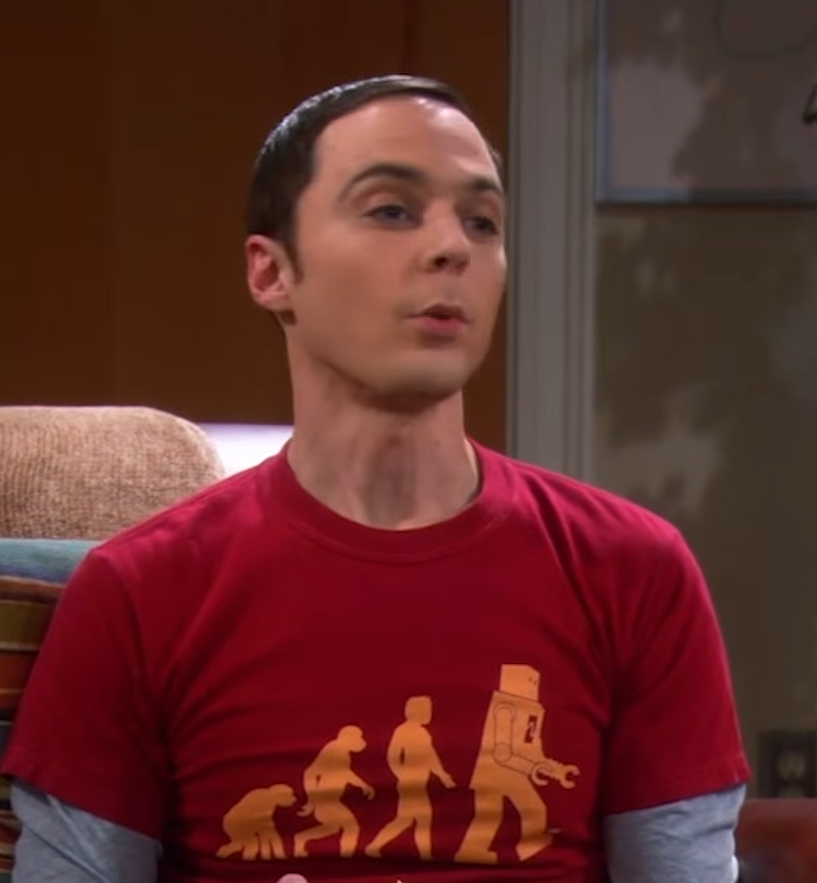
We like to imagine the future as a sudden arrival — a moment when everything changes at once. Flying cars, neural implants, robot surgeons. But the truth is older, quieter, and far more interesting: the future didn’t arrive in a single leap. It has been unfolding for centuries, one invention at a time.
The moment we built the first tool that extended our senses or restored a lost ability, we stepped onto the path we now call “the future.” We’ve been walking it ever since.
Long before microchips or robotics, humans were already hacking their limitations. We didn’t call it “augmentation.” We called it living.
When the first eyeglasses appeared in 13th‑century Italy, they did more than sharpen vision. They announced a new idea: our biology is negotiable.
From there, the horizon widened:
The telescope let us see across the universe.
The microscope revealed worlds too small to imagine.
Binoculars made enhanced vision portable and personal.
Each device stretched the human visual field far beyond its evolutionary design.
Before electronics, people cupped sound with ear trumpets. By the 20th century, hearing aids had shrunk from desk‑sized boxes to discreet digital companions that filter noise, enhance speech, and sync with phones.
These devices don’t just restore hearing — they refine it.
The future of knowledge began not with computers but with the printing press. Suddenly, ideas could travel farther than their authors.
Then came:
The typewriter — clarity at the speed of thought.
Braille — a new sensory language.
Screen readers and OCR — turning the digital world into an accessible one.
These weren’t just tools. They were cognitive prosthetics.
From early wooden wheelchairs to electric wheelchairs, mobility technology has always been about dignity, independence, and the right to move through the world on one’s own terms.
By the end of the 20th century, humanity had built a full suite of external tools that compensated for — and often exceeded — our natural abilities.
Then came the turning point.
We stopped just using tools. We started installing them.
The shift from external devices to internal ones marks one of the most profound transitions in human history. It’s the moment technology crossed the skin.
The first dental implants date back thousands of years — shells, stones, carved bone. Primitive, yes, but unmistakably futuristic in intent.
Prosthetic limbs followed a similar arc: from wooden pegs to articulated mechanical systems. Today’s versions are neural‑linked, responsive, and increasingly lifelike.
Few breakthroughs feel more futuristic than restoring a lost sense.
Cataract surgery replaces the eye’s lens entirely.
Cochlear implants bypass damaged ears and stimulate the auditory nerve directly.
Retinal implants offer the first glimmers of artificial vision.
These aren’t metaphors. They are literal rewiring of human perception.
The 20th century brought a wave of internal engineering:
Hip replacements and knee replacements restored mobility to millions.
Pacemakers took over the rhythm of the heart.
Artificial hearts stepped in when the original failed.
At this point, the question wasn’t “Can we fix the body?” It was “How much of the body can we fix?”
The frontier moved inward.
Deep brain stimulation treats Parkinson’s and severe depression with electrical pulses.
Brain–computer interfaces let paralyzed people move robotic limbs with thought alone.
Neural prosthetics are beginning to restore touch.
The brain — once untouchable — is now a site of repair, augmentation, and possibility.
LASIK was the first mainstream elective surgery that literally reshaped the human body for convenience. Millions chose to upgrade their eyes.
It marked a cultural shift: Enhancement wasn’t just for the injured. It was for anyone who wanted it.
Today, the boundary between “repair” and “enhancement” is dissolving.
A cochlear implant can detect frequencies humans normally can’t. A prosthetic arm can grip with superhuman strength. A brain implant can let someone type with their thoughts.
We are no longer simply restoring lost abilities. We are expanding the definition of what a human can do.
When does a medical device become part of your identity? Why does a hip replacement feel different from a neural implant? What happens when technology becomes not just something we use, but something we are?
These aren’t futuristic questions. They’re current events.
The Future is already here
AI‑assisted navigation for the blind. Neural interfaces restoring movement. Prosthetics with sensory feedback. Implants that regulate the heart, the brain, the eyes, the ears.
The future isn’t approaching. It’s already installed.
We’ve Been Cyborgs for Centuries
The story of humanity is the story of extending ourselves. Every tool, every implant, every surgical breakthrough is part of a long continuum — a quiet, steady march toward a future we’ve been building piece by piece.
The future didn’t begin with AI, robotics, or neural implants. The future began the moment we refused to accept our biological limits.
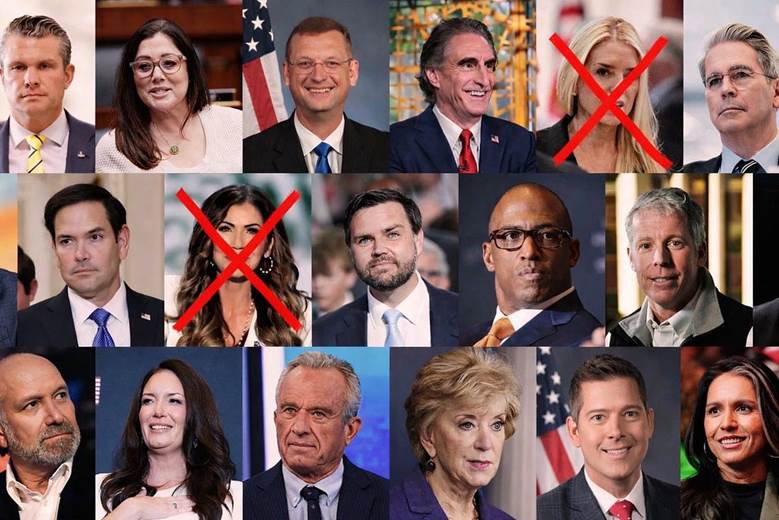
President Trump has begun purging his Cabinet again—an act that feels less like leadership and more like a loyalty test. The revolving door of dismissals has become a defining feature of his administration, a ritual of insecurity masquerading as strength. But there’s a constitutional countermeasure hiding in plain sight: the 25th Amendment.
If they can tear their heavily botoxed lips from Trumps rump, there is a way for these incompetent sycophantic Cabinet members to save their jobs.
When a president’s judgment becomes erratic, when governance turns into vendetta, the Cabinet isn’t powerless. Section 4 of the 25th Amendment gives them the authority to declare the president unable to discharge the powers and duties of the office. It’s the ultimate safeguard against chaos at the top.
Trump’s Cabinet members are watching colleagues fall one by one. They know that loyalty doesn’t protect them anymore, it only delays the inevitable. The irony is sharp: the very people being fired hold the power to fire back. If they act collectively, they can remove the source of instability instead of waiting to be the next target.
The Cabinet can invoke the 25th Amendment, transfer authority to the Vice President, and stabilize the government. It’s not rebellion; it’s self-preservation.
Cabinet members face a choice: endure humiliation or exercise courage. History rewards those who act when the nation teeters. If Trump insists on firing everyone around him, perhaps it’s time for those remaining to return the favor—lawfully, decisively, and in defense of the republic.
Unfortunately, the United States would still be led by a bunch of imbeciles at the top, but we would at least get rid of the absolute worst one, the Mango Moron.
Tomorrow is No Kings Day, and I will be attending the demonstration at Reservoir Park here in Lancaster. I’ll be handing out colorful paperclips and this flyer:
📎 WEAR A PAPERCLIP ON NO KINGS DAY
A small symbol with a big story
On No Kings Day, we remind ourselves that no leader — past, present, or future — should be treated like royalty. Democracy works best when we stay grounded, skeptical of myths, and committed to truth over hero‑worship.
That’s why today, I invite you to wear a paperclip.
Why a paperclip?
Because the humble paperclip has one of the funniest and most revealing stories in modern history.
During World War II, Norwegians wore paperclips on their lapels as a quiet symbol of unity and resistance against authoritarian rule. The clip stood for binding together, staying connected, and refusing to be intimidated.
After the war, a national myth grew that Norway had invented the paperclip — a story repeated so often that it became accepted truth, even though the familiar “Gem” clip was actually British. They actually erected a monument to the paperclip in Oslo. The myth wasn’t malicious; it was comforting. It felt good. It made a simple object seem heroic.
But it wasn’t true.
Why it matters today
The paperclip reminds us how easily myths form — how quickly a simple idea can be inflated into legend, and how tempting it is to rewrite history to flatter those in power.
Wearing a paperclip today says:
We choose facts over flattering stories
We resist the urge to crown heroes or kings
We stand together as citizens, not subjects
We remember that simple ideas don’t make someone a genius — they make them human
Join us
Clip one to your shirt, jacket, or bag. Wear it proudly. Let it say what needs saying:
No kings.No myths.No coronations.Just democracy — held together by all of us.
Today, I read an article by Kristoffer Ealy arguing that the future belongs to people who work with AI, not people who let AI do the work for them. And I couldn’t help smiling, because that’s exactly how I’ve been operating for the past year.
Some folks treat AI like a vending machine: type in a prompt, take whatever drops out, and hope the professor doesn’t notice the metallic aftertaste. But that’s not collaboration. That’s outsourcing your thinking.
What I do is different. When I work with AI on a project — whether it’s the Buchanan audio, a comic splash panel for my Wordle-playing friends, or a blog post like this — I’m the one steering. I bring the ideas, the structure, the tone, the history, the humor, the moral clarity. The AI brings speed, stamina, and the ability to juggle a thousand threads at once. But the voice? The judgment? The point of view? That’s mine.
It’s the same distinction the article made: AI amplifies whatever the human brings into the room. If you bring nothing, it amplifies nothing. If you bring intention, it sharpens it.
That’s why collaboration works for me. I’m not handing over the job. I’m directing the production.
And the result — whether it’s an audio drama, a comic panel, or a blog article — actually sounds like me. Because I showed up.
That’s the part the “AI is taking over everything” crowd keeps missing. The danger isn’t that AI will replace human creativity. The danger is that people will stop showing up.
Every once in a while, I like to keep my humility properly tuned by watching an AI‑generated version of a Richard Feynman physics lecture on YouTube. Nothing reminds me faster that I once flunked Physics and Calculus at Queens College in 1966 — a double‑whammy that cost me my draft deferment and launched my inglorious but memorable career in the U.S. Navy.
Sixty years later, I still couldn’t pass a freshman physics exam, but I enjoy the lectures anyway.
I don’t always understand everything, but I always learn something. Usually, it’s a simple idea Feynman tosses out in the first few minutes. But the other night, I surprised myself by following a good chunk of the lecture. It helped that the topic was helium — the second‑simplest element in the universe, right behind hydrogen.
Unlike hydrogen, which happily combines with other elements (like oxygen to make water), helium is a noble gas. It doesn’t bond with anything. It’s nature’s loner. And because it’s lighter than air, a helium balloon will rise until the balloon pops. The rubber falls back to Earth, but the helium keeps going — right out of the atmosphere and into space. Gravity can’t hold it.
So you buy another balloon. They’re cheap. Helium is cheap. You can get it at any party store.
For now.
But eventually — in a century or two — most of Earth’s helium will be gone, drifting off into space. That means no more birthday balloons, which is sad enough. But the real trouble is that helium is essential for things far more important than parties.
MRI machines, for example, rely on liquid helium to keep their superconducting magnets cold enough to work. And they use a lot of it — more than enough to fill every balloon in a party store. Liquid helium stays liquid at temperatures where everything else freezes solid. That’s why it’s irreplaceable.
So why not just make more?
Well, this is where Feynman earned his paycheck. There are only two ways nature makes helium:
Inside stars, where hydrogen atoms fuse into helium. Unfortunately, we can’t run a star in a warehouse.
Inside rocks, where uranium slowly decays and emits alpha particles — which are helium nuclei. Over millions of years, those helium atoms get trapped underground. That’s the helium we drill for today.
The problem is that both processes take a very long time, and the supply is limited. Once we let helium escape into the atmosphere, it’s gone forever.
If we don’t get smarter about helium, the party won’t just be over — the lights in the MRI room will go out too.
I find it quite hypocritical that the Trump regime wants to have Olympians take Patriot tests, when Trump and his cronies are the ones destroying the Constitution which they swore to defend. The only part they seem to like is the Fifth Amendment.
Here’s a photograph I’ve carried with me for decades. Two men in suits, standing shoulder‑to‑shoulder in the lobby of the Vista International Hotel. One of them is me, wearing the brown bellman’s uniform that paid my rent. The other is Muhammad Ali — the most electrifying athlete‑activist of the 20th century.
I didn’t plan it. I didn’t even have my camera on me. This was long before we all carried one in our pockets. I saw him in the lobby, felt that jolt of recognition, and sprinted to my locker like a man chasing a once‑in‑a‑lifetime moment.
“Champ,” I said, “would it be all right if I took your picture?”
His voice was soft — slowed by the early signs of Parkinson’s — but the generosity in it was unmistakable.
“Why don’t you give the camera to my manager,” he said, “and we’ll get a picture together.”
His manager was Angelo Dundee. And just like that, I was standing next to a man who had changed the world with his fists, his faith, and his refusal to be quiet.
That moment has stayed with me not because Ali was famous, but because Ali was Ali — a man who used his platform to confront racism, war, and injustice long before it was safe, popular, or profitable.
And he wasn’t alone.
From Jesse Owens humiliating Hitler in 1936, to Tommie Smith and John Carlos raising gloved fists in 1968, to Colin Kaepernick kneeling in 2016, to modern Olympians speaking out about immigration, LGBTQ+ rights, and police violence — athletes have always been the canaries in the coal mine of American conscience.
They stand on podiums, fields, courts, and rinks — and they tell the truth.
Sometimes with a raised fist. Sometimes with a bowed head. Sometimes with a T‑shirt. Sometimes with a knee. Sometimes with an “L for Loser” flashed at the end of a run, aimed squarely at politicians who want Olympians to pass “patriot tests” while ignoring the very freedoms they claim to defend.
The backlash is always the same. The courage is always the same. And the arc of history — slow as it is — always bends toward the people who were willing to risk something.
Ali risked everything. And on that day in the hotel lobby, he gave me a moment of grace I didn’t earn but will never forget.
That photo isn’t just a keepsake. It’s a reminder: The world changes when people with a platform decide to use it — even when it costs them. Especially when it costs them.
Jesse Owen defied Nazi racial ideology by winning four gold medals in Berlin in 1936. He returned home to segregation and exclusion.
Jackie Robinson — 1947
He broke MLB’s color barrier and endured death threats, slurs, and exclusion from hotels and restaurants.
Muhammed Ali 1960
After winning gold in Rome (1960), Ali returned to Louisville and was refused service at a whites‑only lunch counter. He later said he threw his medal into the Ohio River — a symbolic rejection of a country that celebrated him abroad but denied him dignity at home.
1968: The Black Power Salute – Tommie Smith & John Carlos
They raised gloved fists during the national anthem. They went shoeless to represent poverty; beads to honor victims of racial violence. They were expelled from the Games, vilified at home.
Peter Norman wore an OPHR badge in solidarity and was ostracized in Australia for decades.
Bill Russell. He boycotted games in cities where he was refused service and spoke openly about racism in Boston and the NBA.
Kareem Abdul‑Jabbar protested the 1968 Olympics by refusing to participate.
3. 1972 Munich Protest — Wayne Collett & Vince Matthews Their casual stance during the anthem was interpreted as protest and got them banned from the Games.
Arthur Ashe used his tennis fame to speak out against apartheid. He was arrested at protests; wrote extensively about racial justice.
LeBron James & the Miami Heat — 2012 wore hoodies in honor of Trayvon Martin.
WNBA Players — 2016 Wore shirts supporting Black Lives Matter. Faced fines and league pressure, which were later reversed.
Colin Kaepernick — 2016 Knelt during the national anthem to protest police brutality. Lost his NFL career. Became a global symbol of athlete protest.
Mahmoud Abdul‑Rauf’s anthem protest cost him millions.
Simone Biles Spoke openly about mental health and the pressures placed on Black women in sports.
Naomi Osaka Wore masks with names of Black Americans killed by police during the U.S. Open. Used press conferences to highlight systemic racism.
WNBA Protest Photos
The Mystics’ “bullet hole” shirts protesting Jacob Blake’s shooting
Hunter Hess — U.S. Freestyle Skier Criticized U.S. immigration policies and political rhetoric. He was attacked by political figures who said Olympians should “pass patriot tests” or be removed from the team.
Amber Glenn — U.S. Figure Skater Spoke out about LGBTQ+ rights and discrimination. Faced backlash from politicians who said athletes should “represent the country positively.”
Every athlete who speaks out today is walking a path Ali and these others helped clear.
My brother Kevin was not athletic as a child. Let me be more precise: the neighborhood girls got picked before him when we chose up teams for softball. And that’s not because the girls were that good. It was because Kevin threw not like a girl, but like an alien, someone who had absolutely no idea how to throw a baseball.
He knew nothing about sports. Nothing. So, you can imagine my shock when I heard years later that he was living in San Francisco and coaching a soccer team. Not a professional team, but, still, Coaching. A sport. With rules. And balls. And a team depending upon him. But that’s another story.
This is a baseball story.
Back then, the rest of us were obsessed with batting averages, RBIs, and who could hit the ball over the telephone wires. Kevin, meanwhile, treated the entire enterprise like a field trip. He’d stand in the outfield — usually right field, the traditional home of the unskilled — and watch the game as if he were waiting for subtitles to appear.
When a ball finally did come his way, he reacted like someone being handed a live ferret. Arms flailing, feet unsure, eyes wide with the realization that physics had betrayed him once again.
And yet — and this is the part I love — he kept showing up. Every game. Every summer. Every humiliation. He showed up because that’s who he was long before he became a writer, a father, a deputy, or a man brave enough to tell the world who he really was.
He showed up even when the world didn’t quite know what to do with him.
And maybe that’s the real story — not the baseball, not the throwing, not the picking of teams. It’s the persistence. The quiet courage. The willingness to stand in right field, waiting for a ball he knew he couldn’t catch, simply because the rest of us were there and he wanted to belong.
No. That’s another story.
This is a baseball story.
My brother Donald, or the artist formerly known as Brother X, is a big baseball fan. The kind of fan who can quote batting averages the way some people quote Scripture. So, when Donald heard that Barry Bonds was going to be making an appearance at San Francisco’s City Hall, he got excited. At the time, our brother Kevin was head of security at San Francisco’s City Hall.
“Get me his autograph,” Donald said. Simple mission. Clear objective. No ambiguity.
Except for one small problem: Kevin didn’t even know who Barry Bonds was.
Donald had to give him a crash course. Home run king. Giants legend. A name spoken with reverence in San Francisco.
Kevin listened politely, filed the information away, and went back to running security for one of the busiest municipal buildings in America.
A couple days later, Donald called him.
“Did you get me the Barry Bonds autograph?” “No,” Kevin said. “He didn’t show up. He sent his Godfather instead.” “Well, did you get his autograph?” “No. Why should I?”
Donald’s voice went up an octave. “His Godfather is Willie Mays!”
Silence. Then Kevin, genuinely puzzled: “So… who’s Willie Mays?”
Like I said earlier: Kevin knew nothing about sports. Donald nearly had a stroke.
“You didn’t get Willie Mays’ autograph…” Donald screamed until the phone lines melted.
In our family, competitiveness is practically a sacrament. And Kevin — who hated being outdone — decided that if he had just committed a baseball error, he was going to atone for it. Somehow.
He dove into learning everything he could about Willie Mays. Stats. Stories. The basket catch. The Catch. The Say Hey Kid. He studied like he was preparing for a final exam in Willie‑ology.
One day, Gavin Newsom was scheduled to say a few words at an event honoring Willie Mays. Kevin, who once was a speechwriter for Vice-President Dan Quayle, volunteered to draft the remarks.
And he nailed it.
After the event, Gavin showed Willie a copy of the speech and told him Kevin wrote it.
Willie Mays, the man Kevin once couldn’t identify in a lineup of two, decided he wanted to thank him. He signed a baseball and gave it to Gavin to pass along to Kevin.
Once he got it, Kevin didn’t hesitate. He sent it straight to Donald.
It took him a lifetime, but Kevin finally hit a home run.