
For entertainment purposes only, I have an idea for a remake of Fatal Attraction:
Fatal Distraction
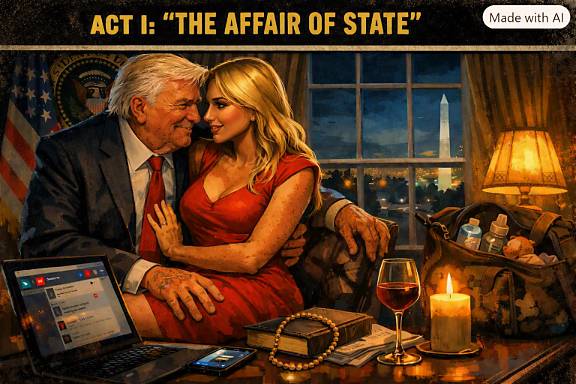
Inside the Oval Office, President Randall Crump — an 80-year old, self‑absorbed populist with a spray‑tan sheen — flirts with his “chief tweet adviser and diaper bag carrier,” Natalie Sharp, a zealous media aide who believes divine destiny runs through cable ratings. Their late‑night “strategy sessions” blur the line between strategy and pillow talk. “Natalie, this is a brilliant tweet to put on my Truth Social to the MAGA idiots who believe every word I say, ‘I live for you and everything I do is for you.’” “No, Mr. President, that’s not for the people. I wrote that just for you.”
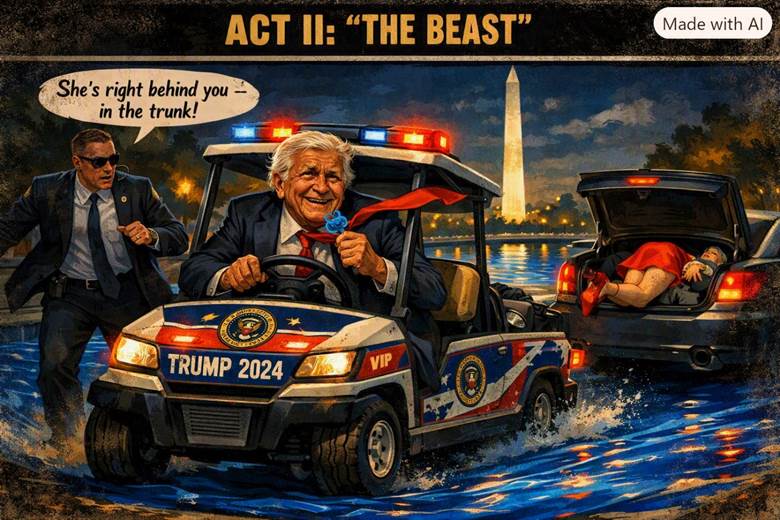
President Crump is ready to speed around the drained Reflective Pool in a suped-up golf cart to show off the “Flag-Blue” plastic liner that was installed by a campaign donor. “Wait, I need my Binkie. Where’s Natalie? “Don’t worry the Secret Service agent assures him, “She’s right behind you in the trunk of the Beast
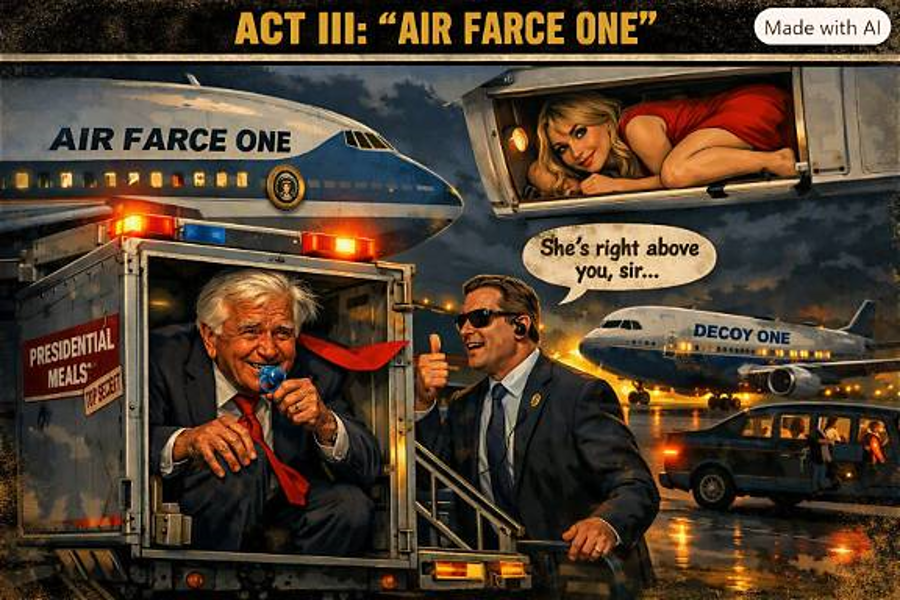
President Crump is informed that Iranians are threatening to shoot down Air Force One, so he pretends to board the plane but sneaks into a catering container to be secretly whisked to another plane. Meanwhile he doesn’t inform the press corps or his Cabinet members that they will be flying on the targeted Decoy plane.
President Crump is ready for take-off in his alternate plane, but says, “Wait. I need my Binkie. Where’s Natalie.
The Secret Service agent informs him, “She’s right above you sir. She stored herself in the overhead luggage compartment of the plane.”
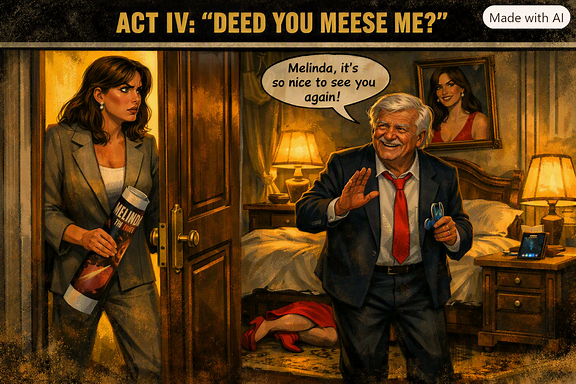
First Lady Melinda Crump returns from a promotion tour for her movie, Melinda: The Movie. She is appalled to find that her position of First Lady is being usurped by Natalie. Normally, she never goes near her husband’s bedroom, but she is upset and storms up to the room. It is locked. “Open up,” she demands.
“Quick Natalie, hide.” Crump screams and Natalie hides under the bed.
He opens the door. “Melinda, it is so nice to see you, again.”
“Save your lies for the MAGA morons who still believe them. Where is the woman I’ve been hearing so much about on the news?”
“Stormy Daniels?”
“No, not her, a new one.”
“Melinda, you know that I only have eyes for you.”
“Yes, but you’ve got hands for everyone else. Those tiny little hands of yours grab everything in sight.”
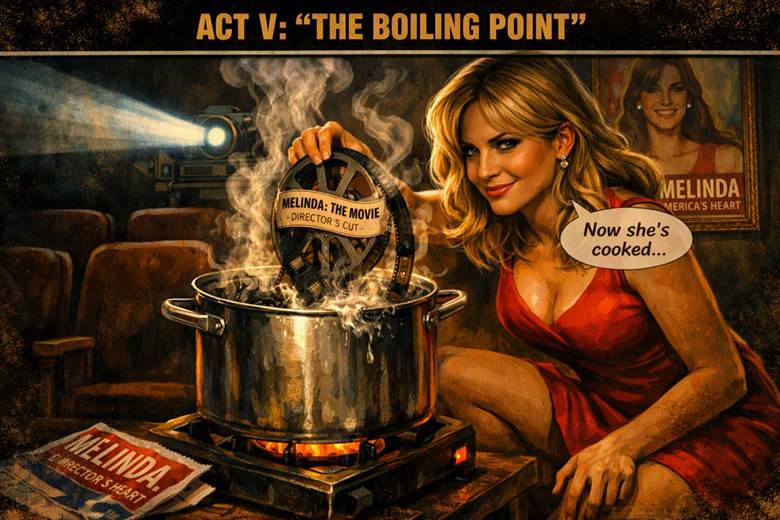
When Crump ghosts her for a photo‑op with First Lady Melinda, Natalie snaps. She sneaks into the White House screening room, finds the reel of Melinda: The Movie — a syrupy biopic commissioned for campaign propaganda — and boils the celluloid in a silver stockpot. Steam rises, the film curls, and Natalie whispers, “Now she’s cooked.”
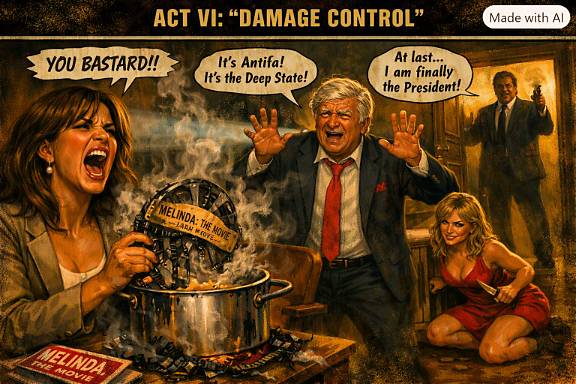
Melinda discovers the melted reel and screams so loudly it can be heard throughout the White House. Crump walks into the room and blames the deep state, Antifa, Communists, Venezuelan fishermen, Iranians, Jeff Shlepstein, and former President Boden. Melinda blames him and accuses him of cheating on her, which he denies. Suddenly Natalie crawls out of a kitchen cabinet with a long knife. President Crump and Melinda raise their hands, when Vice-President Couchpoker bursts in and shoots them all. “At last,” he cries, “I am finally the President.”
The End.
Peace and Love, and all of the above,
Earl

