I went to my Aunt Miriam’s funeral in Ohio last week. Naturally, it was a sad occasion, but it still had it’s lighter moments. That’s one of the benefits of the deceased being 91 and someone who we knew had lived a full life. My Aunt survived my Uncle George by 5 years, but in her final months she was losing her memory and fading quickly. So, while it is always sad to lose someone, it wasn’t a big surprise when she passed. So, the funeral, while solemn, felt more like a family reunion, only with less alcohol.
Decades ago, I realized that drinking and driving was a very dangerous combination, so, putting safety first, I gave up driving. Luckily for me, my brother Donald was driving to the funeral from his residence on Long Island, New York, and he agreed to stop in Lancaster on Sunday to pick me up. He even showed up with breakfast. What a good brother.
Most people just use GPS to get to their destination. My brother Donald also drives with a set of self-imposed rules. He likes order, predictability, and structure. I’m more loosey goosey. So, our road trip was a study in contrasts. He had everything planned out. I was in road trip mode, just ready to see what the road had in store for us. Donald’s girlfriend, Kathleen wanted to attend the service, but she had to work on Sunday. They worked out a plan. Donald would drive to Akron. When she got off work, Kathleen, ever the jet-setter, would fly to Akron with a short layover in Washington, D.C. Donald would pick her up at the Akron airport.
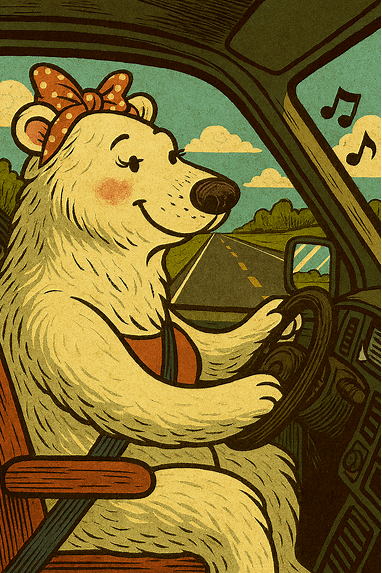
We got to Akron around 5 p.m. and Kathleen’s flight wouldn’t arrive until 9 p.m. I suggested we go to the hotel bar, where we could grab something to eat and watch football. Don agreed, but because he had to drive to the airport at 8:30 he would only have one drink. I, once again, thanked my lucky stars that I had made the right decision decades ago to quit driving, so I didn’t have to stop at just one drink. “Kathleen likes the room to be cool,” Don said. So, we cranked up the a/c before we headed to the bar. I’m not a big fan of air conditioning, but I knew that I would be able to stock up on “anti-freeze” at the bar, so I readily agreed to pre-chilling the room for her. Donald let me continue watching football when he went to pick up Kathleen. We entered the room, and I felt like I had walked into Superman’s Fortress of Solitude in the Arctic Circle. Donald showed no reaction. Kathleen loved it. I put a jacket on and asked if we were expecting a family of penguins to drop by for a visit. I remembered that Donald and Kathleen met while both of them were on vacation in Iceland in January of 2024. Iceland in January. She must really love the cold. I wondered if she might be part polar bear. Anyway, we turned in early and I slept well under a thick layer of sheets, blankets, and bedspreads.
We got up early, had breakfast, and headed off to the funeral. There we met all our Ohio cousins. The wake was held in the entrance of the church. After an hour, everyone moved into the church for the funeral mass. I found a spot close to an exit, just in case the walls couldn’t withstand my Atheistic vibrations. After the service, we all went across the street for a funeral luncheon, and then it was time to get back on the road home.
On the return trip, Donald drove the first 60 miles and made two wrong turns because the GPS wasn’t prepared for the Ohio traffic circles. We all laughed the first time, when the GPS immediately responded with, “Make the first U-turn.” After we came out of the wrong section of the next traffic circle, however, only Kathleen and I laughed when the GPS again responded with “Make the first U-turn.” We teased Donald. One of his rules of the road is don’t poke the driver, and we were both poking him quite a bit, when he responded with something that upset Kathleen. I suggested he apologize. Instead, he executed a silent transfer of power: He stopped the car, climbed into the back seat, and handed her the keys. He was trying hard to give us the silent treatment, but Kathleen and I just began singing along to the oldies on the radio, and we used some serendipitous lyrics to lob good-natured jabs at Donald, “Come on you people now. Smile on your BROTHER. Everybody get together. Got to love one another right now.”
Another of Donald’s rules on a road trip is that we stop every two hours for a restroom break.
Kathleen was driving, and we were approaching one of the rest areas, which are spaced about 40 miles apart on the Turnpike. This was supposed to be our scheduled stop. Kathleen, looked at me and quietly asked me if I had to go to the bathroom. I shook my head “No.” “You?” I asked. She shook her head, no.
“Ooops! I missed the entrance ramp for the rest stop,” she said as we cruised by the rest station. Donald had to hold his water for 40 more miles. The power had shifted, and that ended the silent treatment. Peace was quickly restored. We pulled into the next rest stop, and everyone was relieved in more ways than just number one. We got back in the car, and all three of us were now singing along to every song on the radio, even when we went through tunnels and the satellite radio cut out. We were back in perfect harmony, even if we might have sounded more like the Karaoke crew from hell. The next thing you know, we were in Lancaster, and we stopped at a diner to get something to eat, and laugh about “what a long, strange trip it was.”
This trip had rules, yes. But it also had rhythm. And quite a bit of laughter. It had the kind of shared absurdity that turns a trip into a fond memory. Donald may live by rules, but Kathleen and I didn’t always follow them—and together, that made the road a little warmer. Even when the AC said otherwise.
They were brown men. Poor men. Fishermen, smugglers, fathers. Not cartel kings. Not warlords. Just convenient bodies in American Power theater.
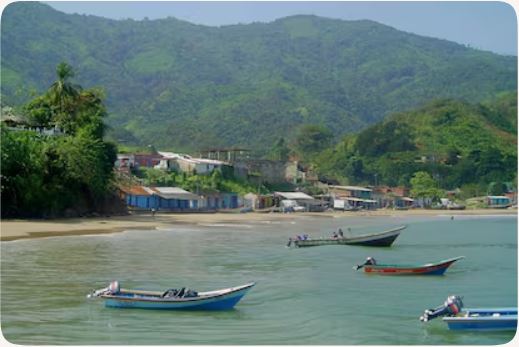
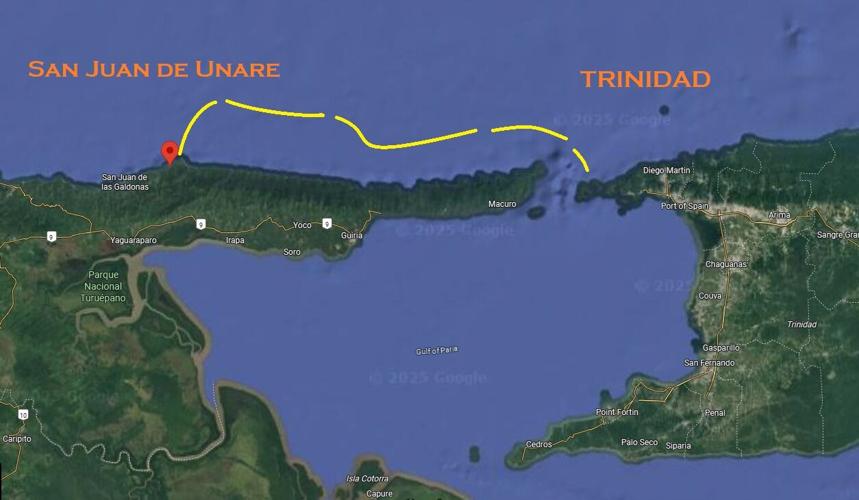
San Juan de Unare was never meant to be a headline. It was a village of salt and sun, where boats bore names like Esperanza and La Fe, and the sea was both cradle and coffin. The men rose before dawn to fish. The women salted the catch and mended the nets. Children learned the tides before they learned their letters.
But poverty is a tide that doesn’t recede. And when the Venezuelan state abandoned the coast, others arrived—armed, organized, and hungry for routes. The village became a corridor. The boats once used for snapper and sardines now ferried cocaine and migrants. The fishermen didn’t become criminals overnight. They became desperate. And desperation, in the eyes of empire, is indistinguishable from guilt.
So when the Trump regime needed a distraction— a flex, a flourish, a headline—A real live version of Hollywood’s Wag the Dog, they reached across borders, bypassed international law, and turned a forgotten village into a theater of war.
Eleven lives extinguished in a flash, not for what they carried, but for what they represented— a convenient target, a distraction, a spectacle.
The strike wasn’t surgical. It was symbolic. A criminal president, facing scrutiny and scandal, chose brown bodies for his stage. Not in Manhattan. Not in Mar-a-Lago. But in a village no one had heard of, and few will remember.
San Juan de Unare is now a ghost with a pulse. The sea still laps the shore. The nets still hang. But the air is heavy—with grief, with fear, with the knowledge that the world only noticed them when it was time to kill.
This wasn’t justice. It was theater. And the poor brown men of San Juan de Unare were just props.
Back in the day, our basement wasn’t just a hangout—it was a teenage Shangri-La with vinyl grooves, checkerboard tiles, and just enough parental distance to feel like we were living on the edge. My brother and I would head down there with our friends to spin records, swap stories, and—unbeknownst to each other—conduct covert operations involving Dad’s liquor cabinet.
We weren’t throwing wild parties or reenacting scenes from Animal House. No, our rebellion was more… artisanal. A sip here, a splash there. Just enough to feel like we were pulling off a heist worthy of a Saturday matinee. And we had a system: mark the bottle with a crayon, take your sample, top it off with water, and erase the evidence like a magician with a disappearing act. Genius, right?
Except we were both doing it. Independently and repeatedly. By the time Dad poured himself a highball, it had the alcohol level of a snowball. His bourbon gradually became as colorless as gin with less kick than a Shirley Temple.
Our parents were highball aficionados—elegant glassware, fizzy mixers, and drinks so gentle they could’ve been served at a toddler’s tea party. The real excitement came during neighborhood card nights. At our house, the games were quiet, strategic, and sober—unless someone brought beer, which we hadn’t yet figured out how to misappropriate. But when the party moved down the block to a neighbor’s house — That’s when the cards flew, the rules bent, and the laughter spilled into the street like a runaway keg. We could hear them singing from a block away, and we knew: those folks weren’t sipping watered-down whiskey.
It wasn’t until last month, during a visit with my brother, that we finally compared notes about our teenage years. We were mildly surprised that we’d been running parallel bootlegging operations like two competing moonshiners. We laughed until our ribs hurt—not just at the memory, but at the sheer absurdity of thinking we’d fooled anyone. Dad probably knew. Maybe he even preferred his bourbon with a splash of sibling sabotage and a twist of teenage ingenuity. Maybe he was glad nobody got rip-roaring drunk in our house.
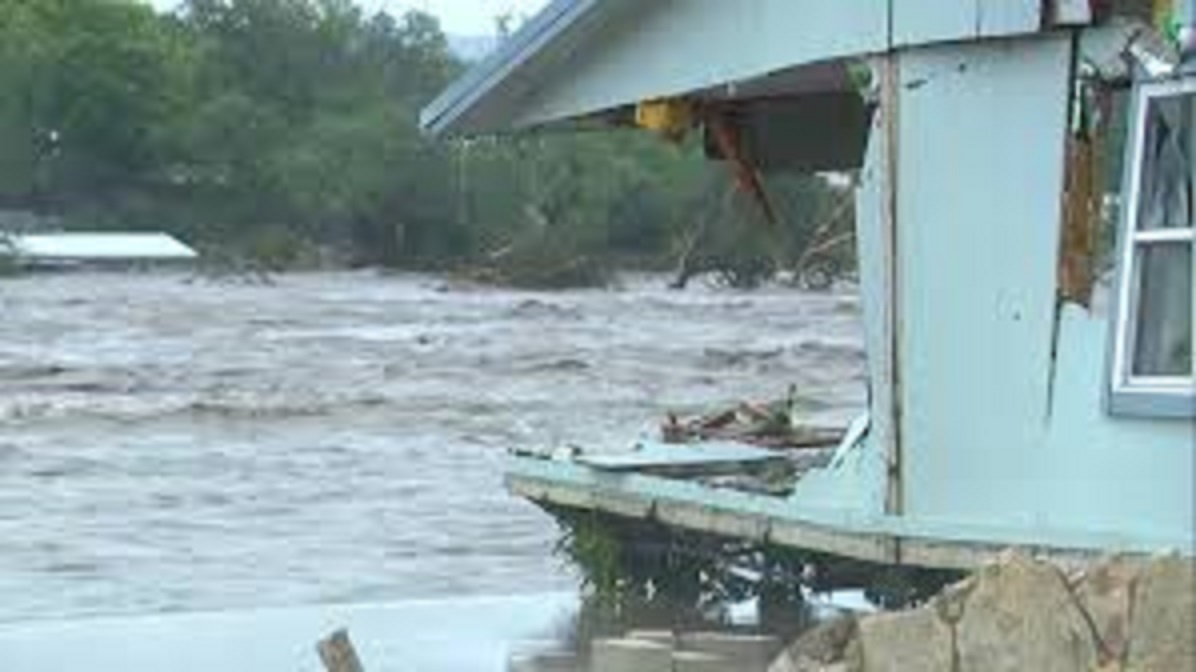
When the Guadalupe River swallowed Camp Mystic whole, it wasn’t just water that filled the cabins. It was silence. A Christian summer camp for girls, nestled in Texas Hill Country, where faith was supposed to be a shield—and where 27 young lives were lost while sleeping. The sirens never came. Because Kerr County didn’t have them.
This wasn’t an act of God. It was an act of neglect.
This camp, this tragedy, didn’t happen in a marginalized zip code. The girls were mostly white. Likely the daughters of conservative parents who voted for the very administration that defunded meteorologists, weakened FEMA, and redirected public safety funds toward border detention projects with crocodilian nicknames.
It’s cruel irony. But it’s also consequence.
When a government dismisses science, cuts funding to NOAA, lays off weather experts, and calls climate change a hoax, nature doesn’t discriminate. It strikes, and when our infrastructure is hollowed out, even the privileged suffer. The floodwaters in Kerr County didn’t pause to ask political affiliation. But the policies that failed to prevent this disaster were built by one.
Meanwhile, in Chicago, flash floods inundated Black and Latino neighborhoods with decades-old drainage systems. In New Mexico, monsoons cascaded over wildfire burn scars, catching children in rivers that weren’t supposed to rise. The message? Climate doesn’t care who you vote for. But our response does.
Republican lawmakers continue to fight climate legislation while oil lobbyists write their fundraising checks. Denial isn’t just ideological—it’s lethal. Especially for the young, the poor, and yes, even for those who believe they’re protected by faith or legacy.
We’re all up the creek. But only some of us were handed a paddle.
I debated with myself whether I should write this article or not. It’s not a pleasant subject, but it does contain a valuable lesson, so I’m going to write it. I’ll try not to be too crude and I’ll keep it as brief as possible.
Several months ago I watched a show about Fascism under Mussolini. He would round up his enemies and opponents and have them marched across town. Then he would make them drink a cup of castor bean oil and march them back across town. Invariable the laxative effect of the castor oil would make them soil their pants as they walked, and they had to walk all the way across town like that. I got two things out of this video. One, dictators are sadistic and cruel. Two, Castor Bean Oil is a powerful laxative.
Since I occasionally suffer from constipation. I decided to order a bottle of it. To qualify for free shipping, I ordered 2 bottles and a rechargeable portable hand-held mini bidet. I figured the two products could both come in handy if I ever needed them.
I realized today that I hadn’t had a bowel movement in days. I was worried and I decided it was finally time to try the Castor Bean Oil treatment. I took a big gulp of it and 15 minutes later the blockage was easily eliminated without the moaning and groaning, grunting, and rapid breathing that usually accompany multi-day bowel movements. Mission Accomplished.
But, similar to George W. Bush’s mission, it was not yet complete. I had to hover in or near the bathroom for the next five hours in what I can only describe as a Colonoscopy prep without the green Gatorade.
So, what did I learn? First, I learned that the next time I am in this situation, start with just a half-teaspoon of Castor Bean oil, and secondly, I learned to make sure to charge the batteries of the hand-held portable bidet, before taking the Castor Bean Oil.
Back in January, I decided that the hip pain I was feeling made the pain of a hip replacement worth my while. So, I told the VA doctor and started on the road to the surgery. What a long, strange trip it’s been.
First I had to meet with the Orthopedics department to get their assessment of my hip. They set up an appointment for x rays. The x-rays confirmed that a hip replacement was in order. But now I had to get confirmation from my cardiologist and dentist that I was cleared for surgery. I expected my cardiologist to tell me that I needed more stents or some other work done, since I’ve be sluggish for months. Nope. He sent me for two different tests and the results came back, okay. Not perfect, but okay for surgery.
Then I hit my first roadblock. I called my dentist who I haven’t seen in years and left a message. He didn’t call back. So, the following week, I left another message and again he didn’t call back. The following week I left another message and the next day I got a call from the office. They would only see me if I got a referral from another dentist. WTF. I decided to find another dentist. When I go to the VA Clinic I pass by a dental office. The bus there doesn’t run often, but the office is near the bus stop. I called, and I asked if they were accepting new patients.
There was a pause, where the person on the other end of the line wanted to say, “Duh!” but she controlled herself and just said, “Of course.” We set up an appointment.
I thought this would be easy as I didn’t have any pain, though I did have one broken tooth. The X-rays revealed that I needed more work than I thought. So, I made another appointment to get started. Now, it was time to catch the bus home. That bus stop wasn’t far, but it was on the other side of what is basically a busy highway. It was at least 10 minutes before I saw a big gap and made my move. Here, you should remember that I have a bad hip. I made it half-way across, and realized that I would have to wait for another break in traffic to complete the crossing. So, I stood in the middle of the highway with cars whizzing by on both sides waiting for a break in traffic. After about 5 minutes, a lady came out from the car repair business on the same side of the street as the dentist. “What the hell are you doing? You can’t stand in the middle of the highway.”
I yelled back that I was just trying to get to the bus stop. She shook her head, and mumbled something I didn’t understand. Finally, I saw my break and I made it to the bus stop unscathed.
After my dental appointment the following week, I decided to just catch the bus at the same stop where I got off, ride to the end of the line, stay on the bus, and ride home, instead of trying to cross the highway again. That worked. It took much longer, but it worked.
After my appointment yesterday, I realized that I had about an hour and 20 minutes before the bus would arrive. This time I brought my walker, not just a cane, so, figuring that I was now a tiny bit faster, I decided to cross the highway again. I had plenty of time before the bus would arrive, so I waited until I was sure that I had enough time to make it all the way across. It was about 15 minutes before I saw my opportunity, and I took it. I made it.
Here’s where I should mention that the bus stop doesn’t look like a bus stop. The weeds on the side of the road have overgrown the bus stop sign, and there is no shelter, marking, or anything else that would let you know that it is a bus stop, except that it is across the street from the bus stop heading in the other direction. I had my walker, so I sat down on the shoulder of the road to wait.
About 20 minutes later a cop car went by going the other direction. He waited until it was safe, made a u-turn, and pulled up a few feet behind me, lights flashing. He got out and asked me if I was okay and what the heck was I doing. I told him I was waiting for the bus. He didn’t see any bus stop sign, so I told him that the weeds were blocking it. He checked. I mentioned that I wouldn’t object if he put me in the back of his patrol car and drove me into town. He said that was against the rules, wished me luck, and drove off.
So, I went back to patiently waiting for the bus that I knew was still more than 45 minutes away. It hadn’t even passed by in the other direction, yet. Then, a woman came out of the dental office and yelled something at me. I couldn’t hear what she was saying over the traffic noise. She waited for a break in traffic and ran over to me. Was I okay? What was I doing? Once again, I explained that I was just waiting for the bus. She told me that she was waiting in the dental office with her teenage son, when she saw me through the window, she was worried that I was a dementia patient or something. I was slurring my words. I assured her that I was fine. I was just going home after a trip to the same dentist, and the reason I was talking funny was because the Novocain hadn’t worn off yet.
She asked where I lived and offered to give me a ride home. That was better than a visit from the Tooth Fairy. We crossed the highway together, with her holding out her hand to slow down the traffic. We got to her car. She called her son to tell him that she would be right back. Melisa and I headed for my house.
Along the way, we chatted and realized that we both had moved from other places to Lancaster. She was from Baltimore. It was an interesting conversation, and she told me to take her phone number in case I ever needed a ride. We realized that we both like to play Scrabble, so we made plans to get together for a Scrabble game. So, I wound up making a new friendship, and now have another Scrabble player to hang out with occasionally.
I have another Dental appointment on Thursday. I wonder if I should bring my Scrabble board.
Today, it was raining as I went to the V.A. hospital in Lebanon, PA, and it reminded me of something that happened years ago in a city far, far away. I was reminded that while the destination is important, the journey can be just as important.
I was working for Publishers’ Phototype, Inc. in East Rutherford, New Jersey. My friend, Robert P. McAuley got me the job. (So, check out his books on Amazon. Though he is probably more well known for his contributions to Aviation Magazine, he’s written tons of terrific books about time travel in his 1800 Club series.)
Anyhow, the job was like a dream come true. P.P.I. was the middleman between almost every magazine and the printer. Middleman is grave misnomer, though, as most of the staff were female. So, after years in the military and working as a Frameman for the N.Y. Telephone Company, it was a pleasant change of routine to be surrounded by intelligent, interesting, sexy females. I did, however, manage to keep in on a professional level (no matter how much I tried not to).
I worked in a division known as CBS magazines. Working directly with the editors, we prepared every page of Boating, Popular Photography, Car & Driver, and a few other magazines to go to the printer. I loved it, but then something happened. I got transferred to the 4-12 shift. I don’t mind working odd shifts, but the bus home to Jersey City stopped running at 11 p.m.
So, my first night on the new shift, I had to walk home 7 miles. Two of those miles were on a stretch of Route 3 that goes over the Hackensack River. There was no pedestrian lane. I walked on a narrow shoulder of the road just about a foot wide. I was scared, and all the honking didn’t help. Then I got to four miles of Paterson Plank Road that was mainly occupied by junk yards and the junkyard dogs who guarded them. The barking was constant and scary.
The last mile was residential as I walked home fearlessly through my neighborhood, and I was pretty calm by the time I got home. I knew that I had to do something to improve the first six miles, though. I invested in a reflective vest, a flashlight that was the size of a war club, and a Sony Walkman cassette player.
So, the next afternoon, I went to work with a knapsack full of snacks, cold-packed beverages, vest, flashlight, Walkman, and my favorite cassette tapes. Since I was now more visible from a distance, the honking was greatly reduced as I walked over the bridge. The first two miles of the journey was a great improvement over the previous night.
On the four deserted miles of Paterson Plank Road, I cranked up the volume to 10, and roadside Karaoke was born. I couldn’t even hear the barking dogs, and they truly were, “Out of sight, out of mind” as I sang along to the tape.
I sang quietly on the last mile through residential streets, but I did have one more song to belt out. As I got within a block of my home, I sang You’ll Never Walk Alone, the song that Jerry Lewis always sang at the end of one of his telethons for “Jerry’s Kids.”
It was a 90-minute journey and I made special cassette tapes that made that journey the best part of my night. After I left that company, the thing I missed the most was that 90-minute walk home.
Today, I went to an appointment at the V.A. Hospital in Lebanon, PA. I don’t drive, but the V.A. provided me with a free Uber ride to and from the appointment. On the way back I saw that there was a paperback book in the seat pocket in front of me, “From Darkness Into Light.” I pulled it out and noticed that the author’s picture looked very similar to the one I saw in the rear-view mirror. I questioned him about it, and he told me all about his journey from troubled youth to respectable author. Then he performed an epic poem that he wrote one time while driving 300-plus miles from Pittsburgh to Philadelphia. It was incredible. I’m slightly deaf and the road noise was making it hard to hear, so I just kept saying “Louder” and he really got into the performance, keeping one eye on the road and the other on his spellbound audience in the rear-view mirror. Before I knew it, the sun was out, and I was home. Sometimes the journey is just as much fun as the destination.
Back in 1962, the British had a TV show called, That Was the Week that Was, which starred David Frost, who also starred in the American spin-off of the show in 1964. It satirized the news of the week and influenced later comedic shows like Weekend Update on Saturday Night Live. It was a forerunner of fake-news programs like The Daily Show.
Well, now it’s December and this long year is finally about to end, so I thought I’d take a look back at 2024, and oh what a year it was. The U.S. Presidential election was held in 2024, but I’m going to ignore that here. I promised some friends that I would lay off politics for the rest of December, as an early Christmas present to them.
Politics may have dominated the news in 2024, but, fortunately for me, it wasn’t the only thing. Artificial Intelligence (AI) was the most talked about development in computing. Like politics, though, it also had people divided. AI had strong supporters who see it as a tool on par with the first use of fire and the invention of the wheel. It also had strong detractors who saw it as a weapon that would eventually eliminate humans from the planet, or make us slaves or pets to our robot overlords.
Originally, most AI programs available to the public just dealt with text. You could type a prompt into your computer and the AI would type back a response. Sometimes it was very accurate and at other times it was caught “hallucinating” an answer that it made up out of thin air, with no actual connection to reality (kinda like Fox News). Ooops, it’s not easy for me to go off politics cold turkey.
AI now gives us images, such as the one above, where I asked AI to show Old Man 2024 staggering at the finish line on New Year’s Day. I had to reword my description several times before the AI finally created an Old Man 2024 who didn’t look and dress like Santa Claus.
My AI photo problem was nothing compared to the Pandora’s Box of fake images that were generated by AI in 2024. Every scandal seemed to find itself accompanied by dozens of fake images that supposedly “proved” the false claims. I found it odd that AI’s photo creator doesn’t seem sure about the number of fingers people are supposed to have. In addition to everything else, AI’s training input must have included hundreds of thousands of pictures from cartoons.
Space was also a big tech topic of 2024, with various companies offering customers a taste of what it was like to be an astronaut by taking them on short flights into upper space. Elon Musk even started touting journeys to Mars. I can’t wait for the day when science can send Elon to Mars. (Ooops, I’m slipping.)
Combining big tech with AI, the concept of self-driving cars was another big topic in 2024. As usual, it had its proponents and detractors. The proponents celebrated its convenience. The detractors screamed that self-driving cars were not 100% perfected and could lead to traffic fatalities. Of course, the proponents showed data that even if a few cars did kill a few people, they were still a whole lot safer than human drivers, especially ones who had been drinking. I wondered if self-driving car companies would be held responsible for vehicular deaths since gun manufacturers are not responsible for gun deaths. I’m sure that Elon Musk’s new Department of Government Efficiency will figure that one out.
One item that made the news this year in Europe, but was ignored by American media was the reverse art theft at a German art museum. The “reverse museum heist” took place at the Pinakothek der Moderne in Munich, Germany. An employee, who was also an aspiring artist, decided to hang one of his own paintings in the museum’s modern art collection.
He managed to do this unnoticed because he was carrying tools for an installation project and had access to the gallery outside of opening hours. The painting, which was about 45 inches wide and 25 inches tall, hung on the wall for several hours before museum staff discovered it.
The museum staff decided to leave the painting up until closing time before taking it down. The employee was later fired and banned from visiting the museum. The German police are investigating him on charges of property damage because he drilled two small holes in the wall to hang his painting.
In January of this year, the airlines were also in the news, when an Alaska Airlines flight experienced a door flying off mid-flight. Remember that? I’ll bet they do. For the rest of their lives, too.
As this year comes to an end, the manhunt for the man who murdered an insurance company CEO, seems also to be ending with the apprehension of Luigi Mangione in a MacDonalds restaurant in Altoona, PA. One of the employees recognized him from his photo and called the cops. McDonalds, if the e-coli doesn’t get you, our employees will.
As usual, even this case had people on both sides of the fence. It seemed that people who had previous problems with their insurance companies saw a silver lining in the enormous black cloud. They (secretly, if not openly) hoped that the murder might lead to insurance companies lowering their rates and denying fewer claims. We really do need universal health care in the U.S. (Ooops, I don’t want to slip into politics again. So, I’ll let the late great Barry White do it for me.)
What intrigued me most about the CEO murder case, though, was the fact that a “ghost gun” was used. A “ghost gun” is a weapon that you can make at home using a 3-D printer. “Alexa, make me an untraceable gun.”
We’re worried about what AI can do…Heck, anything bad AI can do, we can already do better (or should that be worser?) I wonder how Congress will react to a do-it-yourself gun. Will they spring into action and outlaw the machine code that enables a 3-D printer to make such a weapon, or just blame “Tik Tok,” social media, and video games? I bet they just sit on their thumbs until somebody actually prints out an “assault ghost gun” at home and takes it to school, or to the Capital. (Ooops, I can’t seem to avoid that slippery slope into Politics.)
Don’t get me wrong. All the gun news wasn’t bad this year, though. We did all get to enjoy clip after clip of Australia’s Olympic answer to the Jamaican Bobsled Team, Rachael “Raygun” Gunn doing her now world-famous break-dancing routine. Here’s one more clip for you. I got a kick out of this short video that Terry Moore compiled for YouTube.
So, that was just a bit of the year that was. Last year, I didn’t make any New Year’s Resolutions, but this year I do have one. Stop making promises to not write about Politics and You-know-who, the orange guy, because that appears to be a harder resolution for me to keep than my usual failed-resolution of trying to lose 25 pounds.
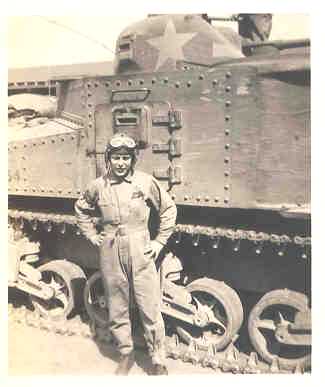
For my Dad’s Birthday this year, I would like to retell the story of the last road trip I went on with my father. On Father’s Day, I told the tale of our trip to his Army reunion in Indianapolis. This is the story about our trip to his Army reunion in Washington, D.C. which took place in October of 2006. It was reprinted on the Third Armored Division’s website, along with all the poems he wrote during WW II.
This year, for the second year in a row, I went with my dad to his Spearhead 3rd Armored Division, Army Reunion. Last year we went to Indianapolis and had a lighthearted romp in the nation’s heartland. This year the reunion was held in the nation’s capital. So Dad and I spent the last five days together in Washington, D.C. This year it was murder.
Fortunately, the murder was only on the stage in Shear Madness, a delightful murder mystery play we attended on Saturday night at the Kennedy Center for the Performing Arts. The audience, contrary to what I expected, consisted not of Washington elite, but of the group of WW II Vets I was with, and two large groups of high-school students. The students thoroughly enjoyed the interactive portion of the show where they helped “solve” the murder, and the seniors thoroughly enjoyed watching the youngsters have fun. Everyone got a kick out of how the actors worked the 3rd Armored Division and both High School names into the plot. I liked the rockin’ soundtrack, so I’m sure my father didn’t. At least now, he’s no longer yelling for the damn music to be turned down, like he used to when I was a teenager. Nowadays, he’s hi-tech. With the flick of one switch, he can turn both his hearing aids off.
That morning, before the show, we had taken the Monument Tour. Our guide was Kenny. The first stop on the tour was the Marine Memorial, with that famous sculpture of the Servicemen raising the flag on Iwo Jima. The monument is inscribed with the years and innumerable battles the marines have fought all over the world since 1775. This list went on and on and on. Back on the bus, I turned to my father and said, “I knew that the Navy and the Marines didn’t get along, but it looks like Marines don’t get along with anyone.”
We spent the whole week the same way, sharing memories at the memorials and trading barbs on the bus.
The next stop was the Vietnam Memorial. Upon arrival, I announced with pride to the bus of grisly veterans that “This was my war – the one I fought to get out of.”
Thousands of names are carved in the marble chronologically representing each one of the killed and M.I.A. from the Vietnam conflict. The morning was rainy and bleak, and the memorial looked bleak, too. To me, it looked like the headstone for a mass grave. It was kind of creepy. I noticed that John Anderson was the first name scratched into the stone. I was going to go to the far end of the monument to see who the last name was when I thought of the poem by John Donne. “Ask not for whom the bell tolls. It tolls for thee.” Then I noticed a woman with a little slip of paper making one of those pencil shading pictures of the name etched in stone below where she had placed the paper. The two volunteers who had helped her find the section of the monument where the name she sought was carved, stood quietly behind her as she made the shading. When she was finished she got up and hugged both of them. As the woman walked away, there were tears in her eyes, but she was smiling too, and the same thing was going on with the two volunteers. Even though this had to be at least the thousandth time they had helped somebody find a name on the wall, they were still touched by every one of them. I was touched, too.
There were no assigned seats on any of the tour buses, but people invariably would return to the same exact seat after every memorial stop. On the Arlington Cemetery tour I boarded very late. The tour began just after breakfast one morning and my father figured I had probably gone back to bed. He knows I’m not fond of cemeteries, so he got on the bus by himself. By the time I showed up, somebody was already sitting next to my father, so I took an empty seat in the back. After the first stop on the tour, I switched to the seat next to my father. This shift was noticed by one of the ladies, who, just for conversation sake, asked me why I decided to switch seats.”
“Rosa Parks says I don’t have to sit in the back of the bus, anymore” I joked, knowing from previous experience that my father would use the opportunity to talk about the two African-American boys my brother Kevin adopted.
“That’s right,” my Dad said as he proudly pulled out his wallet to show her pictures of his two “colored” grandchildren. “We be black now, so we can sit anyplace on the bus that we want.”
“They’re beautiful children,” the lady said smiling approvingly at the pictures, “and I don’t see any color at all.”
“I know how it is,” Dad replied. “My eyes aren’t so good anymore, either.”
I’m not sure if she knew he was joking.
Shelley the Guide on that tour was super. She was more than super. She was supercalifragilisticexpialidocious. Many Washington Tour Guides resemble Mary Poppins with their brightly colored umbrellas leading a pack of tourists around. Whenever it was time to get back on the tour bus, Shelley and her big yellow umbrella would suddenly appear. Washington Tour-Group guides must have to work extra hard to keep track of everybody on rainy days, when everyone has an umbrella.
Our drivers on a couple of the bus tours we took were two black guys named Roscoe and Rodney. I’m not making that up. It was straight out of central casting. I kept asking them to please drive by Dupont Circle, which is mentioned in one of my favorite movies, The American President. They did their best to ignore me.
Shelley couldn’t ignore us though. It was her job to work the crowd. One of the things Shelley liked to do was test our knowledge of Washington, D.C. trivia What my dad and I liked to do was test her patience.
“On your right is The White House. Can anyone tell me who is the only U.S. President who never lived there?”
“Al Gore,” I shouted.
We were like Charlie Weaver and Paul Lynd on the old Hollywood Squares TV Show. Even if we knew the correct answer to one of Shelley’s trivia questions, we wouldn’t answer until we could first come up with a joke answer.
One part of the FDR memorial was a just a pile of great big rocks. I asked Shelley if that was the Marriage Memorial.
“Washington D.C.,” Shelley said, “was built on a swamp and occasionally we have had some flooding. Does anyone know the elevation of Washington D.C.?”
“Lower than pond scum.”
On the right is the Pentagon. Donald Rumsfeld has his office here.
“Stop the bus, and give me a rock,” my Dad yelled out.
On Monday, our tour stopped for lunch at the Pentagon Fashion Center. How’s that for an oxymoron? Pentagon Fashion. Even more interesting was one of the t-shirts they were selling in this mall, just a stone’s throw from the Pentagon. It said:
Tank of Gas: $100
Prescription Refill: $500
Iraq War: $300,000,000,000
New President in 2008: Priceless.
I also found it amusing that each famous place on the tour seemed linked to an equally infamous one.
“On the left is the Jefferson Memorial. On the right is the Tidal Basin where in the 1970’s House power-broker Wilbur Mills was caught cavorting with Fanne Foxe, the Argentine Firecracker.”
There are memorials everywhere you go. While we were there, construction was just finishing up on The Air Force Memorial, which we could see clearly from our hotel window. There must have been at least 50 different Memorials in a town that’s notorious for people who can never, ever, remember anything, especially if they’re under oath.
Many things in Washington are etched in stone, and I don’t mean that figuratively. Unlike New York, where the words of the prophets are written on subway walls, in Washington they’re etched in stone all over the place. The most brilliant statements made by some of the greatest leaders the country ever had are carved into the walls, where you can not only see them but touch them. It’s just a shame that only the tourists are reading them.
On one tour, I learned that Smithson was an English metallurgist who made a fortune on zinc oxide or something like that. He wanted a title and a castle, but because he was illegitimate he wasn’t able to marry a woman of title in England. To spite them, he gave his entire fortune to America, which was how the Smithsonian Museum began. The architect designed one of the Smithsonian buildings to look like a castle in his honor.
Extraordinary coincidence #1. On the same weekend, in the same hotel, having their reunion was the airborne squadron that my father claims accidentally strafed the 3rd Armored Division when they broke through into Germany, because they didn’t think there could possibly be any Americans in Germany, yet. The Army denies that this ever happened. I believe my father.
At the men’s luncheon, we watched a German version of the 3rd Armored Division’s Battle of Cologne. I couldn’t help but think that there probably wasn’t an English version of the film because there simply wasn’t enough profit in the project for an American company to make the movie.
On Saturday, the tour stopped at Union Station for lunch. I was in the Mall and looking all around., because I couldn’t believe that there actually was a train station in America that didn’t have a McDonald’s, Burger King, Wendy’s, or KFC. There must be a secret war on Transfats going on in Washington.
“Did you lose something?” an inquisitive cop said to me, as he saw my eyes gazing around the mall.
“Well, my dad wandered off!” I told him.
“What’s he like?” the cop asked.
“Bourbon, playing cards, and dancing,” I said, “but don’t help me look for him; I’m actually hiding.”
Whenever we asked Dad the question, “Where should I sit?” my father always gave us the same riddle answer, “Sit where your mother sat when she got married.” It took us kids years to figure out that he just meant, sit on your ass; I don’t care where. When we went up the stairs at the Lincoln Memorial, he told me that when she was young, my mother had actually climbed up the statue of Lincoln in the chair and sat on his lap. I couldn’t help but think, “Gosh, my mother was actually young once, too. Wow!’ Seeing how high up Lincoln’s chair was, I also realized that to sit where my mother sat, she sometimes needed a boost. Don’t we all?
I offered to give my dad a boost if he wanted to “sit where my mother sat,” but he declined my generous offer.
At the FDR Memorial, Dad told me that my mother had once written to Eleanor Roosevelt inviting the First Lady to her graduation and Mrs. Roosevelt actually showed up.
My father and I really enjoyed one another’s company this past week, but I had an ace up my sleeve. Any time Dad busted my horns I said, “Be good, or we’re sending Kevin and his kids with you next year.”
At the World War II Memorial, the highlight of the tour for mostly everyone on the bus, the names of all the States of the Union are carved into sections of the stone. People get their pictures taken by the names of their state. My father heckled the people from the tiny states, whenever they would stand up to have their picture taken. “I didn’t know that they had any people in New Hampshire”
When our tour bus got to Arlington National Cemetery, we hopped on a trolley car that took us to all the high points of interest. Our tour guide Shelley had to take a back seat to an official Arlington Cemetery Tour Guide, so it was very informative, but he didn’t know the particulars about the group he was leading. I noticed that we went right past the 3rd Armored section of the Cemetery without a word mentioned about it.
At Arlington we went to the grave of John Kennedy, which is at the bottom of a hill. Robert E. Lee’s House was at the top of that hill, and, according to our guide, the view was spectacular. He said that when John Kennedy was standing on that hill, he had remarked to Jacqueline that he could spend eternity there. That’s why, after his death, the family had him buried there. Our tour guide assured us that he would take us up to the Lee House later in the tour. (But we drove by the back of the house, so we didn’t see any of the amazing view that Kennedy loved.)
I did pick up the best bargain of the tour at Arlington, though. There was a guy in the parking lot selling 10 photo postcards for a buck. I wondered how long a prison term you would get for sending the Arlington Cemetery postcard to President Bush or Dick Cheney and writing “Wish you were here” on it. I also wondered whose name I would forge on the postcard if I ever did that.
Shelley pointed out that the two Senate Office Buildings were officially named recently in an effort to get people to stop referring to them as the Old SOB and the New SOB.
“Is everyone ready to get back on the bus?” Shelley said.
“Hold up a minute, I’ve got to pay a visit to the Wang Memorial.”
Vic Damon, the 3rd Armored Division’s Webmaster, was one of the guest speakers at the final dinner. As a computer geek, he did not appear to be comfortable in the limelight of public speaking, but he sure knew a ton of facts about the 3rd Armored Division. Not only had he read the thousands of tales submitted to the website by hundreds of people, but he had personally researched and visited some of the places of interest. He even had pictures of the Connecticut house where the Division’s leader General Rose was born, and an aerial view of the spot where the beloved general was ambushed by the Germans and murdered. After years of posting all these stories on the Internet and visiting the archives, Vic couldn’t stop thinking of interesting stories related to the main story he was trying to tell. “One last thing, before I get back to my last thing” was an oft repeated line. I guarantee that if you go to the website, you will be fascinated by the thousands of articles, photos, and first-hand accounts of the war. (www.3AD.com)
General Rose’s great great nephew was there to speak about his great great uncle, and wound up very diplomatically giving the praise to the great great troops General Rose had to lead. That got a round of applause and numerous campaign pledges if the young man should ever want to run for public office.
I don’t want to mislead you. This may be a reunion for WW II veterans, but there are a lot of younger people there, too. Most of them are the sons and daughters who either join their parent or who come in honor of a deceased parent. The youngest person at this year’s convention was Jordan, the granddaughter of the 2006 Association President, Bill Heinz. Every one of us wished that we had her energy. She danced. She sang with the band. She led the group twice in the Pledge of Allegiance to the Flag. The little girl had so much energy, she made the Eveready Bunny look like a narcoleptic.
One last thing, before I get to my last thing.
There was another incident one night on the tour bus that I was going to omit from this story, but I think that you’re bound to hear it elsewhere, anyway so I might as well tell it here first.
On our way back from the Kennedy Center, an elderly woman went up to the driver and said, “I’ve just been molested!”
The driver felt that she must have fallen asleep and had a dream. So he told her to go back to her seat, and sit down.
A short time later, another old woman claimed that she was just molested. The driver knew he had a bus load of old whacko’s, but doubted if anyone could possibly be molesting these two old ladies?
About 10 minutes later, a third old lady went up and said that she too had been molested.
The bus driver decided that he’d had enough, and pulled into the first rest area. When he turned the lights on and stood up, there was an old man on his hands and knees crawling in the aisles.
“Hey pops, what are you doing down there? ” the bus driver demanded.
“I lost my toupee,” he said. “I thought I found it three different times, but every time I tried to grab it, it ran away!”
Another last thing before I get to my last thing. This one is serious.
After visiting the front lines in WW I, FDR said, “I have seen war. I have seen war on land and sea. I have seen blood running from the wounded. I have seen men coughing out their gassed lungs. I have seen the dead in the mud. I have seen cities destroyed. I have seen 200 limping, exhausted men come out of line – the survivors of a regiment of 1,000 that went forward 48 hours before. I have seen children starving. I have seen the agony of mothers and wives. I hate war.”
And yet he wound up leading the country through World War II.
One generation fights a war so that their children will not have to go to war, but war still does not skip a generation. The men and women in World War II were there because the “War to end all wars,” which their fathers fought, didn’t end all wars. Neither did their war end war. In the 60 years since World War II ended, we’ve had Korea, the Cold War, Vietnam, Persian Gulf 1 & 2, and Granada, to name a few. War gets passed along from generation to generation similar to child abuse. It’s a vicious cycle. Abuse breeds abuse. War breeds war.
I’d like to see one last memorial in Washington, D.C., The War Itself Memorial, a stone to commemorate the death of war. A monument to the day the world learned to live in peace. Make it out of wood, and we, the living, could all go carve our own names on it. Then, the sacrifices made by all the people in previous wars, will finally stop being in vain.
While I gazed on the rows and rows of Graves in Arlington Cemetery. I couldn’t help but think of these words by Bob Dylan:
How many times must a man look up Before he can see the sky? Yes, ‘n’ how many ears must one man have Before he can hear people cry? Yes, ‘n’ how many deaths will it take till he knows That too many people have died? The answer, my friend, is blowin’ in the wind, The answer is blowin’ in the wind.
By virtue of the power of the 3AD Webmaster, and by outliving so many of the other guys from World War II, my father has become the poet laureate of the 3rd Armored Division. The poems he wrote about his army career were collected into a book called Dogface Doggerel. Many of those poems are freely available for all to read on the aforementioned http://www.3AD.com website. After the past weekend, Dad too was nudged by the muse and he decided to put his feelings down in a poem. In extraordinary coincidence #2, it turns out that my father and I did something this week that we tried desperately not to do in the past. We agreed on something. He, too, felt that there should be another memorial in our nation’s capital. He actually felt we needed two more. Here is the poem he wrote to explain why.
WE NEED A NEW MEMORIAL
By Harold A. “HAP” Paulson
I just returned from our reunion, In Washington, D.C. It’s a city full of memorials, To honor folks like you and me.
Tribute is paid to the Air Force, The Seabees and the Marines. Vets from the war in Korea, Vietnam and other scenes.
We honor the women who went to war, And those who stayed behind, And the National cemetery at Arlington, Is a reminder for all mankind.
Please don’t think we have enough now, I’d like to add two more, To the paraplegics, the blind, the lame, All those invalids from the war.
I’d place one on the White House lawn, And one on Capitol Hill, A gruesome reminder to politicos Of those men still paying the bill.
It would have a wheelchair and crutches, A cane for those who are blind, A hospital bed from a burn unit And orthopedics of every kind.
I’d place one so that the PRESIDENT, When he arose each morn, Would get a reminder from it, Of the load these men have borne.
And the one up at the Capitol, As an inscription would have this plea, “The next time you declare war, Enlist yourselves, but don’t send me.”
—————————–
One more last thing, before I get to my last thing.
Studies have shown that more people die in the months just after their birthday than in the months just prior to their birthday. The hypothesis is that looking forward to something helps you keep living. As we get older, and birthdays are less anticipated, maybe we might live longer if we are looking forward to some other things, such as Reunions or Anniversaries (Well, maybe not in all cases, but in some). My dad was the only member of his 703rd Tank Destroyer Battalion healthy and young enough to make it to the Spearhead reunion, and I know it is because every year he looks forward to spending a few pleasant days with the gang who went slogging through hell with him. Now I have something great to look forward to, also, next year’s reunion in Louisville, Kentucky. I’m hoping to bring back some souvenirs from Fort Knox.
Peace and Love, and all of the above, Earl
P.S. We never did make it to another reunion, as Dad wasn’t healthy enough to make the trip, but he still managed to bring good times to the folks in the senior-citizen village in Florida where he spent his final years. Happy Birthday, Dad.
MY DAD AT REUNION TIME – A story I wrote for the 3rd Armored Division’s website.
By Earl Paulson
3AD.com Web Editor’s Note: This is a part-humorous, part-serious “must read” for anyone who knows Hap Paulson personally or knows him through his Army-related poetry. The author is the oldest son of Harold “Hap” Paulson (703rd TD Bn & 3AD Association Poet Laureate). In this true and often side-splitting story, Earl writes of events surrounding the trip he made with his father to the Association Reunion in July, 2005, in Indianapolis. This work first appeared in Earl’s personal newsletter called “Earl’s Wearld” and then in the Association Newsletter in Sept., 2005.
I’m back from my Dad’s 3rd Armored Division Army reunion. What a week! I hadn’t spent five straight days with my father since I was a teenager at Boy Scout Camp. It was quite an experience. I’m amazed that my mother lived with the man for more than fifty years and never once tried to kill him (or herself). My Dad has both a photographic memory for old jokes, and the uncanny ability to spot them in everyday life. He also has the gift of gab, though I’m not really sure that it would rightly be called a gift.
The night before we left for Indianapolis, I stayed with him at his summer house in Yaphank, NY. Reveille was at oh-three-thirty. That’s 3:30 A.M. to you civilians. My 86-year-old father, who can no longer read without his glasses and a magnifying glass, but still has his Florida driver’s license, drove us to Islip Airport in the middle of the night. Surprisingly, I wasn’t afraid, even though it was pitch black and pouring rain, because I couldn’t see either.
Somehow, we managed to get to the practically vacant airport long-term parking lot around 4:30 A.M. We sloshed the couple hundred feet to the terminal to find that they were only kidding us about having to be at the airport two hours before our 7 A.M. flight. The counter wasn’t even open yet — nor was the coffee shop.
My father is a very religious man. While we were waiting in the airline terminal, he took out his rosary beads to pray. All the security guards saw this. When we got to the security check we were both strip-searched before we could get on the plane. Despite this, the flight to Philadelphia did, still, leave on time and with us on board. The connecting flight in Philadelphia, though, was delayed, because of bad weather the day before. We had a three-hour layover in Philly. We took a shuttle bus from Terminal F, where we had landed, to Terminal C, where the connecting flight to Indianapolis would depart. After that, we still had two and a half hours to kill.
My dad loves pancakes, so we decided to find a MacDonald’s and have breakfast. Surely, there had to be a MacDonald’s in one of the food courts. There was. However, it was in terminal A! The original reason for me to take this trip was because my father’s heart condition made him feel uncomfortable about traveling alone. My Uncle Leon, who went with him to the reunion held in Europe last year, was going to go with him again this year, but he had heart problems of his own and was unable to make it this year.
So, aware of my father’s heart problem, but also aware that we had a lot of time to kill, I asked my Dad if he was up for a leisurely stroll to the McDonald’s in Terminal A. He told me that he goes to a gym regularly and does 20 minutes on the treadmill and 20 minutes on the stationary bike every day, so, he could handle it. It took us almost an hour, because it was so far away, but we made it there no problem. On the way back though, Dad tried to stop all of the golf carts taking handicapped people from one gate to another. He faked three heart attacks trying to get them to stop. Nobody stopped. They just rang their little bicycle-type bells at him and sped by.
When we eventually got back to terminal C, we still had plenty of time before our flight. So, he wandered about our waiting room asking everyone over 60 if they were going to Indianapolis for the 3rd Armored Division Reunion. Anybody who wasn’t going to the reunion was regaled with a brief history of the famed “Spearhead” Division. Finally, though, he found someone who was taking his grandson to the reunion. We all agree to share a cab from the airport. Well, the reunion committee had mentioned something in their newsletter about an arrangement being made with a local cab company for a special rate for those people attending the reunion. So, when we got to the terminal in Indianapolis, my father asked the girl at the limousine desk where we could find that cab service. “Right here,” she said without missing a beat, and I knew this girl was a natural for sales. The next thing I knew, the four of us are riding in a limousine capable of holding an entire Army platoon. I felt like a rock star.
We drove past the downtown section of Indianapolis, and then just kept going and going. The hotel seemed to be closer to Chicago than Indianapolis. Finally, we got to the hotel, and the old soldiers who were already there saw the size of the stretch limo and thought a General must be arriving. The Sheraton hotel we stayed in had two buildings. After checking in, we wandered up and down the 6th floor for an hour looking for room 643 before we found out it was in the other building. Hup-two-three-four. On we marched. We registered for all the events Dad wanted to attend, and then found ourselves with time on our hands before the first event. We had already done enough walking for the day, so we decided to visit the hotel pool and relax. We changed into our bathing suits and headed for the 3rd floor pool. When we got there, we found that it was closed for the day for routine maintenance. We got back on the elevator which was now full of Dad’s old Army buddies. “How’s the pool, Hap?” (That’s what my Dad’s friends call him. His initials are H.A.P., Harold A. Paulson.) “We got thrown out,” he tells everyone on the elevator, as he sees an opening to tell a joke. “The lifeguard caught my son peeing in the pool and threw us both out.” My son argued that it wasn’t fair because everyone occasionally pees in a pool, but the lifeguard said, “That may be true, but nobody else does it from the diving board.” Half of his buddies laughed at the joke. The other half gave me a strange look. Fortunately, we had reached our floor by then.
The week was filled with enjoyable social events, but there were also many serious moments, such as the memorial service for the many “Spearheaders” who died during World War II. A list of their names was posted, and I didn’t have time to count all of them, but I counted over 700 names in just one Infantry Regiment of the 3rd Armored Division. My father’s unit, the 703rd Tank Destroyers, had 71 guys killed in action. During the war, my father was lieutenant-in-charge of a platoon of 32 men. Those 32 guys were collectively awarded a total of 64 Purple Hearts, but only one died. He was Earl R. McCleary, and I was named after him, even though he was a poor illiterate sharecropper from Virginia who had absolutely nothing in common with my father other than that they had gone through Hell together. When I listened to the stories these guys told me during the week, I thought of that Billy Ray Cyrus song, “All Gave Some; Some Gave All.”
That’s enough of the serious moments. I have a lot more bloopers to share. Being guests of the hotel gave us privileges to use Bally’s Fitness Center next door. I decided to accompany my dad on his daily trips to the gym to do the cardiovascular routine prescribed by his doctor. Since I was there anyway, I figured I’d take advantage of the machines too, especially after I saw my reflection in the full-length mirrors on every wall. I knew from previous experience years ago how to use the Nautilus equipment, varying the weights to amounts that I could do without killing myself. I didn’t want to push myself too hard, even if I did need a good workout. After all, I was there to keep an eye on my dad’s health, not create problems with my own. I had never been on a treadmill before, but I figured I’d give it a try since walking is one thing I know I’m naturally good at.
So, while Dad did his stretching exercises, I headed for the fancy machine. It was computer operated, but there was more to it than just turning it on. I had to use a keyboard to enter all sorts of data. The machine calculated my target rate based upon factors such as my weight and age. My target rate was 106 heartbeats per minute. I pushed the button for an aerobic workout and started to walk. There were sensors in the machine that automatically monitor the heart rate, but you have to be wearing some kind of belt. I wasn’t wearing one of those devices, so the machine just assumed, as a starting point, a normal pulse around 60 or so and the conveyor belt started. When the machine did not detect any increase in my pulse rate, after so many seconds, it increased speed and inclination to help me reach my target heart rate. So, every testing cycle, the machine would continue to measure my pulse rate at the same 60 beats per minute and determine that I was not yet expending enough energy to produce an effective workout and automatically increased both speed and elevation. Before long I was on a machine going 90 degrees straight uphill at the speed of sound – that sound being my screaming as I did my best imitation of a Vonage “stupid things people do” commercial.
On Saturday my father and I headed for a post-workout dip in the pool, only to find that the pool was once again closed. This time some kid pooped in the pool. We got back on the elevator and another group of Army buddies suddenly became the audience my father needed for the chance to tell the same exact diving board joke another time. I pictured my Mom in Heaven rolling her eyes, shaking her head, and saying “That’s Harold.”
Since Dad and I now had time on our hands, we changed out of our bathing attire and went to the Spearhead hospitality room for a beer. Sure enough, as soon as we got there, Dad told all the guys who asked him why he wasn’t in the pool, that we had gotten thrown out because I took a dump from the diving board. (Author’s note. The pool was only 5 feet deep at the deepest end and didn’t even have a diving board.)
On our way home from the reunion, Dad was at the flight gate again praying his rosary. Now, London had just been hit by four terrorist attacks the day before. Everyone in the waiting room who was watching him was getting nervous. So, he was strip-searched again. This time they let me go, but I noticed that they kept an eye on me. Boarding the flight home on the Philadelphia-to-Islip leg, my father and I were sitting in the aisle across from one another. A pretty coed is sitting next to me. The seat next to my father is vacant. Then just before takeoff time a middle-aged woman comes up the aisle with a huge potted plant. Naturally, she has the window seat next to my father. Instantly, he starts making conversation with her. I turned to him and said, “I did what I could to make sure you stayed alive the last five days, but if you tell this lady I pooped in the hotel pool, I’m going to strangle you right here on this plane.







 earlthepearl137