A Baseball Story

My brother Kevin was not athletic as a child. Let me be more precise: the neighborhood girls got picked before him when we chose up teams for softball. And that’s not because the girls were that good. It was because Kevin threw not like a girl, but like an alien, someone who had absolutely no idea how to throw a baseball.

He knew nothing about sports. Nothing. So, you can imagine my shock when I heard years later that he was living in San Francisco and coaching a soccer team. Not a professional team, but, still, Coaching. A sport. With rules. And balls. And a team depending upon him. But that’s another story.

This is a baseball story.

Back then, the rest of us were obsessed with batting averages, RBIs, and who could hit the ball over the telephone wires. Kevin, meanwhile, treated the entire enterprise like a field trip. He’d stand in the outfield — usually right field, the traditional home of the unskilled — and watch the game as if he were waiting for subtitles to appear.

When a ball finally did come his way, he reacted like someone being handed a live ferret. Arms flailing, feet unsure, eyes wide with the realization that physics had betrayed him once again.

And yet — and this is the part I love — he kept showing up. Every game. Every summer. Every humiliation. He showed up because that’s who he was long before he became a writer, a father, a deputy, or a man brave enough to tell the world who he really was.

He showed up even when the world didn’t quite know what to do with him.

And maybe that’s the real story — not the baseball, not the throwing, not the picking of teams. It’s the persistence. The quiet courage. The willingness to stand in right field, waiting for a ball he knew he couldn’t catch, simply because the rest of us were there and he wanted to belong.

No.  That’s another story.

This is a baseball story.

My brother Donald, or the artist formerly known as Brother X, is a big baseball fan. The kind of fan who can quote batting averages the way some people quote Scripture. So, when Donald heard that Barry Bonds was going to be making an appearance at San Francisco’s City Hall, he got excited.  At the time, our brother Kevin was head of security at San Francisco’s City Hall.

“Get me his autograph,” Donald said. Simple mission. Clear objective. No ambiguity.

Except for one small problem: Kevin didn’t even know who Barry Bonds was.

Donald had to give him a crash course. Home run king. Giants legend. A name spoken with reverence in San Francisco.

Kevin listened politely, filed the information away, and went back to running security for one of the busiest municipal buildings in America.

A couple days later, Donald called him.

“Did you get me the Barry Bonds autograph?” “No,” Kevin said. “He didn’t show up. He sent his Godfather instead.” “Well, did you get his autograph?” “No. Why should I?”

Donald’s voice went up an octave. “His Godfather is Willie Mays!”

Silence. Then Kevin, genuinely puzzled: “So… who’s Willie Mays?”

Like I said earlier: Kevin knew nothing about sports. Donald nearly had a stroke.

“You didn’t get Willie Mays’ autograph…” Donald screamed until the phone lines melted.

In our family, competitiveness is practically a sacrament. And Kevin — who hated being outdone — decided that if he had just committed a baseball error, he was going to atone for it. Somehow.

He dove into learning everything he could about Willie Mays. Stats. Stories. The basket catch. The Catch. The Say Hey Kid. He studied like he was preparing for a final exam in Willie‑ology.

One day, Gavin Newsom was scheduled to say a few words at an event honoring Willie Mays. Kevin, who once was a speechwriter for Vice-President Dan Quayle, volunteered to draft the remarks.

And he nailed it.

After the event, Gavin showed Willie a copy of the speech and told him Kevin wrote it.

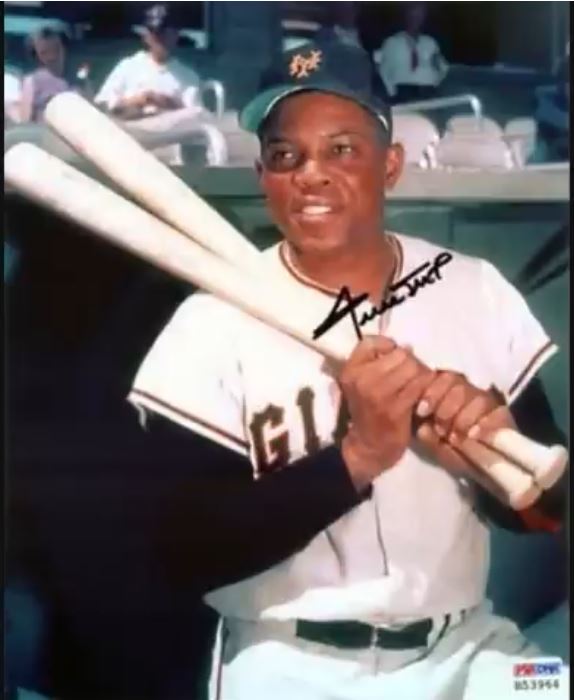
Willie Mays, the man Kevin once couldn’t identify in a lineup of two, decided he wanted to thank him. He signed a baseball and gave it to Gavin to pass along to Kevin.

Once he got it, Kevin didn’t hesitate. He sent it straight to Donald.
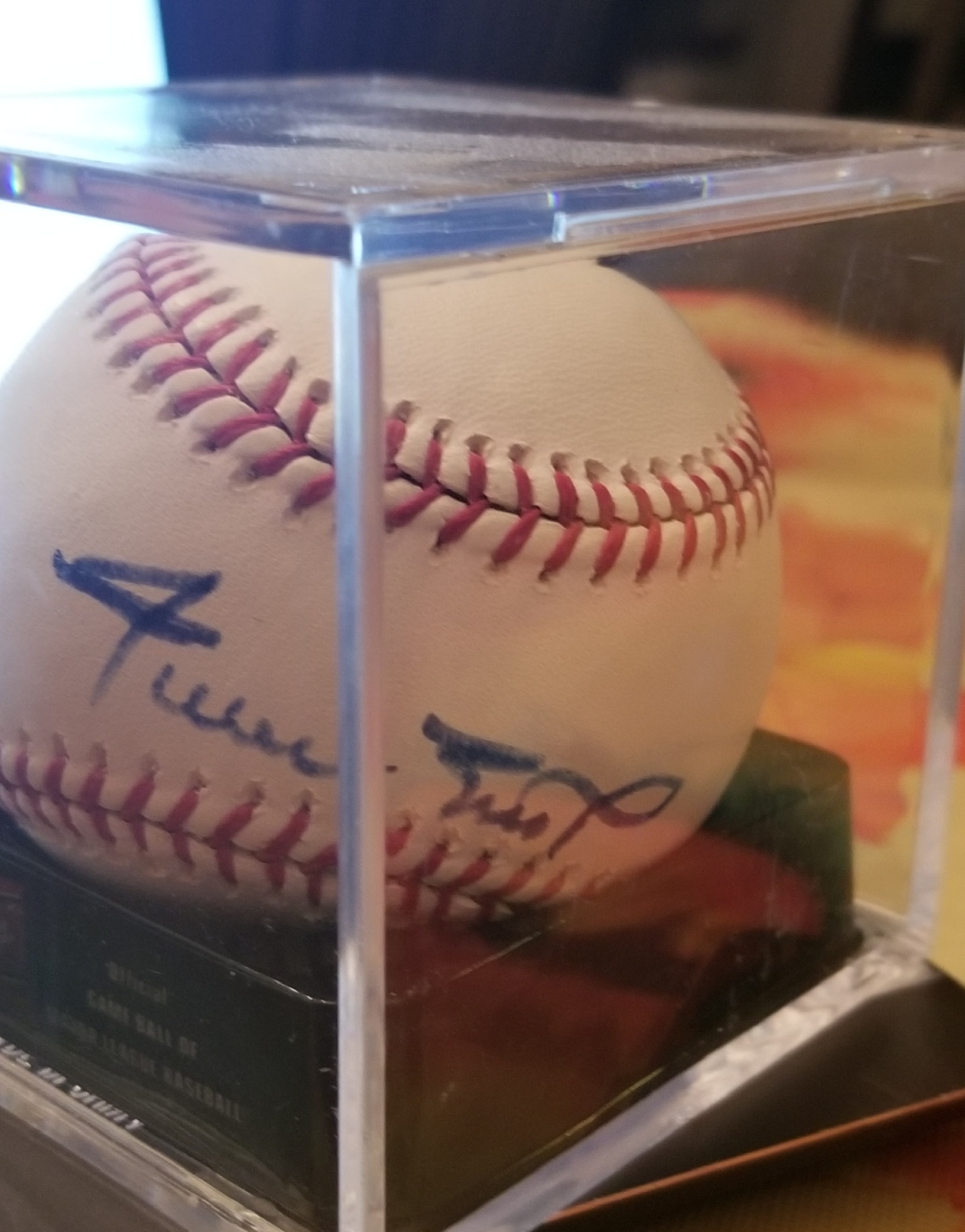
It took him a lifetime, but Kevin finally hit a home run.
Peace & Love, and all of the above,

Earl

Is There Baseball in Heaven?

First we’ll use Spahn, Then we’ll use Sain, Then an off day, Followed by rain. Back will come Spahn, Followed by Sain and followed, we hope, By two days of rain.

That was the Braves’ pitching strategy back in 1948, the year I was born. It was a poetic plan built on two arms and meteorological optimism. It didn’t quite deliver a World Series win, but it gave us one of baseball’s most enduring mantras: trust your aces, pray for rain, and hope the schedule cooperates.

Fast forward to today’s playoffs, and the prayers haven’t stopped — they still go skyward. Every time a slugger hits a home run, he points to the Heavens like he’s communicating with the great batting coach in the sky. The gesture is so common it’s practically part of the batting stance.

And yet…

If God is the Creator of the Universe — galaxies, black holes, cosmic radiation, and the occasional rogue asteroid — is He really tuning in for Game 3 of the ALDS?

The idea that God has a “chosen team” is about as plausible as the Earth being flat. And yet, every October, we get a parade of skyward glances, post-game interviews thanking Jesus for the walk-off double, and fans convinced that their prayers tipped the ump’s call.

So, this playoff season, point to the sky if you must — just know that you may be interrupting a divine Zoom call between God and the Andromeda High Council, where they might be experiencing a severe plumbing problem.

If you’re wondering whether God’s rooting for your team, just check the scoreboard. If you’ve got two starters like Spahn and Sain, and it says “Rain Delay,” that could be your answer.

Peace & Love, and all of the above,

Earl

Demons and Angels

Aaron Judge said that the 2024 World Series will haunt him for the rest of his life. Losing a baseball game, especially an important game like the World Series, should affect you, but not haunt you for the rest of your life.  Killing somebody is something that should haunt you for the rest of your life, not an error on a pop fly.   I understand how Aaron Judge feels though.  He’s an MVP player and he took his eye off the ball for a split second to look at the baserunner. It led to a disastrous 5th inning in a World Series game that the Yankees desperately needed to win to stay alive in the series.

So, what should he do?  Wear a hair shirt for the rest of his life?  No.  He made an error.  Nobody died.  Sure, millions of people were disappointed, but shit happens.  Just minutes before that play, he made a sensational catch crashing into the centerfield wall. He, certainly, didn’t miss the next shallow pop fly on purpose.  It was an error. He was trying to make the play and keep an eye on the baserunner, too.  Looking back on it, he should have kept his eye on the ball, but you don’t play baseball looking backwards.  You play it in real-time, and, in real-time, shit happens. It’s the law, Murphy’s Law, “Anything that can go wrong will go wrong, and at the worst possible time.

Aaron Judge makes $40 million a year.  He signed a $360 million contract for 9 years.   He could probably eke by for 9 years on just $320 million, and not have to really give up anything.  So, I’ve figured out how he can turn something really bad into something really good.  He can donate his entire $40 million 2024 salary to New York charities, or he could start his own charity.  That much money, would feed a lot of the hungry, clothe a lot of the naked, house a lot of the homeless, and heal a lot of the sick.  He can turn a World Series game gone bad into something that make the world much better for a lot of people.  Maybe, management and others on the team might want to chip in something, and be part of helping to turn a lost World Series Ring into a ringing victory for New York City.  The shortstop who made the bad throw to third, and the pitcher who didn’t cover first base, both played their asses off for every other moment of the game.  They each made just one mistake, but those mistakes will probably haunt them, too, for the rest of their lives, like Ralph Branca’s homerun pitch to Bobby Thompson, or the ground ball that went through Bill Buckner’s tired old legs at first base. Their small errors will take on mythical proportions, unless they can exorcise the demons quickly. They can do that by turning those demons into angels, angels of mercy.  I’ll bet that the Yankee players and management could easily raise $100 million and, if their charity had a catchy name, the multitude of Yankee fans might easily match that amount. Right now, I’m leaning towards naming the charity something like, the Call to the Field, or the ’24 Challenge, or The World Serious Fund.

The damned Yankees of 2024 can rise up like a Phoenix from the ashes of the World Series.  Instead of letting something haunt them for the rest of their lives, they, and their fans, can use the moment to do things that will make them positively proud of themselves for the rest of their lives, something worthy of a ticker-tape parade. It could positively benefit the lives of many thousands of New Yorkers, probably enough people to fill a baseball stadium.

Peace & Love, and all of the above,

Earl