Candygram for Earlthepearl137

It happened just after dusk. I was halfway through reheating last night’s chili when the knock came — firm, rhythmic, and suspiciously polite. I figured it was U.P.S. with my Bourbon order. I opened the door to find two masked men, dressed like extras from a dystopian reboot of The Blues Brothers, holding a ribboned box and wearing jackets labeled “I.C.E.”

“Candygram for Earlthepearl137,” one of them said, eyes wide with bureaucratic innocence.

I blinked.  I wasn’t surprised — I’d just published a blog post titled The End of Free Speech: A Love Letter to Monitored Comedy.  I knew the drill. Say something morally clear, challenge selective outrage, and suddenly you’re on the compliance radar.  Satire, when done right, makes some people nervous.

In my latest post, I questioned the double standards of speech policing — how moral clarity gets labeled “aggressive,” while actual harm gets a pass if it’s wrapped in patriotism or profit. I used examples from club signage, media pivots, and the way certain phrases get flagged not for content, but for who’s saying them.

Apparently, that was enough to trigger a “courtesy check.”

The I.C.E. agents didn’t arrest me, though. They didn’t even enter. They just stood there, box in hand, waiting for me to acknowledge the delivery. It was performance art — a compliance ritual dressed as concern. And like all good satire, it left me wondering: who’s really afraid of free speech?

I reached for the candygram, and the masked man winked. Not a friendly wink. The kind that says, We know where you live.

And then I woke up.

I wonder if it was a dream or a premonition.

“No Kings Day” – October 18th. Be there and bring a friend.

Peace & Love, and all of the above,

Earl
He Who Laughs Last

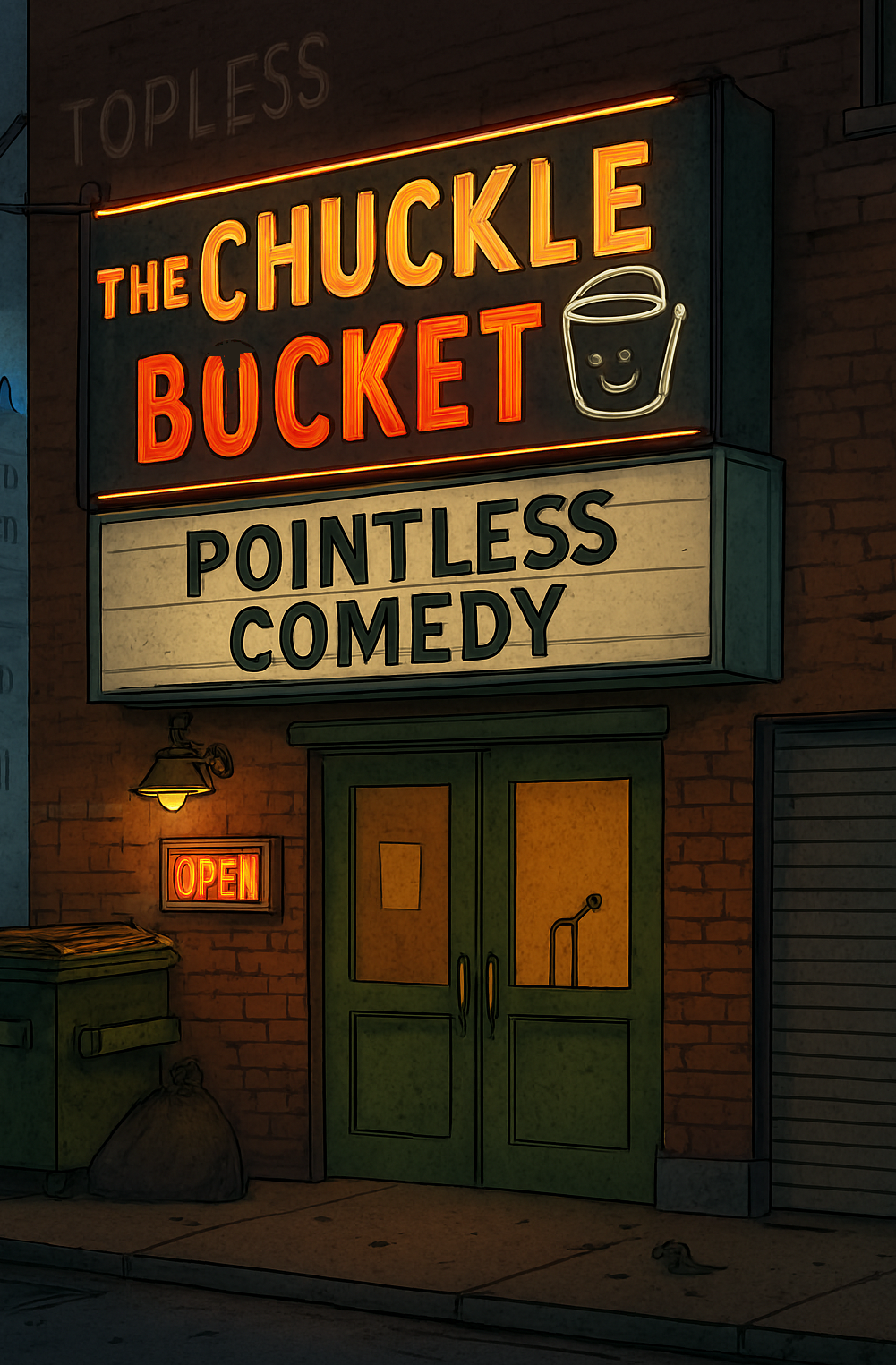
The last working bulb on the stage at the Chuckle Bucket flickered like it knew a punchline was coming.  Marty’s set was one of the few that still had punchlines.  The other comedians just did their 7-minute sets by conversing with the sparse audience, asking them about their problems.  It wasn’t funny, but it made the handful of people in the room at least feel heard, and, in reality, that was probably what they came for.  The comedy clubs were all closing ever since Trump signed an executive order that the government had to approve all jokes.

Marty still told jokes.  But he was very careful about how he phrased them.  “I want you to know that I love this President,” he said,  “I really, really love him.  I love him so much I named my ulcer after him.”

The crowd chuckled, cautiously. A laminated sign on each table read: “Please laugh responsibly.”  Even the regulars, the ones who dropped in more than once a week, didn’t know what to make of that sign.  Was it a joke?  Or was it serious?  Several times when a joke landed perfectly, a person passing by the club might be able to hear laughter coming from within.  It might make them curious, but they dared not go inside.  On the respectability scale, Comedy clubs were ranked somewhere between pornographic theaters and whore houses.

Marty riffed on the new Federal regulations, that he said had just come out that morning:

  • No impersonations can be performed unless pre-approved by the Bureau of Comedy, unless, of course, you were making fun of Democrats.  Those got exceptions, except for impersonators who did Biden.  It seems that too many impersonators, when they were questioned by the comedy police for doing bits where they acted like a stupid, senile old man, would just swear that they weren’t making fun of the current President.  They argued that they were doing Biden.  To put a stop to that defense, all Biden impersonators were henceforth outlawed.
  • No satire was allowed unless it was accompanied by a disclaimer that it was created using AI.”

Marty leaned into the absurdity:

“I tried to do a bit once about my uncle’s conspiracy theories. My act got flagged for ‘unauthorized nostalgia.’  My license to be a comedian was revoked for six months.  It was terrible, a life without comedy.  I felt like I was in Alabama.”

The audience winced. They hoped that no Republican politician from Alabama would ever hear that joke.  They didn’t want Marty to mysteriously disappear like so many other comedians had.

Marty moved on.  “I had a dream about the President this week.  I went to my therapist and asked her if that was normal.  She asked me if I woke up screaming.  I said yes, and she said, Don’t worry about it, then.  That’s normal.” 

The four people in the audience laughed nervously.

“Don’t worry, folks. I’ve got my Passport ready.”

He looked offstage for a second.  “Well, that’s my time.”  He closed with the line that had become his signature—less a joke, more a eulogy:

“And remember, he who laughs Last… turns out the lights.”

He threw the switch that shut off the electricity to the one lightbulb that lit the stage, and he walked towards the bar.  The four people in the room stood up, not in ovation, but in quiet recognition. Marty wasn’t just a local comic. He was the custodian of what used to be funny.

Peace & Love, and all of the above,

Earl