
Wanted in 125 Countries, But Welcomed in Alaska

I almost got kicked out of a diner once for trying to order a Jim Beam milkshake with my breakfast. The waitress said it violated “company policy.” I said it violated my taste buds to drink anything without a little rebellion in it. We settled on a root beer float and a mutual understanding that rules are only flexible when the manager’s on break.

Which brings me to Alaska.

Whoever is running this country must be on a break. This Friday, two men—one a convicted felon, and one wanted in 125 countries for war crimes—will meet at a Hotel in Alaska to discuss peace, war, and possibly who gets custody of Crimea. Donald Trump, who is the only U.S. President with felony convictions, will host Vladimir Putin, a man wanted by the International Criminal Court for abducting Ukrainian children. He is wanted in 125 Countries, while Donald Trump is unwanted everywhere he goes.

Now, before you ask, “How is this legal?”—let me remind you: the United States isn’t part of the ICC. We opted out, presumably to keep our own war crimes tidy and domestic. So while 125 countries would slap cuffs on Putin faster than you can say “borscht,” Alaska rolls out the welcome mat. Probably one with a bear on it.

I imagine the summit will be held in a Bail and Breakfast place, with moose jerky appetizers and a ceremonial exchange of MAGA hats and Kremlin lapel pins. Trump will declare peace in our time, Putin will drink Vodka and nod solemnly, and somewhere in The Hague, a judge will throw a gavel at the wall.  Or maybe one of Putin’s political opponents will vigorously protest by “accidentally” throwing himself off a 30th-floor balcony.

This is not diplomacy. It’s dinner theater.

And yet, there’s something heartbreakingly American about it. We love a good outlaw. Jesse James. Al Capone. Butch Cassidy and the Sundance Kid, not to mention the guy who invented the McRib. We don’t mind criminality as long as it comes with a slogan and a side of fries. Trump and Putin are just the latest duo in our long tradition of “bad boys with branding.”

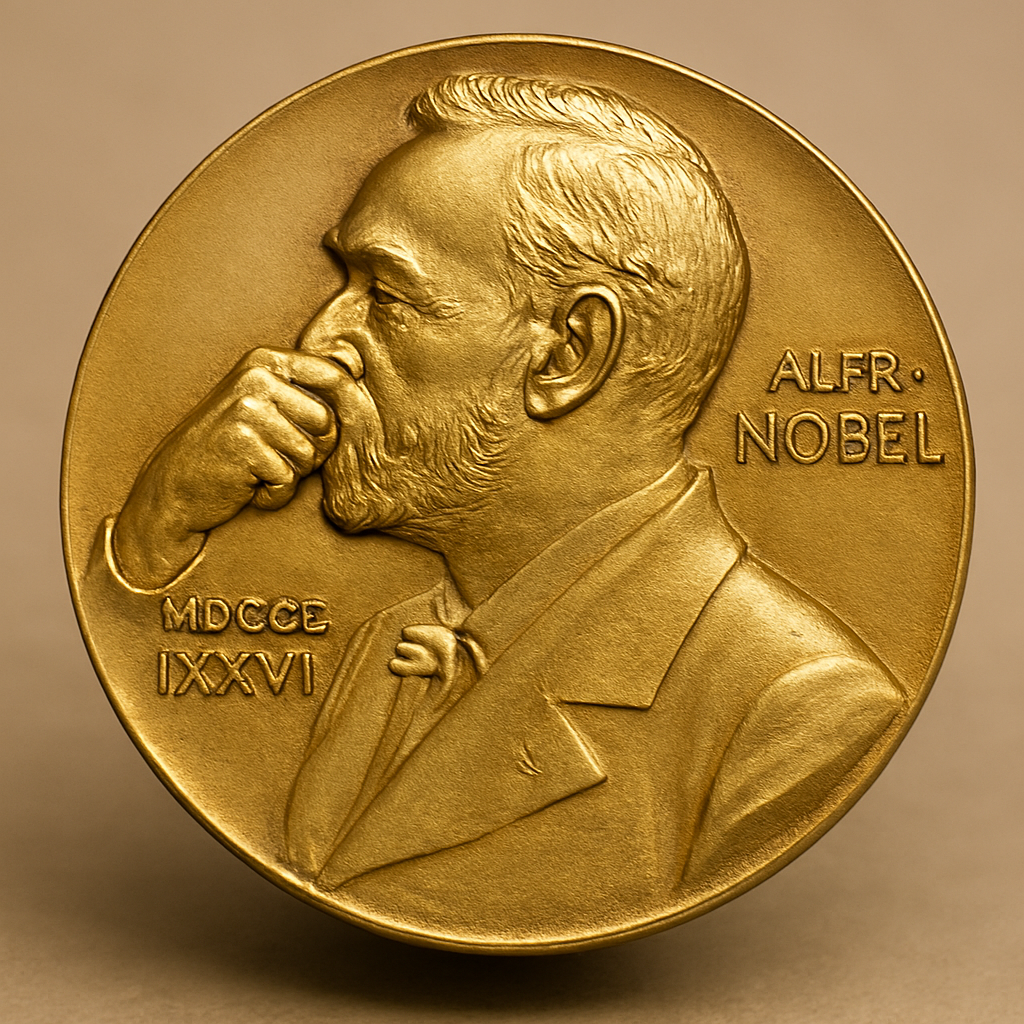
But here’s the rub: this isn’t a sitcom. It’s real. Ukraine is bleeding. Children have been taken. Democracy is being bartered like a used snowmobile. And while the rest of the world tightens its grip on justice, we’re hosting a summit meeting between two known criminals.  The only result anyone expects is for Putin and Trump to issue a joint nomination for the Nobel Peace Prize—submitted in black Sharpie and sealed with a vodka stain.
Peace & Love, and all of the above,

Earl

Get Ready, Because Here I Come

This song is 20 minutes and 31 seconds long.  It’s mostly an instrumental, so you can listen to it and enjoy it while reading this blog. Actually, it should only take a few minutes to read this blog, but you’ll probably want to listen to the entire song, anyway. It’s a masterpiece.

In 1982, the United Nations Convention on the Law of the Sea (UNCLOS) was adopted.  It established a legal framework for the use of the world’s oceans, including the regulation of deep-sea mining in international waters.

The United States has still not ratified UNCLOS.

UNCLOS has faced opposition from certain U.S. senators over the years, preventing its ratification.  A notable instance occurred in 2012, when a group of 34 Republican senators, led by Senator Jim DeMint (R-SC), publicly opposed the treaty.  This group included senators like Kelly Ayotte (R-NH) and Rob Portman (R-OH), among others.  Their opposition was enough to block the two-thirds majority required for ratification in the Senate.

What was the result?  U.S. companies didn’t want to invest billions in deep-sea mining in international waters, without having the legal protection of the U.S. Government as a signatory of the U.N. resolution.

Guess who did sign the U.N resolution and invest heavily in deep-sea mining technology?  China.

Well, over the years, oceanographers discovered an interesting area on the ocean floor where polymetallic nodules were “growing.”  These small potato-shaped mineral deposits have been formed over millions of years as minerals like manganese, nickel, cobalt, and rare earth elements precipitated from seawater and formed around small rocks or shell fragments, kinda like the way pearls form around bits of sand inside an oyster’s shell.  The greatest accumulation of these nodules is found in an area called the Clarion-Clipperton Zone in the Pacific Ocean between Hawaii and Mexico.

So, U.S. companies are not mining these deep-sea nodules but China is, and a funny thing happened on the way to the future.  We’ve known the value of manganese, nickel, and cobalt for centuries.  The value of rare earth materials , however, was not so well known.  Recently, in a speech about a potential deal with Ukraine, President Trump even referred to them incorrectly as “raw earth materials.”  No big surprise.  He’s not exactly a scientist.

I’m not a scientist either so I had to look them up.  Here’s what I found.

Rare earth elements (REEs) consist of 17 elements on the periodic table, including the 15 lanthanides plus scandium and yttrium. Here are their atomic numbers:

  • Lanthanides:
    • Lanthanum (57), Cerium (58), Praseodymium (59), Neodymium (60), Promethium (61), Samarium (62), Europium (63), Gadolinium (64), Terbium (65), Dysprosium (66), Holmium (67), Erbium (68), Thulium (69), Ytterbium (70), Lutetium (71).
  • Others:
    • Scandium (21) and Yttrium (39).

These elements are prized for their unique properties and are critical to many technologies, like magnets, batteries, and LEDs.

You don’t need to memorize the names of these elements, but let’s have another look at that last sentence.  These elements are prized for their unique properties and are critical to many technologies, like magnets, batteries, and LEDs.

So, while China has been harvesting these precious “potatoes” off the ocean floor, the U.S. has been waiting since 1982 for the Senate to ratify UNCLOS. The result is that China is now the world’s largest producer of rare earth elements, and the U.S. relies heavily on imports, particularly from China, for processed rare earth materials.  China is kicking our ass in the area of refining rare earth elements.

Let’s revisit that sentence one more time.  These elements are prized for their unique properties and are critical to many technologies, like magnets, batteries, and LEDs.

Ukraine has rich rare earth deposits, which is why – Surprise Surprise – Donald Trump wants to quickly end the war in Ukraine so that the U.S. can start mining their rare earth elements.

So, Ukraine, Donald Trump desperately wants your rare earth elements and he will stop at nothing to get them. He’ll even cooperate with Russia. So, like the band Rare Earth said in 1970, “Get ready, because here I come.”

Peace & Love, and all of the above,

Earl