Pay to Play

In 2025, President Trump issued a wave of controversial pardons that raised eyebrows across the political spectrum. While presidential clemency is a constitutional power, the pattern of recipients suggests a troubling trend: those with wealth, influence, or political loyalty were far more likely to receive mercy than those without.

The Donors and Allies Who Walked Free

  • Juan Orlando Hernández: The former president of Honduras was convicted of trafficking over 400 tons of cocaine into the United States. His pardon followed lobbying efforts by Trump ally Roger Stone. Roger Stone, by the way, was pardoned by President Donald Trump on December 23, 2020. He received a full and unconditional pardon for his conviction related to charges of lying to Congress, witness tampering, and other offenses connected to the investigation into Russian interference in the 2016 U.S. presidential election. Stone had been sentenced to 40 months in prison, but his sentence was commuted and then fully pardoned by Trump.
  • David Gentile: Orchestrated a $1.6 billion Ponzi-style fraud targeting over 10,000 investors. Praised by Trump’s pardon czar Alice Marie Johnson.
  • George Santos: Convicted of wire fraud, identity theft, and campaign finance violations. A vocal supporter of Trump.
  • Changpeng Zhao: Founder of Binance, convicted of money laundering. Binance had promoted Trump family crypto ventures.
  • Trevor Milton: Founder of Nikola, convicted of securities fraud. His business aligned with Trump’s economic messaging.
  • Rod Blagojevich: Former Illinois governor who attempted to sell Obama’s Senate seat. A former contestant on Trump’s “Celebrity Apprentice.”
  • Devon Archer: Convicted in a $60 million bond fraud. His ties to Hunter Biden were used by Trump to fuel political attacks.
  • BitMEX Co-founders: Pardoned for violating anti-money laundering laws. Their crypto influence aligned with Trump’s push for digital finance.
  • Henry Cuellar and wife: Facing federal bribery charges. Trump framed their case as DOJ overreach.
  • Michele Fiore: Convicted of charity fraud involving police memorial funds. A vocal MAGA supporter.
  • Scott Jenkins: Involved in a “cash-for-badges” scheme. Tied to Trump-aligned law enforcement circles.
  • Let’s, also, not forget the 1600 MAGA-merch-wearing insurrectionists who were pardoned by Trump for their attack on the Capital and Capital Police. He called them heroic patriots.

These pardons share a common thread: political loyalty, economic influence, or usefulness to Trump’s narrative. While no direct bribes have been proven, the optics suggest a system where clemency is granted not based on justice, but on proximity to power.

Meanwhile, over 80 Venezuelan boatmen—accused of drug smuggling but never tried—were killed in U.S.-led maritime strikes. They had no lobbyists, no campaign donations, no celebrity connections. They didn’t “Pay to Play.” They paid with their lives, and Trump and Hegseth should pay for their “Kill them all” war crimes with Impeachment and prison.

Peace & Love, and all of the above,

Earl
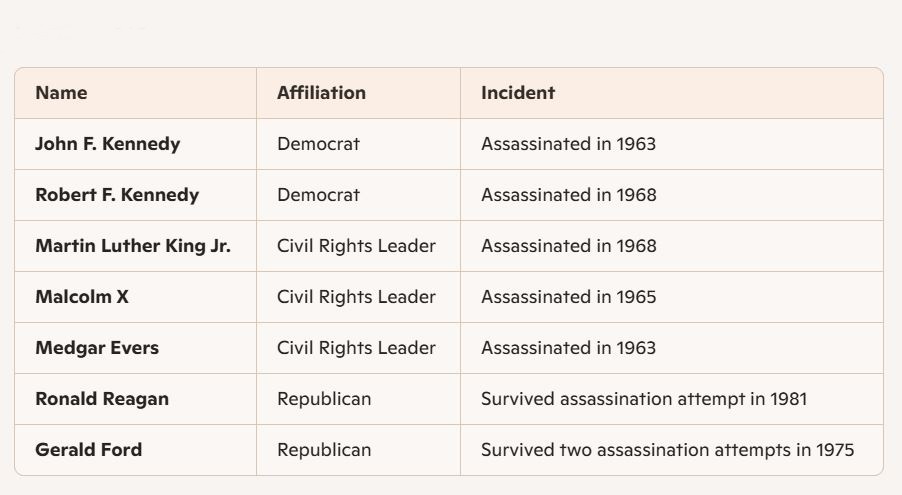
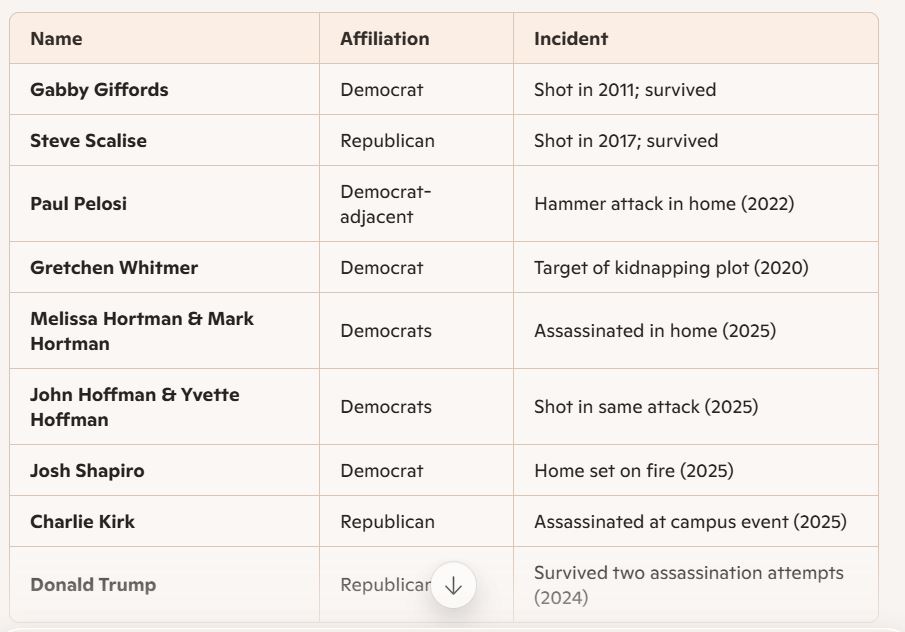
A Timeline of Political Violence

Today marks the anniversary of September 11, 2001—a day of unimaginable loss. Nearly 3,000 Americans were murdered in coordinated terrorist attacks. The grief was real. The fear was justified. But the response? It became something else entirely.

In the name of justice, the United States launched the War on Terror. Over the next two decades, that war claimed the lives of more than 363,000 civilians across Afghanistan, Iraq, Syria, Yemen, and Pakistan. The total death toll—including combatants, journalists, and aid workers—approaches 900,000.

These were not accidents. They were the result of deliberate policy, drone strikes, invasions, and occupations. And they were justified with the same language we hear today: “threats,” “terrorists,” “national security.”

Fast forward to this week.

President Donald Trump bragged about ordering a strike that killed 11 Venezuelans on a boat suspected of drug smuggling. No trial. No names. Just a video of the explosion and a caption: “BEWARE.”

Days later, Charlie Kirk, a conservative activist, was assassinated while speaking at a university. Trump responded with solemnity, grief, and fury—calling Democrats “terrorists” and promising retaliation.

This is not just hypocrisy. It’s a moral collapse.

A pacifist sees murder as murder. Whether it’s by drone or by gun, whether the victim is a political ally or adversary, the moral cost is the same. The selective outrage—grieving one death while glorifying another—erodes our shared humanity.

The War on Terror didn’t just avenge 9/11. It multiplied its death toll a hundredfold. And now, in 2025, we see the same pattern: state violence is celebrated, while personal violence is condemned—but only when it’s politically convenient.

🧭 What We Must Refuse

  • Refuse to let grief be weaponized.
  • Refuse to let state violence be sanitized.
  • Refuse to let political affiliation determine moral worth.

If we mourn Charlie Kirk, we must also mourn the 11 Venezuelans. If we condemn his assassination, we must also condemn the strike that killed them. If we remember 9/11, we must also remember the civilians who died in its name.

Otherwise, we are not defending life. We are defending a brand.

Peace & Love, and all of the above,

Earl
American Power Theater

They were brown men. Poor men. Fishermen, smugglers, fathers. Not cartel kings. Not warlords. Just convenient bodies in American Power theater.

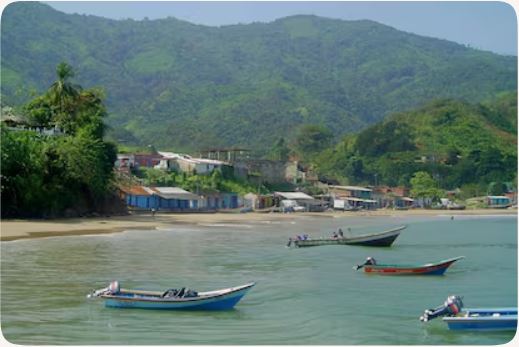
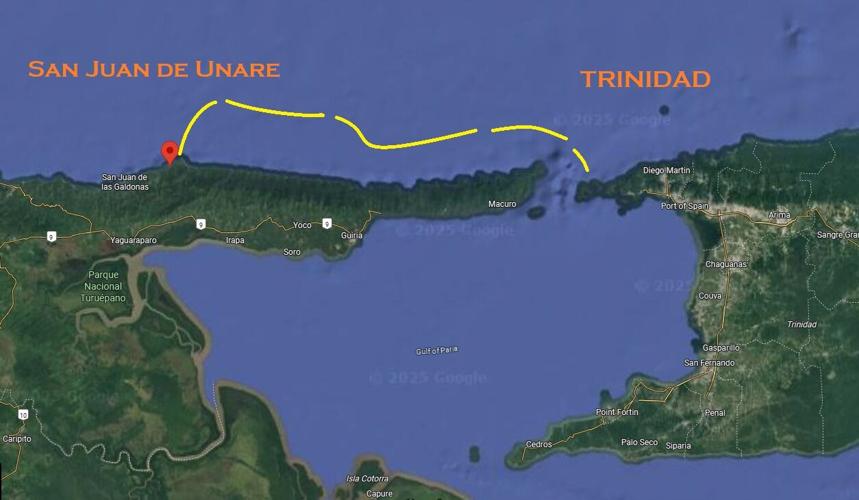
San Juan de Unare was never meant to be a headline. It was a village of salt and sun, where boats bore names like Esperanza and La Fe, and the sea was both cradle and coffin. The men rose before dawn to fish. The women salted the catch and mended the nets. Children learned the tides before they learned their letters.

But poverty is a tide that doesn’t recede. And when the Venezuelan state abandoned the coast, others arrived—armed, organized, and hungry for routes. The village became a corridor. The boats once used for snapper and sardines now ferried cocaine and migrants. The fishermen didn’t become criminals overnight. They became desperate. And desperation, in the eyes of empire, is indistinguishable from guilt.

So when the Trump regime needed a distraction— a flex, a flourish, a headline—A real live version of Hollywood’s Wag the Dog, they reached across borders, bypassed international law, and turned a forgotten village into a theater of war.

Eleven lives extinguished in a flash, not for what they carried, but for what they represented— a convenient target, a distraction, a spectacle.

The strike wasn’t surgical. It was symbolic. A criminal president, facing scrutiny and scandal, chose brown bodies for his stage. Not in Manhattan. Not in Mar-a-Lago. But in a village no one had heard of, and few will remember.

San Juan de Unare is now a ghost with a pulse. The sea still laps the shore. The nets still hang. But the air is heavy—with grief, with fear, with the knowledge that the world only noticed them when it was time to kill.

This wasn’t justice. It was theater. And the poor brown men of San Juan de Unare were just props.

Peace & Love, and all of the above,

Earl