
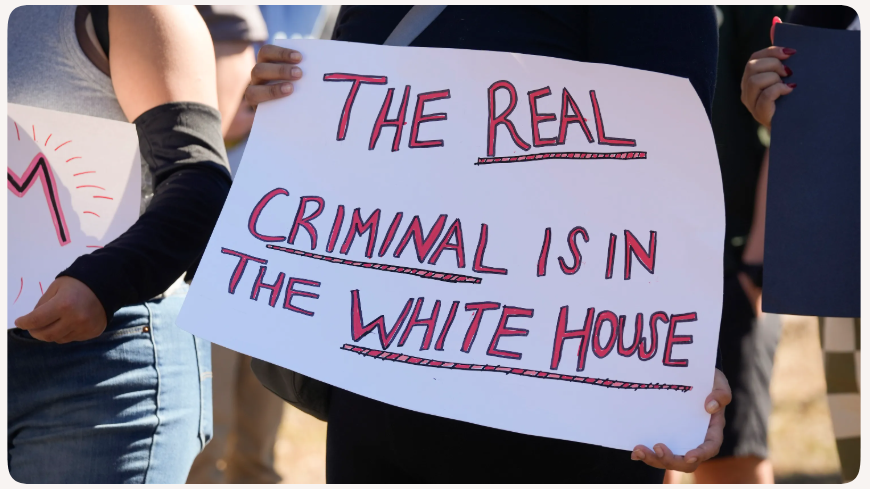
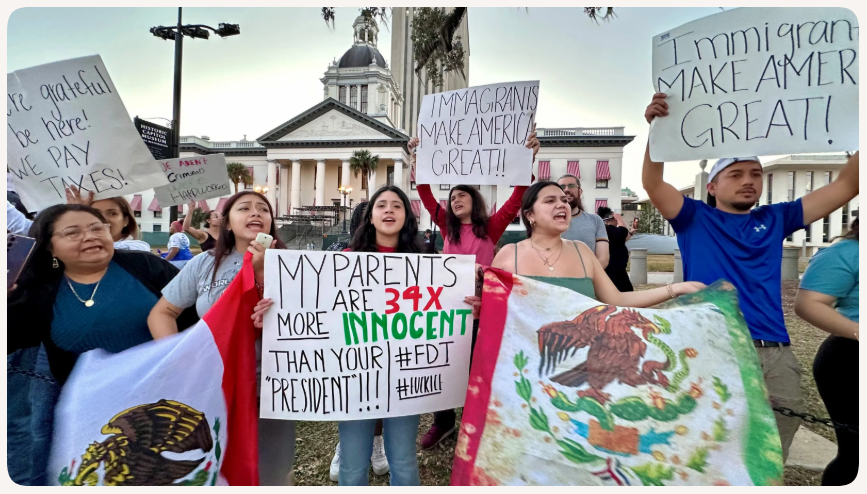
History has a way of repeating itself—not in the details, but in the echoes. As I watch the current administration deploy Marines and National Guard troops into American cities to confront protests over ICE raids and immigration policy, I can’t help but feel a chill. It’s not just the uniforms or the optics. It’s the precedent. And for me, that precedent begins not with Donald Trump—but with Abraham Lincoln.
Yes, Lincoln. The man most Americans revere as our greatest president. But I’ve long questioned that legacy. Lincoln, in my view, was a stubborn, hardheaded leader who plunged the nation into a war that cost over 650,000 lives. A war he believed would be over in months. A war he arguably provoked.
Let’s rewind to Fort Sumter. No one died in the initial bombardment. The only casualties came when a cannon exploded during the surrender ceremony—one Union soldier died. Yet Lincoln used that moment to summon 75,000 troops, escalating a regional standoff into a full-blown civil war. He suspended habeas corpus, jailed political opponents, and silenced dissent in border states like Maryland. All in the name of preserving the Union.
Fast forward to today. Trump, facing protests over immigration enforcement, has summoned federal troops into cities like Los Angeles—against the wishes of governors and mayors. He’s accepted a $400 million jet from Qatar, raising serious constitutional questions about foreign influence and the Emoluments Clause. He’s used executive power to reshape the judiciary, roll back civil rights protections, and stoke division at every turn.
And yet, like Lincoln, he claims to be saving the nation.
The parallels are uncomfortable. Both men faced divided nations. Both used federal power to suppress opposition. Both were hailed as heroes by some and tyrants by others. When John Wilkes Booth shot Lincoln, he shouted “Sic semper tyrannis”—thus always to tyrants. That wasn’t just a madman’s cry. It was a sentiment shared by many in the South who saw Lincoln not as a liberator, but as a despot.
Today, many Americans—especially those on the political left—see Trump in the same light. A man willing to tear the country apart to preserve his own power. A man who, like Lincoln, may be remembered not just for what he did, but for what he destroyed in the process.
This isn’t a defense of Booth, or of violence. It’s a plea for perspective. We must stop mythologizing our leaders and start scrutinizing them. Lincoln’s war may have ended slavery, but it also ended hundreds of thousands of lives. Trump’s war—if it comes—may not be fought with muskets and bayonets, but with executive orders, surveillance, and militarized streets.
History doesn’t repeat, but it rhymes. And right now, the tune sounds all too familiar.
Peace & Love, and all of the above,
Earl
 earlthepearl137
Ooh, I imagine this won’t be a popular take, but I agree, and you’re just scratching the surface on Lincoln. I’ve often said that Trump didn’t come up from this stuff; he learned from his predecessors.
As far as this guy is concerned, very well put!
–Scott
Thanks, Scott. I know this won’t sit well with a lot of people, but I’m glad that someone is standing with me. Have a safe No Kings Day.