First we’ll use Spahn,Then we’ll use Sain,Then an off day,Followed by rain.Back will come Spahn,Followed by Sainand followed, we hope,By two days of rain.
That was the Braves’ pitching strategy back in 1948, the year I was born. It was a poetic plan built on two arms and meteorological optimism. It didn’t quite deliver a World Series win, but it gave us one of baseball’s most enduring mantras: trust your aces, pray for rain, and hope the schedule cooperates.
Fast forward to today’s playoffs, and the prayers haven’t stopped — they still go skyward. Every time a slugger hits a home run, he points to the Heavens like he’s communicating with the great batting coach in the sky. The gesture is so common it’s practically part of the batting stance.
And yet…
If God is the Creator of the Universe — galaxies, black holes, cosmic radiation, and the occasional rogue asteroid — is He really tuning in for Game 3 of the ALDS?
The idea that God has a “chosen team” is about as plausible as the Earth being flat. And yet, every October, we get a parade of skyward glances, post-game interviews thanking Jesus for the walk-off double, and fans convinced that their prayers tipped the ump’s call.
So, this playoff season, point to the sky if you must — just know that you may be interrupting a divine Zoom call between God and the Andromeda High Council, where they might be experiencing a severe plumbing problem.
If you’re wondering whether God’s rooting for your team, just check the scoreboard. If you’ve got two starters like Spahn and Sain, and it says “Rain Delay,” that could be your answer.
Educated people don’t believe in unicorns. Or mermaids. Or Atlantis, Bigfoot, or the Fountain of Youth. These are dismissed as charming myths—cultural artifacts with no empirical backing. And rightly so. We’ve combed the forests, dredged the lakes, and carbon-dated the ruins. No horned horses. No fish-women. No golden cities.
But God? That’s different.
Despite the same lack of physical evidence, belief in God is not only accepted—it’s revered. Taught in schools, sworn on in courtrooms, and invoked in campaign speeches. The same minds that scoff at fairy tales will defend divine presence with philosophical rigor and moral urgency.
This isn’t a jab at faith—it’s a spotlight on the intellectual gymnastics required to hold both positions. The educated skeptic who demands peer-reviewed proof for mythical beasts will often grant God a pass. “It’s about faith,” they say. “Transcendence. Meaning.”
But why does God get the exemption? Why not the unicorn, who at least has the decency to sparkle?
Maybe it’s not about evidence at all. Maybe it’s about utility. God offers moral scaffolding, community, and cosmic comfort. Unicorns offer glitter and horn-based combat. One gets a cathedral; the other gets a Lisa Frank folder.
So, we believe what serves us. Not what’s proven. And maybe that’s the real myth: that educated people believe only what’s true.
This isn’t a call to abandon belief. It’s a call to examine it. To ask why some unproven ideas are cherished while others are ridiculed. To recognize that even the most rational minds are shaped by culture, emotion, and need.
And if we’re going to believe in things unseen, maybe we should give the unicorn a second chance. At least she never started a war.
The story of Barabbas is found in all four Gospels – Matthew, Mark, Luke, and John. According to the Gospels, Barabbas was a despicable prisoner who was being held by the Roman authorities at the time of Jesus’ trial and crucifixion.
As a token to the Jews during Passover, The Romans would free one prisoner. (Kinda like the way the President pardons one turkey on Thanksgiving.) Pontius Pilate, the Roman governor, brought out Barabbas, a notorious robber, who committed murder during an Insurrection, and he let the crowd choose between releasing either Jesus or the evil Barabbas. Pilate could find no fault in Jesus, so he was surprised when the crowd called out, “Give us Barabbas,” and screamed for Jesus to be crucified. Pilate then washed his hands and said, “I wash my hands of the blood of this innocent man. The crowd said, “Let his blood be upon us and our children.” Anti-Semites, like Hitler, have used that line for centuries as an excuse for exterminating Jewish people.
Last night, history repeated itself. The crowd chose to free a notorious robber who was guilty of murder committed during an insurrection, which he led.
On November 18, 1956, Nikita Khrushchev said in a speech to America. “Whether you like it or not, history is on our side. We will bury you.”
Last night, whether we like it or not, we started digging our own grave.
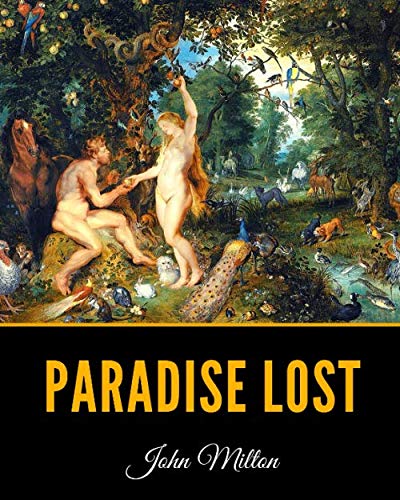
Today, I asked Claude to write a parody of the John Milton poem Paradise Lost in the irreverent British style of Ricky Gervais, but performed before an American audience, with Donald Trump, of course, in the role of Satan. After a few tweaks, we got this:
So, there’s this dude called God, right? He’s made the universe and everything, but he’s pretty ticked off because his favorite angel, Donald J. Lucy-fer (it’s a tremendous name, really the best), has gone and thrown a yuuuge tantrum. Apparently, Lucy-fer didn’t like God’s new policy of “worship me or else,” calling it “fake news” and a “total witch hunt.”
Well, God’s not having any of that. He kicks Lucy-fer and his gang out of heaven faster than Twitter banning an account. Down they go into this place called Hell – imagine the worst Trump property you’ve ever seen, but on fire. We’re talking “We have the heats.” It’s like someone took Trump Steaks and cranked them up to well-done with ketchup… for eternity.
Now Lucy-fer, who we’re calling Satan because it polls better with evangelicals, is seriously pissed off. He’s thinking, “We’re gonna make Heaven pay for this. It’s gonna be great, folks.” So he slithers up to Earth, not so much auditioning for “Snake’s Got Talent” as hosting “The Apprentice: Garden of Eden Edition.”
Meanwhile, God’s gone all NSA, watching everything on his celestial TV (which, by the way, has the best ratings, just fantastic). He sees Satan coming but does he do anything? Nah, he’s playing 4D chess, apparently. “My son will sort it,” he says. “He’s got the best words.”
Down in Eden, the world’s first gated community with a strict no-clothes policy, Satan finds Eve. Now Eve’s never seen a snake before, let alone one trying to push Trump-brand apples. “Listen, honey, you gotta try this fruit. It’s gonna make Eden great again, believe me.” So she does, and then she gets Adam in on it too – it’s a perfect phone call, really. Suddenly, they realize they’re buck naked and go into a panic like they’ve just found out their tax returns are being audited.
God finds out because of course he does – he’s got angels, the best angels, in the FBI (Fruit Bitten Intelligence). He goes ballistic. “Adam! You’re fired!” Adam, being the first man to throw his wife under the Access Eden bus, replies, “She made me do it! Grab ’em by the apple!” Real presidenti– uh, chivalrous, dude.
So God kicks them out of Eden. No golden parachute, nothing. Just a flaming sword at their backs and a lifetime of “I’m Eve, and I don’t really care, do U?” jackets. Eve’s thinking, “All this for an apple? I thought the Trump Diet was all about McDonald’s.”
The story ends with Adam and Eve wandering off, probably to invent locker room talk and the phrase “I’ll release my medical records when Eden releases its birth certificate.” And God’s up there planning the mother of all redemption arcs involving his son and a bestseller called the Bible – because nothing says “art of the deal” like a flood and some plagues before the big finale.
And that, folks, is Paradise Lost – where the snake talks like he’s at a rally, the humans are dumb as rocks (the best rocks, from Trump Quarries), and God proves he’s got a flair for the theatrical that makes WrestleMania look like community theater. Thank you, and don’t forget to tip your waitress – she’s working for minimum wage in a universe created by an omnipotent being who, I assume, has some good people on both sides.
XPH308462 Luther as Professor, 1529 (oil on panel) by Cranach, Lucas, the Elder (1472-1553); Schlossmuseum, Weimar, Germany; (add.info.: Luther als Professor; Martin Luther (1483-1546);); German, out of copyright
“I’ve looked at life from both sides now, from near and far and still somehow, it’s life’s illusions I recall. I really don’t know life at all.”
-Joni Mitchell
I heard about a Philosophy professor years ago who began a lecture by saying that, “Ancient man believed in many gods.” That part was true. The Greeks had a pantheon of gods and goddesses, Zeus, Hera, Poseidon, Demeter, Ares, Athena, Apollo, Artemis, etc. The Romans had Jupiter, Neptune, Mars, Apollo, Vulcan, Mercury, and more. The Norse had gods like Odin, Frigg, Thor, Balder, Tyr, Njord, and many, many more. Then, the professor continued, “Now, we know that there is only one God.” The learned professor had unwittingly made a giant error of logic. He had presented his personal belief as a fact, without any proof that it was indeed a fact, which it wasn’t. None of us KNOW for a fact how many Gods there are, if any.
It’s winter. I’ve been spending a lot of time indoors. To give the hours greater value, I’ve been listening to a lot of audio books. Recently, I listened to a fascinating biography of the Monk Martin Luther by Eric Metaxas. I learned that when an African-American minister named King had studied the famous monk he was so impressed with him that he quickly changed his own name to Martin Luther King, and he changed his son Michael’s name to Martin Luther King, Jr. Since Monday is the day we honor Dr. Martin Luther King, Jr., I thought this might be a good time for me to learn a little something about the monk after whom he was named.
The only thing I knew previously about Martin Luther, the monk, was that 400 years ago he defiantly nailed his 95 Thesis to the door of the Wittenberg Castle Church and kicked off the Protestant Reformation. The first thing I learned while listening to Eric’s book was that this fact, just wasn’t true. Yes, he had posted his thesis on the church door, but the church door in those days was like a community bulletin board, and most likely Martin Luther’s paper was one of many papers politely pasted to the door, not one defiantly nailed there. I also learned that the purpose of the paper was not to break away from the Catholic Church, but to initiate a debate in ways to improve the Church that Luther loved. The lesson for me, was that there are worse things than not knowing something. The bigger problem is all the things we think we know, that just aren’t so.
Monk Martin Luther had a problem with the concept of indulgences. The Catholic Church teaches that good souls go to Heaven, bad souls go to Hell, and slightly soiled souls go to Purgatory, where they are laundered and made ready for Heaven. Most souls need a bit of freshening up, so most souls go to Purgatory. The time a soul spends in Purgatory depends on just how dirty it is. It could be days. It could be centuries. It could even be for ages. So, the Catholic Church, which wanted to raise money to build churches and buy statues and gold chalices, got the idea of selling indulgences. Donate X amount of dollars, and you will reduce your time in Purgatory by X amount of years. It was a big hit. The money was rolling in. So, naturally, the Church decided to expand the program. In addition to buying indulgences for yourself, you could donate money for dead relatives and friends. Do you want your poor mama to spend centuries in Purgatory? Of course not. So, buy indulgences for everyone you know. Martin thought this was a pretty sleazy way to run a church, and he hoped to get the church to drop the program. The Church, eager to keep a good thing going, felt that Monk Martin, was a lousy salesman for their team, and they branded him a heretic.
The book reads like an action adventure and I am gobbling it up. I just have one problem with it. The author does a great job of presenting Luther’s argument against the corruption and greed of the Catholic Church in the Middle Ages, but he makes the same type logic error as the professor I mentioned in the first paragraph. Frequently, instead of saying that Martin Luther fervently believed that God would be for or against something, he states that Martin Luther KNEW that God would be for or against something. Maybe I’m a bit oversensitive about the semantics of the language the author uses, but I get a little bit skittish when people profess to KNOW what God is thinking. Besides, that’s not the job of authors. That’s the job of TV Evangelists, and if there’s one thing I’ve learned during my time on Earth, it’s that the more I learn, the more I realize how little I really know, especially about God.




 earlthepearl137