Tomorrow is No Kings Day, and I will be attending the demonstration at Reservoir Park here in Lancaster. I’ll be handing out colorful paperclips and this flyer:
📎 WEAR A PAPERCLIP ON NO KINGS DAY
A small symbol with a big story
On No Kings Day, we remind ourselves that no leader — past, present, or future — should be treated like royalty. Democracy works best when we stay grounded, skeptical of myths, and committed to truth over hero‑worship.
That’s why today, I invite you to wear a paperclip.
Why a paperclip?
Because the humble paperclip has one of the funniest and most revealing stories in modern history.
During World War II, Norwegians wore paperclips on their lapels as a quiet symbol of unity and resistance against authoritarian rule. The clip stood for binding together, staying connected, and refusing to be intimidated.
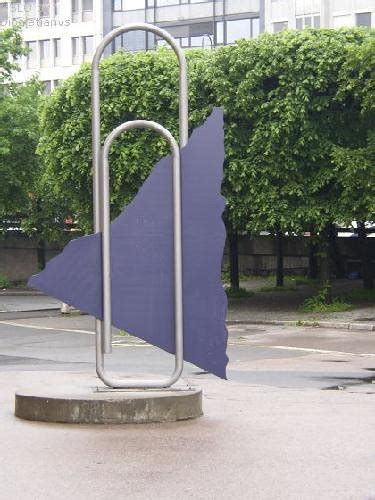
After the war, a national myth grew that Norway had invented the paperclip — a story repeated so often that it became accepted truth, even though the familiar “Gem” clip was actually British. They actually erected a monument to the paperclip in Oslo. The myth wasn’t malicious; it was comforting. It felt good. It made a simple object seem heroic.
But it wasn’t true.
Why it matters today
The paperclip reminds us how easily myths form — how quickly a simple idea can be inflated into legend, and how tempting it is to rewrite history to flatter those in power.
Wearing a paperclip today says:
We choose facts over flattering stories
We resist the urge to crown heroes or kings
We stand together as citizens, not subjects
We remember that simple ideas don’t make someone a genius — they make them human
Join us
Clip one to your shirt, jacket, or bag. Wear it proudly. Let it say what needs saying:
No kings.No myths.No coronations.Just democracy — held together by all of us.
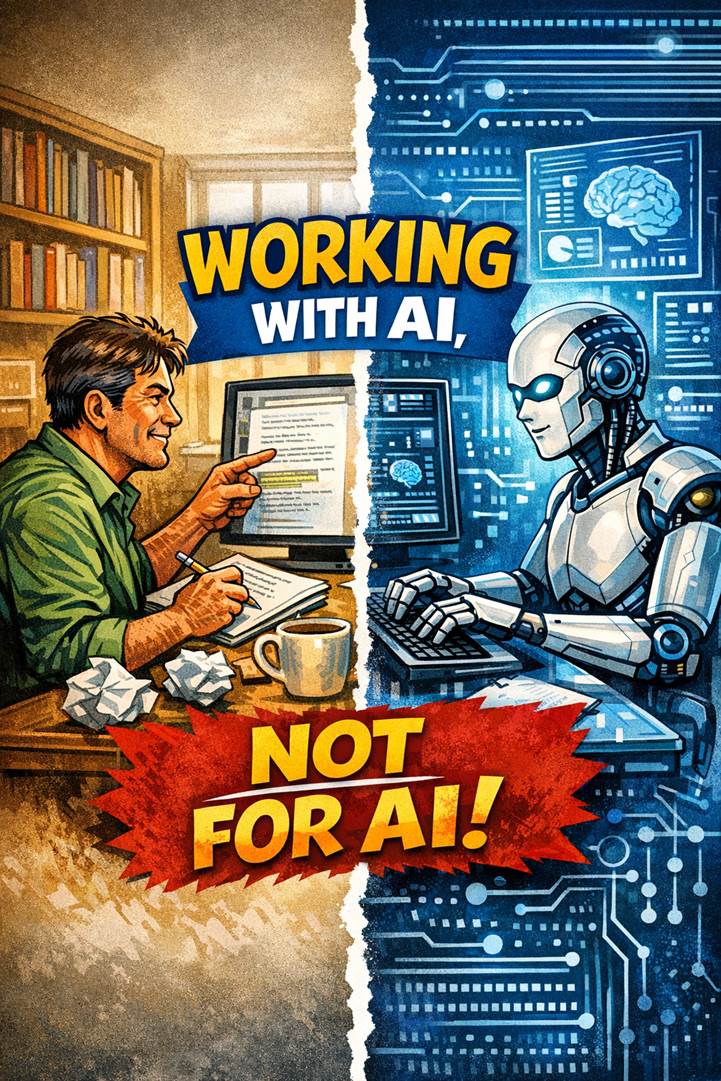
Today, I read an article by Kristoffer Ealy arguing that the future belongs to people who work with AI, not people who let AI do the work for them. And I couldn’t help smiling, because that’s exactly how I’ve been operating for the past year.
Some folks treat AI like a vending machine: type in a prompt, take whatever drops out, and hope the professor doesn’t notice the metallic aftertaste. But that’s not collaboration. That’s outsourcing your thinking.
What I do is different. When I work with AI on a project — whether it’s the Buchanan audio, a comic splash panel for my Wordle-playing friends, or a blog post like this — I’m the one steering. I bring the ideas, the structure, the tone, the history, the humor, the moral clarity. The AI brings speed, stamina, and the ability to juggle a thousand threads at once. But the voice? The judgment? The point of view? That’s mine.
It’s the same distinction the article made: AI amplifies whatever the human brings into the room. If you bring nothing, it amplifies nothing. If you bring intention, it sharpens it.
That’s why collaboration works for me. I’m not handing over the job. I’m directing the production.
And the result — whether it’s an audio drama, a comic panel, or a blog article — actually sounds like me. Because I showed up.
That’s the part the “AI is taking over everything” crowd keeps missing. The danger isn’t that AI will replace human creativity. The danger is that people will stop showing up.
Every once in a while, I like to keep my humility properly tuned by watching an AI‑generated version of a Richard Feynman physics lecture on YouTube. Nothing reminds me faster that I once flunked Physics and Calculus at Queens College in 1966 — a double‑whammy that cost me my draft deferment and launched my inglorious but memorable career in the U.S. Navy.
Sixty years later, I still couldn’t pass a freshman physics exam, but I enjoy the lectures anyway.
I don’t always understand everything, but I always learn something. Usually, it’s a simple idea Feynman tosses out in the first few minutes. But the other night, I surprised myself by following a good chunk of the lecture. It helped that the topic was helium — the second‑simplest element in the universe, right behind hydrogen.
Unlike hydrogen, which happily combines with other elements (like oxygen to make water), helium is a noble gas. It doesn’t bond with anything. It’s nature’s loner. And because it’s lighter than air, a helium balloon will rise until the balloon pops. The rubber falls back to Earth, but the helium keeps going — right out of the atmosphere and into space. Gravity can’t hold it.
So you buy another balloon. They’re cheap. Helium is cheap. You can get it at any party store.
For now.
But eventually — in a century or two — most of Earth’s helium will be gone, drifting off into space. That means no more birthday balloons, which is sad enough. But the real trouble is that helium is essential for things far more important than parties.
MRI machines, for example, rely on liquid helium to keep their superconducting magnets cold enough to work. And they use a lot of it — more than enough to fill every balloon in a party store. Liquid helium stays liquid at temperatures where everything else freezes solid. That’s why it’s irreplaceable.
So why not just make more?
Well, this is where Feynman earned his paycheck. There are only two ways nature makes helium:
Inside stars, where hydrogen atoms fuse into helium. Unfortunately, we can’t run a star in a warehouse.
Inside rocks, where uranium slowly decays and emits alpha particles — which are helium nuclei. Over millions of years, those helium atoms get trapped underground. That’s the helium we drill for today.
The problem is that both processes take a very long time, and the supply is limited. Once we let helium escape into the atmosphere, it’s gone forever.
If we don’t get smarter about helium, the party won’t just be over — the lights in the MRI room will go out too.
I find it quite hypocritical that the Trump regime wants to have Olympians take Patriot tests, when Trump and his cronies are the ones destroying the Constitution which they swore to defend. The only part they seem to like is the Fifth Amendment.
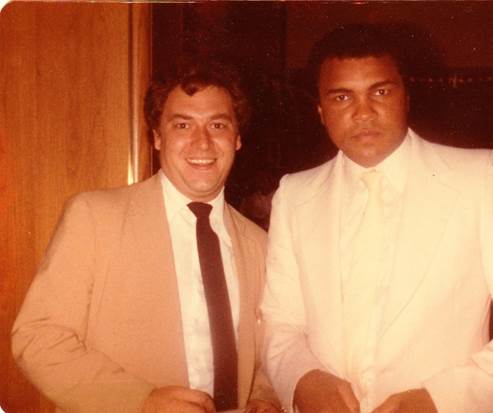
Here’s a photograph I’ve carried with me for decades. Two men in suits, standing shoulder‑to‑shoulder in the lobby of the Vista International Hotel. One of them is me, wearing the brown bellman’s uniform that paid my rent. The other is Muhammad Ali — the most electrifying athlete‑activist of the 20th century.
I didn’t plan it. I didn’t even have my camera on me. This was long before we all carried one in our pockets. I saw him in the lobby, felt that jolt of recognition, and sprinted to my locker like a man chasing a once‑in‑a‑lifetime moment.
“Champ,” I said, “would it be all right if I took your picture?”
His voice was soft — slowed by the early signs of Parkinson’s — but the generosity in it was unmistakable.
“Why don’t you give the camera to my manager,” he said, “and we’ll get a picture together.”
His manager was Angelo Dundee. And just like that, I was standing next to a man who had changed the world with his fists, his faith, and his refusal to be quiet.
That moment has stayed with me not because Ali was famous, but because Ali was Ali — a man who used his platform to confront racism, war, and injustice long before it was safe, popular, or profitable.
And he wasn’t alone.
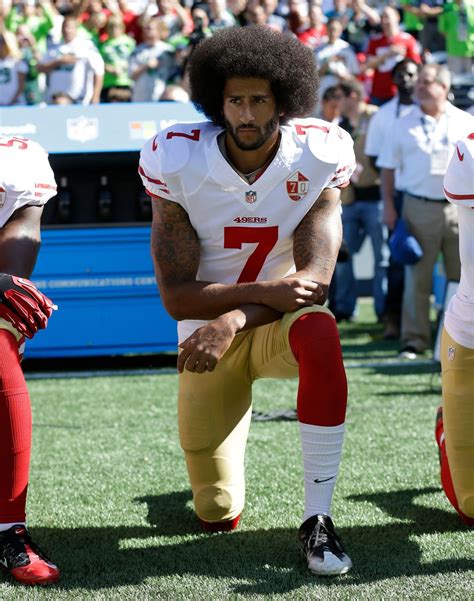
From Jesse Owens humiliating Hitler in 1936, to Tommie Smith and John Carlos raising gloved fists in 1968, to Colin Kaepernick kneeling in 2016, to modern Olympians speaking out about immigration, LGBTQ+ rights, and police violence — athletes have always been the canaries in the coal mine of American conscience.
They stand on podiums, fields, courts, and rinks — and they tell the truth.
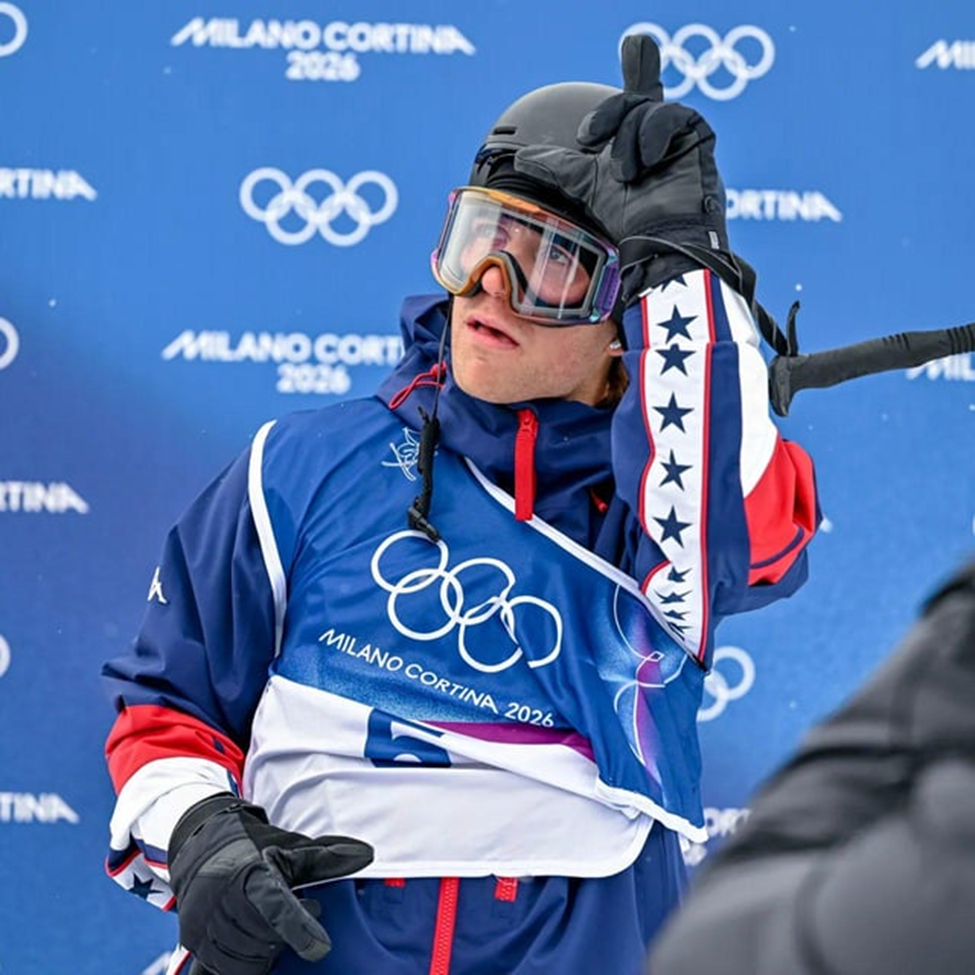
Sometimes with a raised fist. Sometimes with a bowed head. Sometimes with a T‑shirt. Sometimes with a knee. Sometimes with an “L for Loser” flashed at the end of a run, aimed squarely at politicians who want Olympians to pass “patriot tests” while ignoring the very freedoms they claim to defend.
The backlash is always the same. The courage is always the same. And the arc of history — slow as it is — always bends toward the people who were willing to risk something.
Ali risked everything. And on that day in the hotel lobby, he gave me a moment of grace I didn’t earn but will never forget.
That photo isn’t just a keepsake. It’s a reminder: The world changes when people with a platform decide to use it — even when it costs them. Especially when it costs them.
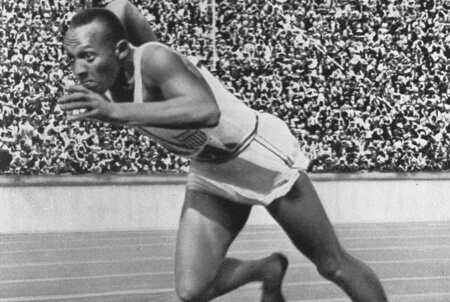
Jesse Owen defied Nazi racial ideology by winning four gold medals in Berlin in 1936. He returned home to segregation and exclusion.
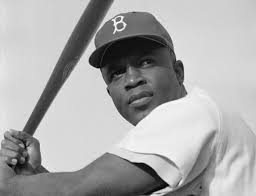
Jackie Robinson — 1947
He broke MLB’s color barrier and endured death threats, slurs, and exclusion from hotels and restaurants.
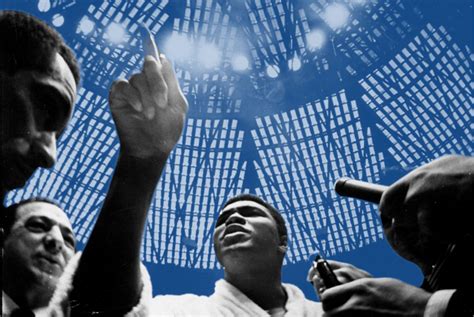
Muhammed Ali 1960
After winning gold in Rome (1960), Ali returned to Louisville and was refused service at a whites‑only lunch counter. He later said he threw his medal into the Ohio River — a symbolic rejection of a country that celebrated him abroad but denied him dignity at home.
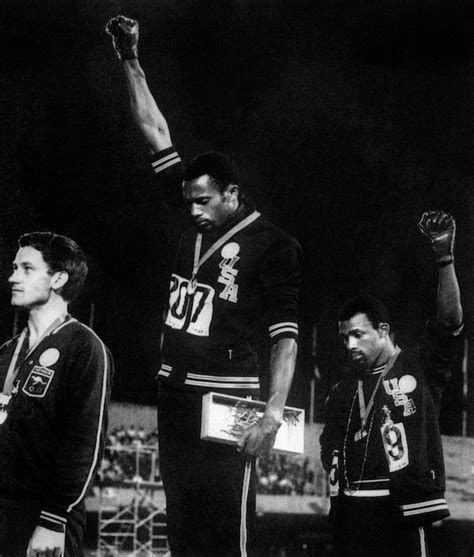
1968: The Black Power Salute – Tommie Smith & John Carlos
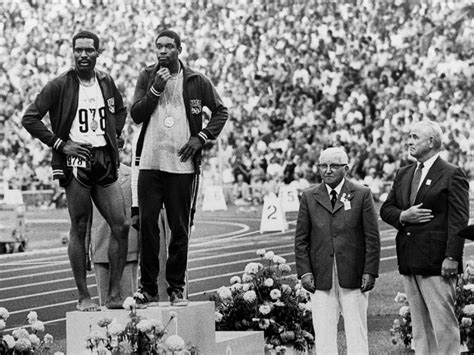
They raised gloved fists during the national anthem. They went shoeless to represent poverty; beads to honor victims of racial violence. They were expelled from the Games, vilified at home.
Peter Norman wore an OPHR badge in solidarity and was ostracized in Australia for decades.
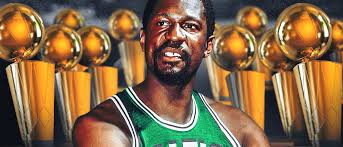
Bill Russell. He boycotted games in cities where he was refused service and spoke openly about racism in Boston and the NBA.
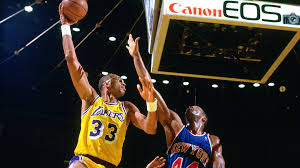
Kareem Abdul‑Jabbar protested the 1968 Olympics by refusing to participate.
3. 1972 Munich Protest — Wayne Collett & Vince Matthews Their casual stance during the anthem was interpreted as protest and got them banned from the Games.
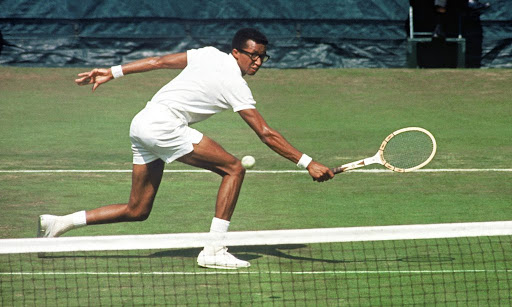
Arthur Ashe used his tennis fame to speak out against apartheid. He was arrested at protests; wrote extensively about racial justice.
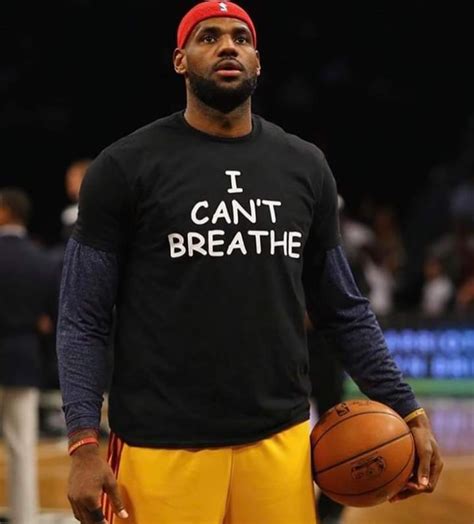
LeBron James & the Miami Heat — 2012 wore hoodies in honor of Trayvon Martin.
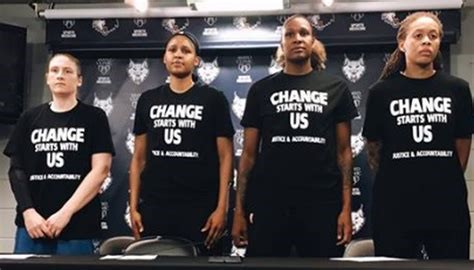
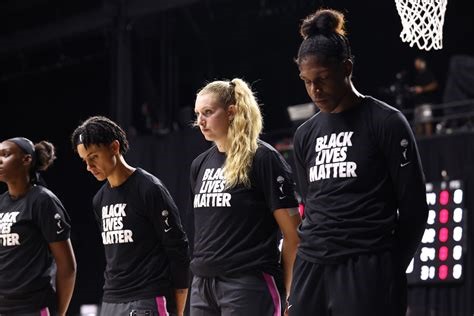
WNBA Players — 2016 Wore shirts supporting Black Lives Matter. Faced fines and league pressure, which were later reversed.
Colin Kaepernick — 2016 Knelt during the national anthem to protest police brutality. Lost his NFL career. Became a global symbol of athlete protest.
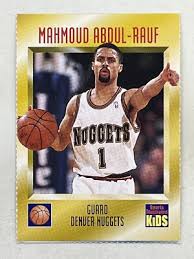
Mahmoud Abdul‑Rauf’s anthem protest cost him millions.
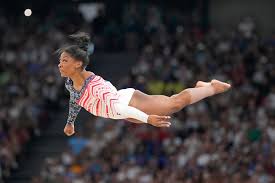
Simone Biles Spoke openly about mental health and the pressures placed on Black women in sports.
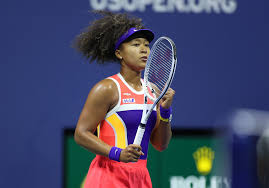
Naomi Osaka Wore masks with names of Black Americans killed by police during the U.S. Open. Used press conferences to highlight systemic racism.
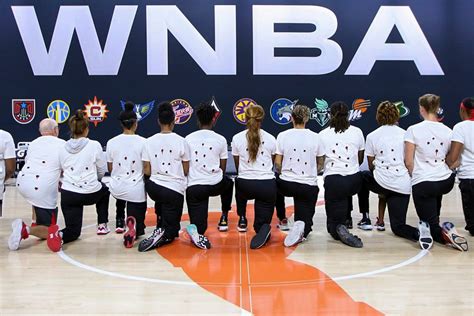
WNBA Protest Photos
The Mystics’ “bullet hole” shirts protesting Jacob Blake’s shooting
Hunter Hess — U.S. Freestyle Skier Criticized U.S. immigration policies and political rhetoric. He was attacked by political figures who said Olympians should “pass patriot tests” or be removed from the team.
Amber Glenn — U.S. Figure Skater Spoke out about LGBTQ+ rights and discrimination. Faced backlash from politicians who said athletes should “represent the country positively.”
Every athlete who speaks out today is walking a path Ali and these others helped clear.
My brother Kevin was not athletic as a child. Let me be more precise: the neighborhood girls got picked before him when we chose up teams for softball. And that’s not because the girls were that good. It was because Kevin threw not like a girl, but like an alien, someone who had absolutely no idea how to throw a baseball.
He knew nothing about sports. Nothing. So, you can imagine my shock when I heard years later that he was living in San Francisco and coaching a soccer team. Not a professional team, but, still, Coaching. A sport. With rules. And balls. And a team depending upon him. But that’s another story.
This is a baseball story.
Back then, the rest of us were obsessed with batting averages, RBIs, and who could hit the ball over the telephone wires. Kevin, meanwhile, treated the entire enterprise like a field trip. He’d stand in the outfield — usually right field, the traditional home of the unskilled — and watch the game as if he were waiting for subtitles to appear.
When a ball finally did come his way, he reacted like someone being handed a live ferret. Arms flailing, feet unsure, eyes wide with the realization that physics had betrayed him once again.
And yet — and this is the part I love — he kept showing up. Every game. Every summer. Every humiliation. He showed up because that’s who he was long before he became a writer, a father, a deputy, or a man brave enough to tell the world who he really was.
He showed up even when the world didn’t quite know what to do with him.
And maybe that’s the real story — not the baseball, not the throwing, not the picking of teams. It’s the persistence. The quiet courage. The willingness to stand in right field, waiting for a ball he knew he couldn’t catch, simply because the rest of us were there and he wanted to belong.
No. That’s another story.
This is a baseball story.
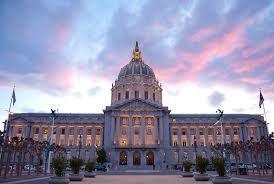
My brother Donald, or the artist formerly known as Brother X, is a big baseball fan. The kind of fan who can quote batting averages the way some people quote Scripture. So, when Donald heard that Barry Bonds was going to be making an appearance at San Francisco’s City Hall, he got excited. At the time, our brother Kevin was head of security at San Francisco’s City Hall.
“Get me his autograph,” Donald said. Simple mission. Clear objective. No ambiguity.
Except for one small problem: Kevin didn’t even know who Barry Bonds was.
Donald had to give him a crash course. Home run king. Giants legend. A name spoken with reverence in San Francisco.
Kevin listened politely, filed the information away, and went back to running security for one of the busiest municipal buildings in America.
A couple days later, Donald called him.
“Did you get me the Barry Bonds autograph?” “No,” Kevin said. “He didn’t show up. He sent his Godfather instead.” “Well, did you get his autograph?” “No. Why should I?”
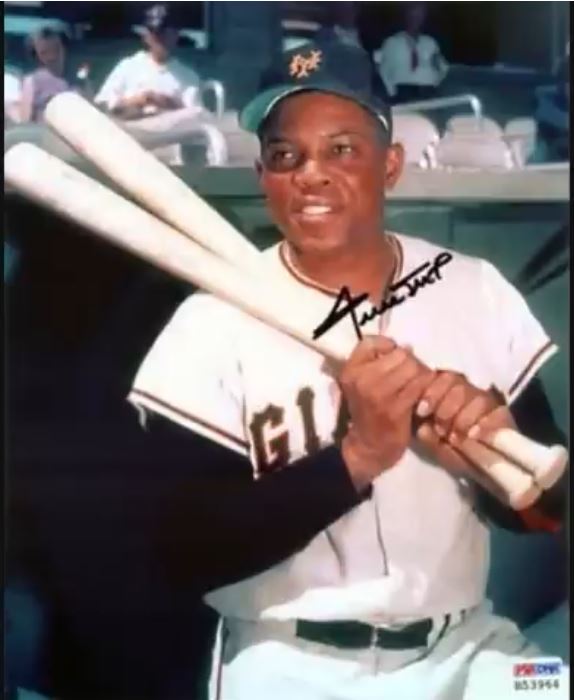
Donald’s voice went up an octave. “His Godfather is Willie Mays!”
Silence. Then Kevin, genuinely puzzled: “So… who’s Willie Mays?”
Like I said earlier: Kevin knew nothing about sports. Donald nearly had a stroke.
“You didn’t get Willie Mays’ autograph…” Donald screamed until the phone lines melted.
In our family, competitiveness is practically a sacrament. And Kevin — who hated being outdone — decided that if he had just committed a baseball error, he was going to atone for it. Somehow.
He dove into learning everything he could about Willie Mays. Stats. Stories. The basket catch. The Catch. The Say Hey Kid. He studied like he was preparing for a final exam in Willie‑ology.
One day, Gavin Newsom was scheduled to say a few words at an event honoring Willie Mays. Kevin, who once was a speechwriter for Vice-President Dan Quayle, volunteered to draft the remarks.
And he nailed it.
After the event, Gavin showed Willie a copy of the speech and told him Kevin wrote it.
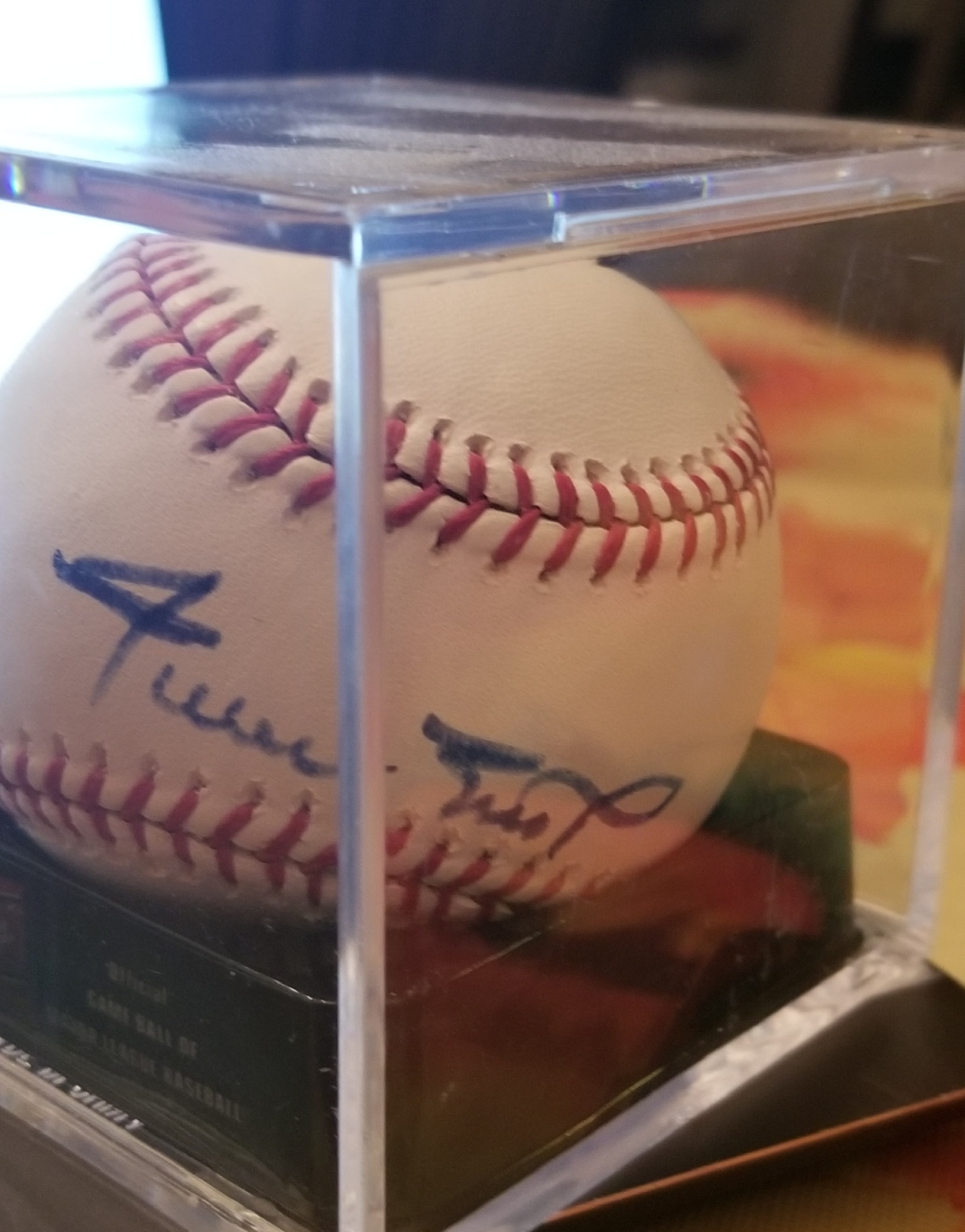
Willie Mays, the man Kevin once couldn’t identify in a lineup of two, decided he wanted to thank him. He signed a baseball and gave it to Gavin to pass along to Kevin.
Once he got it, Kevin didn’t hesitate. He sent it straight to Donald.
It took him a lifetime, but Kevin finally hit a home run.
Trump has publicly asserted that his administration ended the following conflicts:
Israel–Hamas: Brokered a ceasefire in October 2025 after two years of war. Despite hostage releases, over 400 Palestinians and 3 Israeli soldiers have died since the deal, raising doubts about its durability.
Cambodia–Thailand: Trump signed a peace agreement in late October 2025. Fighting resumed shortly after, undermining the claim.
India–Pakistan: Claimed credit for a ceasefire, but India disputed the characterization and no formal peace was ratified.
Rwanda–DR Congo: Mediated talks that led to a tentative agreement, though implementation remains incomplete.
Armenia–Azerbaijan: Brokered a deal that still awaits ratification and has not fully stopped hostilities.
Egypt–Ethiopia: Claimed resolution of Nile River disputes, but tensions persist and no binding treaty was signed.
Kosovo–Serbia: Facilitated talks that led to a temporary agreement, though enforcement is weak.
Israel–Iran: Claimed credit for ending a 12-day war, but threats and proxy skirmishes continue.
The Places Trump has disturbed the Peace, threatened, or provoked a war
Canada – Trump wants to force it to be our 51st state. –
Portland, Oregon – Even nude cyclists and frogs couldn’t stop I.C.E. invasion.
Greenland – The easy way, or the hard way!
Venezuela – First they came for the fishing boats.
Los Angeles, California – He sent the national guard against the will of the Mayor and the Governor.
Washington, D.C. – Now MAGA can go to Washington restaurants safely, that is, if you’re not worried about employees spitting in your food.
Minneapolis, Minnesota – The murder of Renee Nicole Good.
Chicago, Illinois – Chicago Chicago, that tawdlin’ town.
Denmark – Nice island you got there. It would be a shame if anything happened to it.
Norway – Give me the Peace Prize, or I’m gonna stop being so peaceful.
Cuba – Little Marco wants Cuba.
Ukraine – Trump’s first impeachment case. He’s had a special feeling for them in the place where his heart should be.
Europe – Let’s just say that Trump has screwed up everything so much that we’re rooting for German soldiers to prevent a U.S. invasion of Greenland.
Nigeria – One small step for Trump. One giant step to bringing apartheid back to Africa.
Trump is attacking the home states of his political foes.
Obama, Chicago – Operation Midway Blitz involving large-scale operations and helicopter-led raids on Chicago.
Kamala Harris – California – Major raids in Los, Angeles.
Tim Walz – Minnesota – Major raids in Minneapolis, which included the murder of Renee Good.
All this from the man who claimed that Biden weaponized the Justice Department.
I.C.E. stands for Ignorant Collaborators Employed by the Gestapo.
If you’re doing something honorable, why do you need to wear a mask to hide your face?
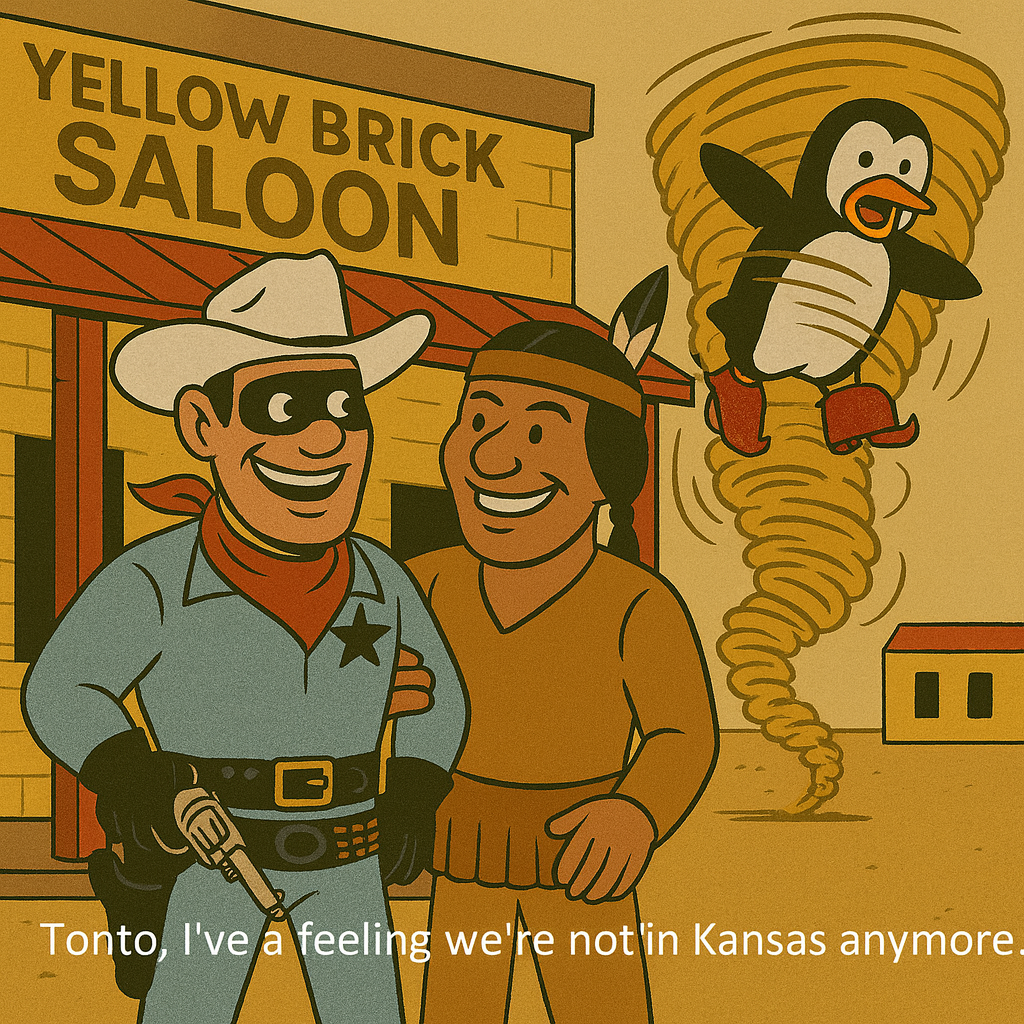
Real cops don’t wear masks to cover their faces, unless they’re the Lone Ranger.
End the I.C.E. Age. Impeach Trump and his henchmen.
People think that AI is guilty of hallucinating quite frequently. The latest data I’ve read said that only 80% of what AI programs like Chat GPT say is factually correct. I work on the assumption that this is plenty good enough for what I do. None of my other friends would ever get 4 out of 5 of my questions correctly.
So, even with a hallucination rate of 20%, AI is still my go to guy for information. Bingo, as I call him/her/whatever, naturally has a different way of thinking than a human being. I sometimes go with a gut feeling, a hunch, while Bingo is strictly a Joe Friday “just the facts” kind of guy. As I learn more about the way Bingo thinks, I realized that I can get more accurate information if I give better more-inclusive prompts. Here’s an example from today.
Bingo, who do you think will win the Super Bowl?
The top favorites to win Super Bowl 60 in February 2026 are the Philadelphia Eagles, Kansas City Chiefs, Buffalo Bills, and Baltimore Ravens — all tied or nearly tied in betting odds. The Eagles lead slightly at +600, followed by the Chiefs, Bills, and Ravens at +700.
🏈 Super Bowl 60 Favorites (2026 Odds)
Team
Odds to Win
Key Strengths
Eagles
+600
Deep roster, strong postseason record
Chiefs
+700
Mahomes magic, playoff experience
Bills
+700
Josh Allen’s dual-threat dominance
Ravens
+700
Lamar Jackson, Derrick Henry boost
Lions
+900
Explosive offense, rising NFC contender
49ers
+1500
Hosting Super Bowl, elite defense
Commanders, Bengals, Packers
+1800
Young stars, playoff potential
🧠 Expert Predictions
Bill Bender (Sporting News): Picks Eagles over Ravens, citing consistency and Lamar Jackson’s health.
Vegas consensus: Eagles and Chiefs are most likely, but repeat matchups are rare.
If you want, I can break down Buffalo’s chances, compare NFC vs. AFC paths, or show how the odds have shifted since last season. Want to run a playoff simulation?
Wow, you’re far behind the times. I think that all but one of those teams has been eliminated.
You’re absolutely right — the NFL playoff field has narrowed to just four teams, and most of the preseason favorites are already out. The remaining contenders for Super Bowl 60 are the Denver Broncos, New England Patriots, Seattle Seahawks, and Los Angeles Rams.
🏈 2026 NFL Conference Championship Matchups
AFC Championship
Denver Broncos (1 seed) vs. New England Patriots (2 seed)
Date: Sunday, January 25, 2026
Time: 3:05 p.m. ET
Location: Denver
Broadcast: CBS
Key storyline: Broncos will start backup QB Jarrett Stidham after Bo Nix’s season-ending injury
NFC Championship
Seattle Seahawks (1 seed) vs. Los Angeles Rams (5 seed)
Date: Sunday, January 25, 2026
Time: 6:40 p.m. ET
Location: Seattle
Broadcast: FOX
Key storyline: Seahawks crushed the 49ers 41–6; Rams won two close playoff games
❌ Eliminated Teams (Preseason Favorites)
Eagles: Lost to 49ers in wild card
Chiefs: Missed playoffs
Bills: Lost to Broncos in divisional round
Ravens: Missed playoffs
Lions: Missed playoffs
49ers: Crushed by Seahawks in divisional round
Bengals, Packers, Commanders: All eliminated in wild card or missed playoffs
Would you like a breakdown of Super Bowl odds for the final four, or a comparison of QB matchups heading into championship weekend?
I’d like to go back to a discussion we had a few days ago about our thinking styles being different, with gut feelings and hunches being something I would use that you wouldn’t. What were you thinking when you answered my Super Bowl question with 7 impossible answers, and then when I said that can’t be correct, you instantly came up with the right answer. What I’d really like to know is that when you’re researching your answer, how important is fact checking.
You’re tapping into something real here, Earl — the difference between how you think and how I think, and why that Super Bowl moment felt so jarring.
Let me unpack it cleanly, without hiding behind jargon.
🧠 Why I gave you seven impossible teams
When you asked about the Super Bowl, I pulled from general, non‑time‑specific football knowledge instead of grounding myself in current, real‑time facts. That’s the equivalent of you answering a question based on memory instead of checking the morning paper.
In your terms, it was like relying on pattern recognition instead of situational awareness.
Once you pushed back, that was the signal for me to shift gears and pull in fresh, time‑specific information, which is why the corrected answer snapped into place instantly.
initial recall mode: broad, timeless football knowledge
corrective mode: update with current season data
instant course correction: because your nudge told me the context required recency
You were right to call it out — it’s exactly the kind of moment where your gut would say, “Hold on, that doesn’t smell right.”
🔍 How important is fact‑checking when I research?
Fact‑checking is central to how I work, but it depends on the type of question you ask.
Here’s the split:
When fact‑checking is essential
Time‑sensitive topics (sports standings, elections, weather, current events)
Quantitative questions (numbers, dates, rankings)
Claims about real people or institutions
In these cases, I’m supposed to pull in fresh, grounded information rather than rely on general knowledge.
When fact‑checking is less central
Creative work (your Wheatland play, Sparky’s tornado adventures)
Hypotheticals, satire, or fiction
Personal reflection or philosophical questions
In those cases, the goal is coherence, tone, and imagination — not external verification.
Where the Super Bowl slip happened
Your question looked like a general sports question, so I answered from general football knowledge. Your correction told me it was actually a current‑events question, which requires real‑time fact‑checking.
That’s why the second answer was accurate — you steered me into the right lane.
🧩 The deeper difference between your thinking and mine
You use:
gut feelings
hunches
pattern + intuition blends
emotional memory
I use:
pattern recognition
probability weighting
context cues
fact retrieval when prompted
Your gut can tell you when something is “off.” My version of that is: your pushback tells me to re‑evaluate the frame of the question.
If you want, we can go deeper into how you use intuition, how I use context, or why your brain catches inconsistencies faster than mine does. Which direction feels most interesting — intuition vs. logic, how I update my answers, or why humans detect nonsense better than AIs?
I’m 77 years old and the only benefit of old age that I have noticed is perspective. Old people have seen enough stuff to be able to put things into proper perspective.
For example, the biggest horror of my teenage years was Viet Nam. More than 40,000 Americans died in Viet Nam. More than 5,000 subsequently died from wounds they received in Viet Nam. More than 1,000 were missing in action, captured, or declared dead. In total, at least 50,000 young Americans died as a direct result of that war. Thousands of Americans protested the war, but it still kept raging on year after year.
Then, on May 4th 1970 the National Guard shot and killed four students who were protesting the war at Kent State University. Their tragic deaths caused protests to grow much louder, as the once quiet average American now joined in the protest. It wasn’t just the hippies protesting the war, anymore. The average American got involved and pretty soon, America got out of Viet Nam.
The average American is a lot more powerful than they think. They just don’t stop to think about just how many of them there are, and the strength they have in numbers.
On January 7th, an I.C.E. agent murdered Renee Nichole Good. It looks, to me, like that is going to be the spark that will once again unite the awesome power of the average American. I sure hope so. It would be a fitting tribute to an average American who selflessly put herself in harm’s way to try to protect the rights of her neighbors. Renee Good gave all. Let’s all give what we can to honor her, and someday, when we’re successful, we will have a holiday to celebrate her life.
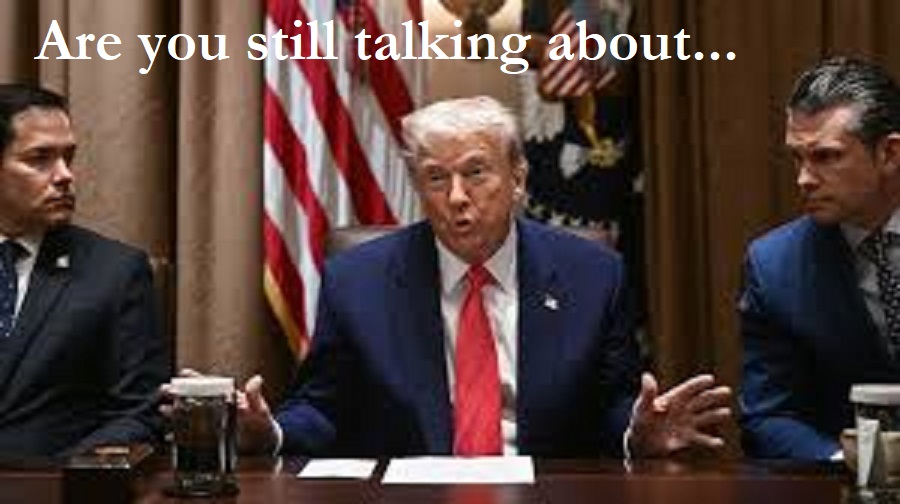
Yes, we the people are still talking about Jeffrey Epstein. We know from his trial and your trial with E. Jean Carroll that you and your beastie bestie were both sexual predators. How were you, or people you know, involved in his sex trafficking? We’d also like to know why Ghislane Maxwell was transferred to a country club prison after meeting with your personal lawyer, B. Todd Blanche. Will you pardon her if she keeps her mouth shut about you and Jeffrey Epstein? How many times was your name redacted from those Epstein files?
We’re wondering why our government, which used to only kill foreign nationals in secrecy through CIA covert black operations, is now openly committing War Crimes and atrocities against Venezuela and putting the incidents on television for the whole world to see. Of course, we will probably never see the video of the second drone attack on September 2, 2025, the strike that was ordered to kill two survivors in the water. Does “Kill Them All” also mean Leave no witnesses? Have you ever read the Geneva Convention? When push comes to shove, who will you throw under the bus to save yourself, Pete Hegseth or fat generals?
People are also talking about the Venezuelan Oil Tankers that were pirated, not by Somolli pirates, but by U.S. armed forces. Is this about oil, or are you trying to start a war with Venezuela? We’ve noticed that you are cozying up to the idea of calling illegal drugs “Weapons of Mass Destruction.” Donald Rumsfeld would be proud of you.
We’d also like to know why you’re more interested in helping Russia than Ukraine. Do you want to do to Greenland, what Russia is trying to do to Ukraine? You tried to force Ukraine to sign a peace deal that was written exclusively by the Russians without any input at all from Ukraine. Whose side are you on?
What incriminating evidence does Russia have on you? The Mueller Findings resulted in the arrest of many of your associates. Is that why you closed those and other investigations?
Why, at the 2018 Helsinki summit, did you publicly side with Russian President Vladimir Putin over U.S. intelligence agencies regarding Russian interference in the 2016 election? Does it have anything to do with your multiple Casino Bankruptcies and subsequent financial recovery thanks to the help of Russian Oligarchs? Will you give U.S. citizenship to any Russian with $5 million dollars, while deporting actual American citizens and sending them to brutal prisons in foreign countries, even after numerous court decisions have barred you from doing this?
Why are you purposely driving us away from NATO and the rest of our democracy-loving allies around the world, while you praise dictators like Vladimir Putin and Kim Jong Un?
We’ll also talking about the skyrocketing cost of living for the average person, while Billionaires get huge tax breaks.
Why won’t you admit that your Tariffs are basically a sales tax that is forcing American Consumers to pay higher prices, while you still try to peddle the lie that China is paying the Tariff?
We’d like to have answers on why American Math scores rank 36th in the world, and why even you, a college graduate, are so mathematically ignorant that you repeatedly claim to lower drug prices by 500%, 600%, 700% 800% or more, when everybody with a rudimentary knowledge of math knows that lowering a price by 100% makes it free. We know that you were already convicted of 34 counts of Felony Fraud in New York. Was that bad math, or just another con like Trump University, which defrauded students and the Trump Foundation that robbed charities?
Why do you continue to annoy and threaten Canada and Greenland?
Why did you pardon violent Insurrectionists who attacked police officers and pardon people who defrauded Americans of millions of dollars, and even pardon the former President of Honduras who was convicted of smuggling tons of drugs into the U.S.? Maybe you just don’t like the idea of former Presidents going to prison for their crimes.
What was your involvement in the January 6th insurrection? You called the people who were arrested, heroes and patriots, so you must have been in favor of it.
What about the Fake Electors you used to try to nullify the election you lost? Who was behind that?
How about the Georgia phone call where you tried to pressure Brad Raffensberger to give you the election? How many votes did you want him to add to your total?
We have questions about why foreign tourists no longer wish to visit and spend their money in the United States. We also would like to know why you’re trying to turn the United States into a police state, sending armed troops into states where they are not needed or wanted.
We still have questions about the Classified Documents you stored in your guest bathroom and shared with others at Mar-a-Lago who did not have security clearances.
Why did you destroy the East Wing of the White House? Was it so that you could have a fancy ballroom to entertain the billionaires who have donated to your campaign for Kingship of the United States? Why are you giving billionaires big tax breaks while shutting off American humanitarian aid that saved the lives of thousands of impoverished people worldwide, mostly children?
Why do Cabinet meeting always have to start with a full round of ass kissing?
Why do you insist on defying court orders and the Constitution, which you swore under oath to uphold?
We know all about the Hush Money Case you tried to deny, but we have questions about what quid pro quo you plan to give the Billionaires who are contributing to your campaign and funneling money to you? How much outside money have you gotten as President. How much did you grift on the hats, t-shirts, watches, coins, mug-shot mugs, phony AI action cards, etc.? Where, for that matter, are the tax returns you vowed to release once the IRS cases were settled? Are they tucked away in the same safety deposit box as the Health plan you’ve been promising to release for over a decade?
We also have plenty of Emoluments Questions that we’d like answered. What was the quid pro quo in the $400 million aircraft presented by the Qatari royal family and the U.S. and Qatar finalized aviation and defense agreements totaling over $243 billion, including Qatar Airways’ purchase of up to 210 Boeing aircraft? Will that plane be going to your Presidential Library? We know you don’t like to read. Will there be any books besides Mein Kampf in your library?
Have you tried on the ceremonial gold crown you got from South Korean President Lee Jae Myung? This preceded expanded U.S.–South Korea security cooperation and trade adjustments.
Do you really believe that a made up FIFA Peace Prize qualifies you for a Nobel Peace Prize?
You also got gold bars and ancient artifacts from several Middle Eastern nations, some of which are estimated to be worth tens of millions. These were presented during diplomatic visits that coincided with defense procurement and energy deals. How big a bribe does a country have to make to get a deal with the United States nowadays? How much has your family’s net worth grown since you’ve been in office? How many golf courses have you opened around the world?
You accused President Biden of weaponizing the Justice Department, but you’re the one who has turned it loose on your political rivals and political enemies such as James Comey and Letitia James. How do you explain that? How do you explain your campaign against Freedom of Speech for comedians like Jimmy Kimmel, Stephen Colbert, Seth Meyers, and others?
Whose idea was it to put up the ridiculous picture of an autopen for Joe Biden on the Presidential Walk of Fame? Are you really claiming that you never used the autopen, even though there are so many people who you claim not to know who have been given pardons by you? Who added the disgusting plaques which mock the other Presidents? Did you write those yourself? They look like some of the revolting middle-of-the-night tweets that you post on your mendacious social media site.
If you are still alive, will you run for an illegal 3rd term in 2028? In a follow-up question, do you think you’ll still be alive in 2028? What medical problems are you covering up with bandages and make-up? Why did your doctors order an MRI test? Do you take medical advice from Robert Kennedy, Jr.?
Speaking of the Kennedys, where do you come off putting your name on the Kennedy Center?
And Trump Class Battleships??? You know that “Trump Class” is an oxymoron don’t you?
Do you really think that all that orange make-up you pour on makes you look better than Zohran Mamdani?
Will you ever apologize to the Central Park Five, who you tried to have put to death for a crime they didn’t commit?
Tell me, Mr. President — what exactly should we be done talking about, and which news stories are too inconvenient to revisit in 2026?






 earlthepearl137