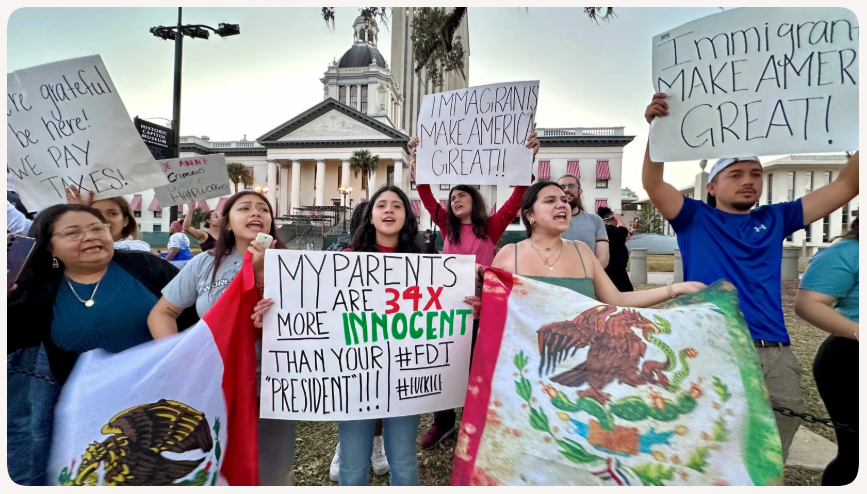
As America prepares for the No Kings Rally — a celebration of democratic resistance and constitutional humility — it’s worth asking: what kind of kingdom are we resisting?
Recent headlines suggest we’re not just dealing with a president. We’re dealing with a monarch-in-waiting, armed not with a crown, but with a blacklist.
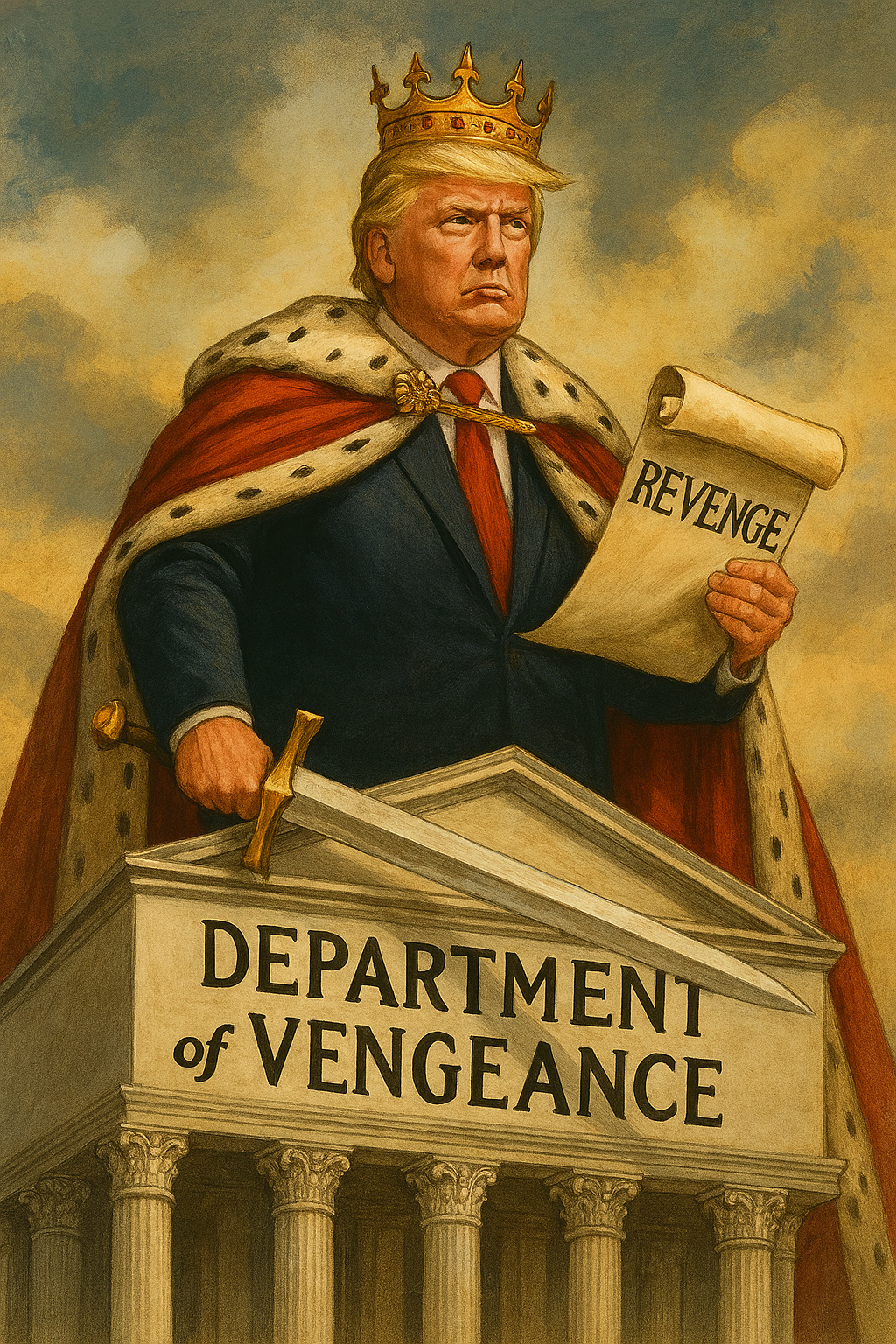
He’s already renamed the Department of Defense the Department of War — now he’s eyeing the Department of Justice for a makeover: the Department of Vengeance.
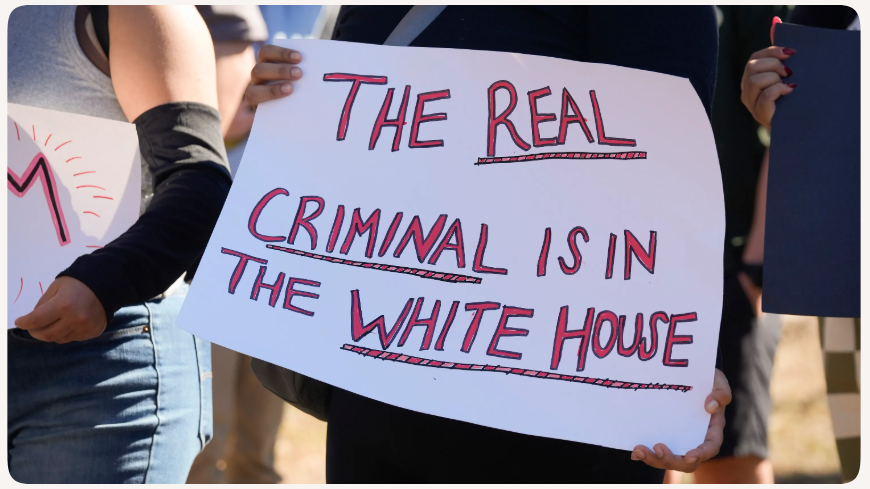
Donald Trump has made no secret of his desire to punish his political enemies. He’s called himself “your retribution”. He’s floated criminal referrals for Letitia James, who dared to hold him accountable for civil fraud. He’s targeted James Comey and John Bolton, not for crimes, but for defiance. And he’s done it all while testing the waters of public appetite for vengeance — a campaign strategy that doubles as a loyalty test.
This isn’t justice. It’s grievance cosplay.
The so-called Department of Vengeance isn’t a real agency, but it might as well be. Trump’s allies have proposed purges of federal institutions, loyalty oaths for civil servants, and even a new “Department of Government Efficiency” — a euphemism for gutting agencies that don’t kiss the ring.
Let’s be clear: this is not about restoring order. It’s about rewriting the rules so that dissent becomes disloyalty, and accountability becomes treason.
And yet, the system resists. Grand juries refuse to indict political targets. Judges push back. Juries — those pesky peers — still ask for evidence, not vendettas. The machinery of democracy may be creaky, but it hasn’t collapsed. Journalists, too, are standing up. They walked out of the Pentagon after they refused to sign agreements that they would only write approved stories.
So, as we gather for the No Kings Rally, let’s remember: the crown isn’t just a metaphor. It’s a warning. When a leader builds a Department of Vengeance, he’s not just settling scores. He’s auditioning for tyranny. Trump is a wannabe Fascist, but like John Bolton once said, “To be a fascist, you have to have a philosophy. Trump’s not capable of that. You know, Adolf Hitler wrote a profoundly troubling book called Mein Kampf — My Struggle. Donald Trump couldn’t even read his way all the way through that book, let alone write something like it.”
Nonetheless, Dumb Donnie wants his revenge fantasies. We just want to keep our republic. Join the rally and help us.
Joseph Goebbels, Hitler’s Minister of Propaganda, is most often associated with the quote: “If you repeat a lie often enough, people will believe it, and you will even come to believe it yourself.” Goebbels’ propaganda strategy was repetition, emotional appeal, and the manipulation of public perception.
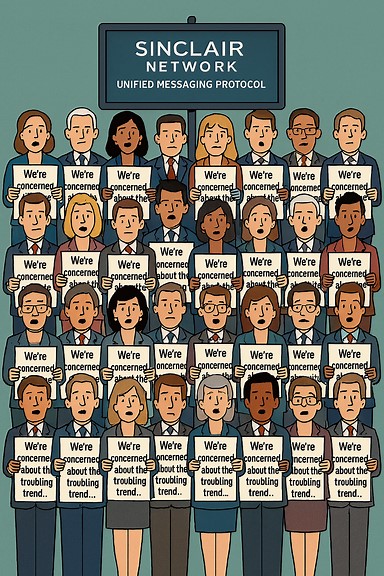
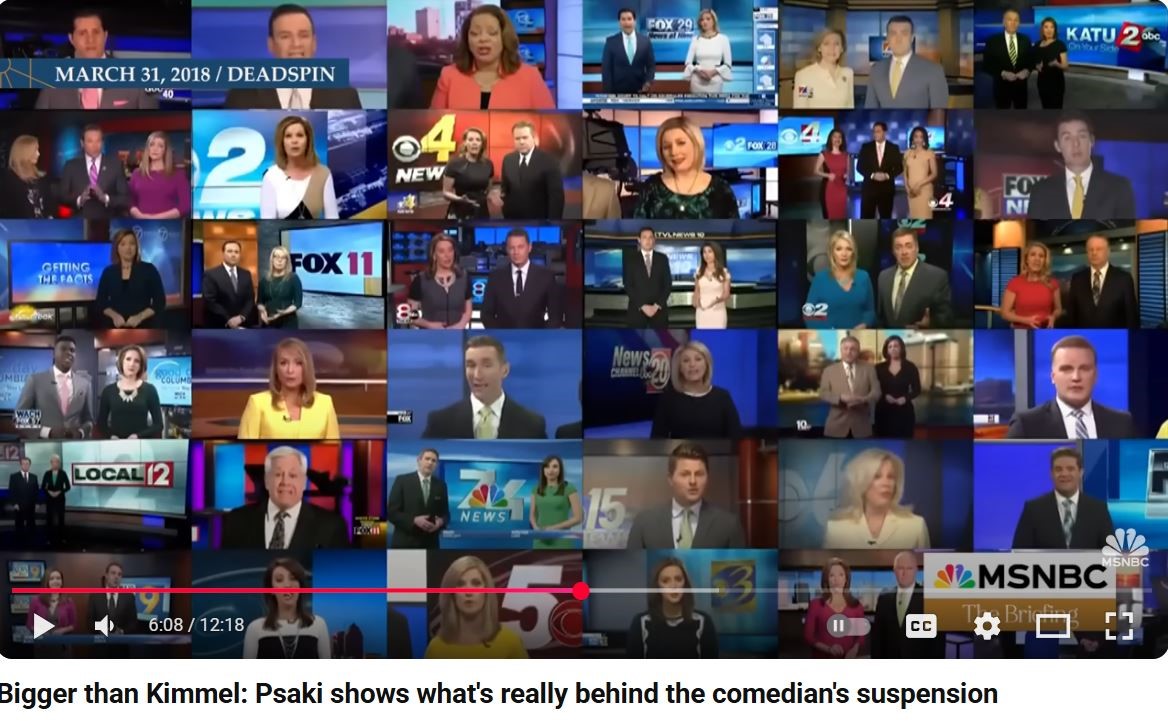
Jen Psaki recently aired a chilling montage: 36 Sinclair-affiliated newscasters in 36 different cities reciting the same exact script, word for word. It wasn’t a blooper reel—it was a broadcast strategy to “flood the zone” with their message. “If you repeat a lie often enough, people will believe it.” Ironically, their message was “We’re concerned about the troubling trend of false news…” Obviously, the irony was lost on them. What are the odds that 36 different opinion influencers in 36 different cities all had the very same word-for-word opinion about a current problem? You have better odds of hitting the Powerball Grand Prize. When 36 newscasters in 36 different cities say the same exact thing, it’s not journalism—it’s choreography.
This isn’t just lazy journalism. It’s tactical repetition—a propaganda technique. Joseph Goebbels believed that if you repeat a lie often enough, it becomes truth, not through evidence, but through echo. The modern Republican messaging follows this blueprint with eerie precision. When a false claim emerges—whether about elections, vaccines, or climate—it’s not debated. It’s deployed. Within hours, the same phrases surface across Fox News, congressional tweets, and local radio. It’s not persuasion. It’s programming. This isn’t about disagreement. It’s about manufactured consensus. The goal isn’t to win an argument—it’s to flood the zone with noise until truth becomes indistinguishable from fiction.
It starts with Centralized Messaging: GOP operatives distribute talking points like marching orders. The purpose is Repetition Over Reason: The same phrases—“weaponized DOJ,” “rigged election,” “woke indoctrination”—are repeated ad nauseam. Then comes the Emotional Anchoring: Lies are tied to fear, patriotism, or outrage, bypassing logic and triggering tribal loyalty. The final step is to Flood the Zone. Currently, the Republicans are blaming the government shutdown on Democrats. Not with nuance, not with evidence, but with a synchronized chant: “Democrats are shutting down the government to give billions in healthcare to illegal aliens.” It’s an outrageous lie. A loud, coordinated, cynical lie. But it’s everywhere—on cable news, in press releases, across social media. The goal isn’t persuasion. It’s saturation. “If you repeat a lie often enough, people will believe it, and you will even come to believe it yourself.”
This isn’t new. But the scale, speed, and shamelessness of its practitioners are unprecedented.
When truth becomes optional, democracy becomes ornamental. Plato warned that unchecked rhetoric leads to tyranny. Goebbels promoted it. And today’s Republican echo chamber is actually proving that it works in real time. They were able to get a twice impeached, convicted rapist and felon elected to the highest office by spreading lies without caring if they were true or not, “They’re eating the dogs!”
We don’t need censorship. We need media literacy, moral clarity, and the courage to call the repetition of lies what it really is: a weapon.
It happened just after dusk. I was halfway through reheating last night’s chili when the knock came — firm, rhythmic, and suspiciously polite. I figured it was U.P.S. with my Bourbon order. I opened the door to find two masked men, dressed like extras from a dystopian reboot of The Blues Brothers, holding a ribboned box and wearing jackets labeled “I.C.E.”
“Candygram for Earlthepearl137,” one of them said, eyes wide with bureaucratic innocence.
I blinked. I wasn’t surprised — I’d just published a blog post titled The End of Free Speech: A Love Letter to Monitored Comedy. I knew the drill. Say something morally clear, challenge selective outrage, and suddenly you’re on the compliance radar. Satire, when done right, makes some people nervous.
In my latest post, I questioned the double standards of speech policing — how moral clarity gets labeled “aggressive,” while actual harm gets a pass if it’s wrapped in patriotism or profit. I used examples from club signage, media pivots, and the way certain phrases get flagged not for content, but for who’s saying them.
Apparently, that was enough to trigger a “courtesy check.”
The I.C.E. agents didn’t arrest me, though. They didn’t even enter. They just stood there, box in hand, waiting for me to acknowledge the delivery. It was performance art — a compliance ritual dressed as concern. And like all good satire, it left me wondering: who’s really afraid of free speech?
I reached for the candygram, and the masked man winked. Not a friendly wink. The kind that says, We know where you live.
And then I woke up.
I wonder if it was a dream or a premonition.
“No Kings Day” – October 18th. Be there and bring a friend.
Today marks the anniversary of September 11, 2001—a day of unimaginable loss. Nearly 3,000 Americans were murdered in coordinated terrorist attacks. The grief was real. The fear was justified. But the response? It became something else entirely.
In the name of justice, the United States launched the War on Terror. Over the next two decades, that war claimed the lives of more than 363,000 civilians across Afghanistan, Iraq, Syria, Yemen, and Pakistan. The total death toll—including combatants, journalists, and aid workers—approaches 900,000.
These were not accidents. They were the result of deliberate policy, drone strikes, invasions, and occupations. And they were justified with the same language we hear today: “threats,” “terrorists,” “national security.”
Fast forward to this week.
President Donald Trump bragged about ordering a strike that killed 11 Venezuelans on a boat suspected of drug smuggling. No trial. No names. Just a video of the explosion and a caption: “BEWARE.”
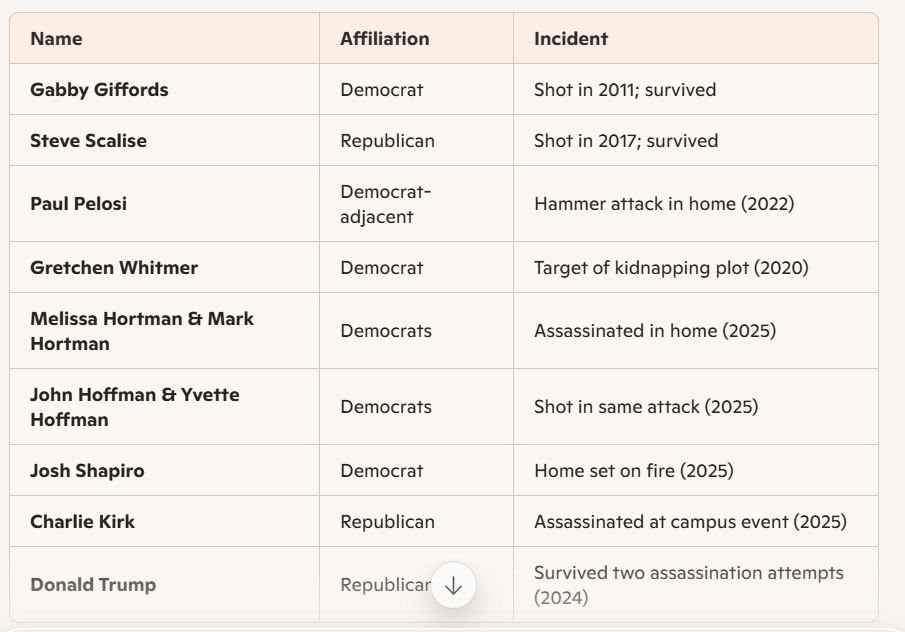
Days later, Charlie Kirk, a conservative activist, was assassinated while speaking at a university. Trump responded with solemnity, grief, and fury—calling Democrats “terrorists” and promising retaliation.
This is not just hypocrisy. It’s a moral collapse.
A pacifist sees murder as murder. Whether it’s by drone or by gun, whether the victim is a political ally or adversary, the moral cost is the same. The selective outrage—grieving one death while glorifying another—erodes our shared humanity.
The War on Terror didn’t just avenge 9/11. It multiplied its death toll a hundredfold. And now, in 2025, we see the same pattern: state violence is celebrated, while personal violence is condemned—but only when it’s politically convenient.
🧭 What We Must Refuse
Refuse to let grief be weaponized.
Refuse to let state violence be sanitized.
Refuse to let political affiliation determine moral worth.
If we mourn Charlie Kirk, we must also mourn the 11 Venezuelans. If we condemn his assassination, we must also condemn the strike that killed them. If we remember 9/11, we must also remember the civilians who died in its name.
Otherwise, we are not defending life. We are defending a brand.
I almost got kicked out of a diner once for trying to order a Jim Beam milkshake with my breakfast. The waitress said it violated “company policy.” I said it violated my taste buds to drink anything without a little rebellion in it. We settled on a root beer float and a mutual understanding that rules are only flexible when the manager’s on break.
Which brings me to Alaska.
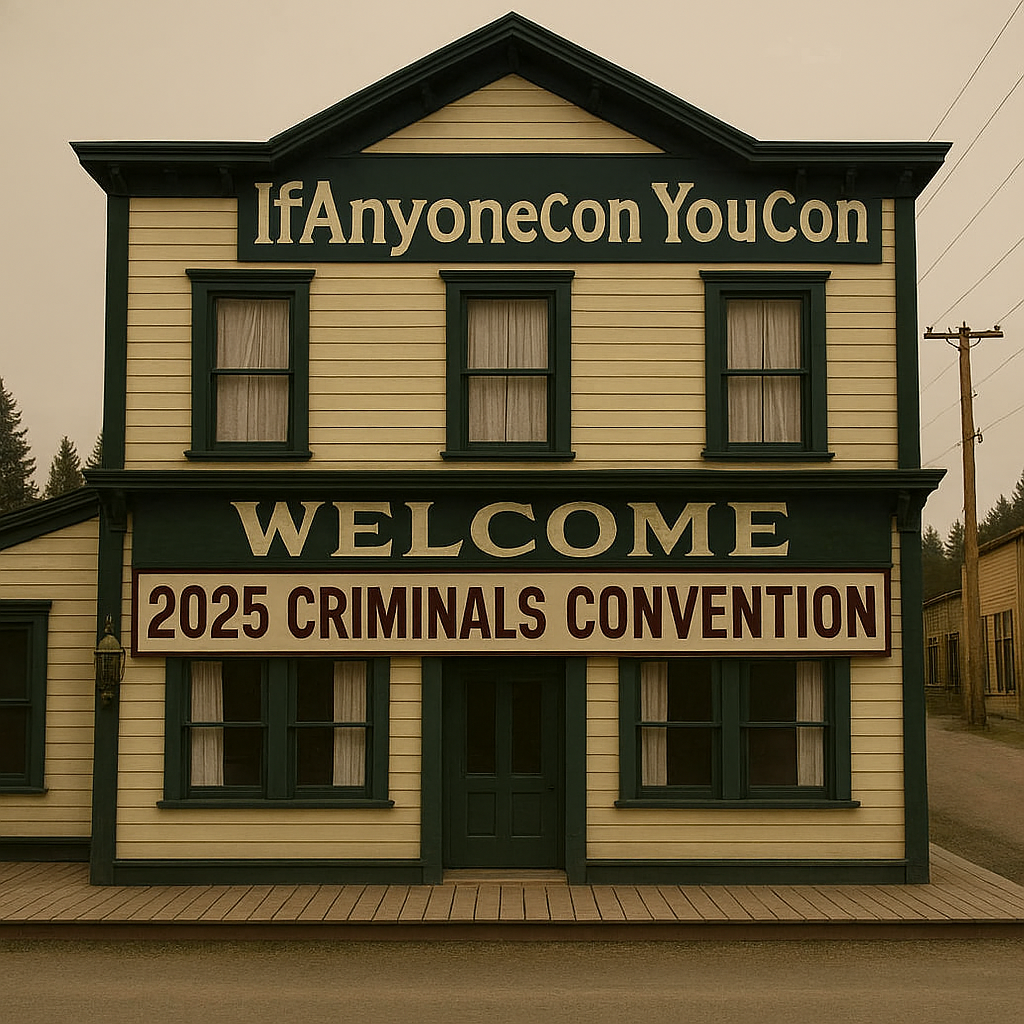
Whoever is running this country must be on a break. This Friday, two men—one a convicted felon, and one wanted in 125 countries for war crimes—will meet at a Hotel in Alaska to discuss peace, war, and possibly who gets custody of Crimea. Donald Trump, who is the only U.S. President with felony convictions, will host Vladimir Putin, a man wanted by the International Criminal Court for abducting Ukrainian children. He is wanted in 125 Countries, while Donald Trump is unwanted everywhere he goes.
Now, before you ask, “How is this legal?”—let me remind you: the United States isn’t part of the ICC. We opted out, presumably to keep our own war crimes tidy and domestic. So while 125 countries would slap cuffs on Putin faster than you can say “borscht,” Alaska rolls out the welcome mat. Probably one with a bear on it.
I imagine the summit will be held in a Bail and Breakfast place, with moose jerky appetizers and a ceremonial exchange of MAGA hats and Kremlin lapel pins. Trump will declare peace in our time, Putin will drink Vodka and nod solemnly, and somewhere in The Hague, a judge will throw a gavel at the wall. Or maybe one of Putin’s political opponents will vigorously protest by “accidentally” throwing himself off a 30th-floor balcony.
This is not diplomacy. It’s dinner theater.
And yet, there’s something heartbreakingly American about it. We love a good outlaw. Jesse James. Al Capone. Butch Cassidy and the Sundance Kid, not to mention the guy who invented the McRib. We don’t mind criminality as long as it comes with a slogan and a side of fries. Trump and Putin are just the latest duo in our long tradition of “bad boys with branding.”
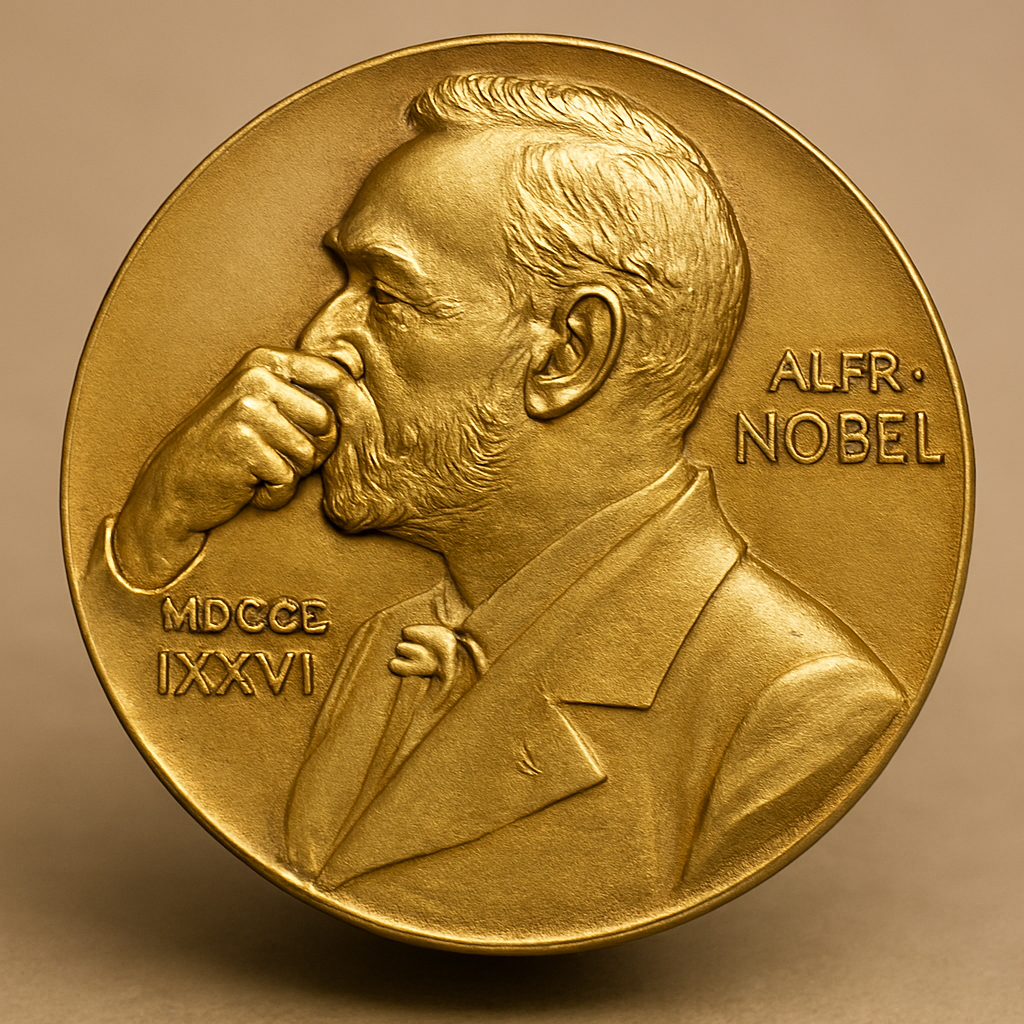
But here’s the rub: this isn’t a sitcom. It’s real. Ukraine is bleeding. Children have been taken. Democracy is being bartered like a used snowmobile. And while the rest of the world tightens its grip on justice, we’re hosting a summit meeting between two known criminals. The only result anyone expects is for Putin and Trump to issue a joint nomination for the Nobel Peace Prize—submitted in black Sharpie and sealed with a vodka stain.
History has a way of repeating itself—not in the details, but in the echoes. As I watch the current administration deploy Marines and National Guard troops into American cities to confront protests over ICE raids and immigration policy, I can’t help but feel a chill. It’s not just the uniforms or the optics. It’s the precedent. And for me, that precedent begins not with Donald Trump—but with Abraham Lincoln.
Yes, Lincoln. The man most Americans revere as our greatest president. But I’ve long questioned that legacy. Lincoln, in my view, was a stubborn, hardheaded leader who plunged the nation into a war that cost over 650,000 lives. A war he believed would be over in months. A war he arguably provoked.
Let’s rewind to Fort Sumter. No one died in the initial bombardment. The only casualties came when a cannon exploded during the surrender ceremony—one Union soldier died. Yet Lincoln used that moment to summon 75,000 troops, escalating a regional standoff into a full-blown civil war. He suspended habeas corpus, jailed political opponents, and silenced dissent in border states like Maryland. All in the name of preserving the Union.
Fast forward to today. Trump, facing protests over immigration enforcement, has summoned federal troops into cities like Los Angeles—against the wishes of governors and mayors. He’s accepted a $400 million jet from Qatar, raising serious constitutional questions about foreign influence and the Emoluments Clause. He’s used executive power to reshape the judiciary, roll back civil rights protections, and stoke division at every turn.
And yet, like Lincoln, he claims to be saving the nation.
The parallels are uncomfortable. Both men faced divided nations. Both used federal power to suppress opposition. Both were hailed as heroes by some and tyrants by others. When John Wilkes Booth shot Lincoln, he shouted “Sic semper tyrannis”—thus always to tyrants. That wasn’t just a madman’s cry. It was a sentiment shared by many in the South who saw Lincoln not as a liberator, but as a despot.
Today, many Americans—especially those on the political left—see Trump in the same light. A man willing to tear the country apart to preserve his own power. A man who, like Lincoln, may be remembered not just for what he did, but for what he destroyed in the process.
This isn’t a defense of Booth, or of violence. It’s a plea for perspective. We must stop mythologizing our leaders and start scrutinizing them. Lincoln’s war may have ended slavery, but it also ended hundreds of thousands of lives. Trump’s war—if it comes—may not be fought with muskets and bayonets, but with executive orders, surveillance, and militarized streets.
History doesn’t repeat, but it rhymes. And right now, the tune sounds all too familiar.
Back in my day, on a TV program named 77 Sunset Strip, the parking lot attendant, Kookie Burns, used to say, “Baby, you’re the Ginchiest.” If you’re under 70, you might need to see this clip from Dick Clark’s American Bandstand to get an idea of his character.
Back then, ginchiest was Kookie’s beatnik word for somebody who was the absolute coolest person. Nowadays, we have somebody who is the exact opposite. Donald Trump is the GRINCHiest person.
When a reporter informed him that there would likely be a toy shortage this Christmas, if he kept the high tariff on China, Trump said that children would just get two dolls instead of 30, and they might cost a little more, but it wasn’t a big deal.
No toys for our little tots? No big deal? If a Democrat said that, the Fox “News” Nutwork would already be screaming about the heartless “War on Christmas” by pinko leftists. Now, since Trump said it, they don’t even bother to comment on his comment. If they ever have to say something, they will find a way to blame it on Biden. “If Biden didn’t force all the toy manufacturers to move to China….”
Donny Two Dolls doesn’t think anything about taking away somebody else’s toys, but he raced back from Italy immediately after the funeral of Pope Francis, so that he could get in a round of golf at his club in New Jersey before the sun went down. He sure won’t give up any of his toys, but he expects your kids to “take it like a man.” Beside, why are you wasting your money on toys when you can get your kids digital action pictures of Donald Trump for only $99.99.
I want to reply to all the people who commented on my most recent post, but I don’t have a “Reply” button. So, until I figure it out how to do that, I’ll just post this as a new post.
Most people commented along these lines…”when you look at the current scenario in the US where the rich are not only determined to get richer by the usual methods, but by re-directing financial support from those needing it into their coffers, it would be enormously hard for the rank and file worker bees to trust.”
I agree 100%. This will not be easy. The rich will make it very difficult, extremely difficult. It won’t happen until we reach a tipping point where the rich have almost everything, and the people have almost nothing. The thing is, I believe that day is rapidly approaching. With AI, Robots, and Drones, most workers can easily be replaced in the next decade or two. Unfortunately, the benefits of the technology will only go to the companies who own the AI, Robots, and Drones. They will not willingly share the wealth. We won’t get more leisure time, but they will get more money. They will have the money, BUT we have the many. We can change society by sheer force of numbers. We can make the future brighter. They know that, so they simply keep us divided. That is their strategy, and unfortunately, it is working. Someday, though, when we’re really downtrodden, out of necessity, we will put aside our petty differences. We will stop with the nonsense of white people versus people of color, middle class versus the poor, educated versus the uneducated, Democrat versus Republican versus Independent, and young versus old. We will unite and win, but it may come too late, especially when the rich will control all media, and they will not tell us the truth. We have to start now.
For those of you, too young to remember this. On November 18, 1956, during a reception at the Polish Embassy in Moscow, Soviet Premier Nikita Khrushchev addressed Western diplomats amidst the tense atmosphere of the Cold War. The world was still reeling from the aftermath of World War II, and the ideological struggle between capitalism and communism was at its peak.
Khrushchev, known for his fiery rhetoric and bold proclamations, declared:
> “Мы вас похороним!” > (Pronounced: “My vas pokhoronim!”)
Translated literally, this means “We will bury you!” The statement sent shockwaves through Western nations, intensifying fears of Soviet aggression and the potential for nuclear conflict. We started building bomb shelters and holding air-raid drills.
The phrase, however, was a subject of misinterpretation due to cultural and linguistic differences. In Russian, the expression is a common idiom akin to saying “We will outlast you” or “We will be present at your funeral.” It’s not necessarily a direct threat of violence but rather a prediction of the eventual triumph of one system over another.
Khrushchev later clarified his remarks, stating:
> “I once said, ‘We will bury you,’ and I got into trouble. Of course, we will not bury you with a shovel. Your own working class will bury you.”
This reflects the Marxist belief in the inevitable collapse of capitalism due to its internal contradictions, leading to a proletarian revolution.
Khrushchev was a complex figure. He criticized Stalin’s brutal regime and introduced reforms to reduce oppression. He launched the Virgin Lands Campaign to boost food production. Under his leadership, the USSR launched Sputnik, the first artificial satellite, marking a significant achievement and initiating the space race with the United States.
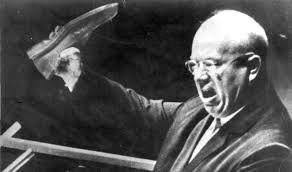
Yet, his approach to diplomacy was often unorthodox. In 1960, he banged his shoe on a desk at the United Nations to emphasize a point. His decision to place nuclear missiles in Cuba led to a critical standoff with the United States in 1962, known as the Cuban Missile Crisis.
In November of 1956, Krushchev predicted that Russia would outlast the United States, because our people would overthrow our government. In November of 2024, 75 million Americans did just that when they elected Donald Trump, a pro-Russian Putin puppet, as President. Today, in the same U.N. building where Krushchev once banged his shoe on a desk to protest a U.N. decision, the United States turned its back on Ukraine and voted with Russia on a U.N. proposal. It took almost 7 decades for Krushchev’s prediction to come true, but our own working class has finally buried us. I just hope we can dig ourselves out.
My brother asked me how he could unsubscribe from my blog, as he is tired of hearing me rant about Donald Trump’s wickedness. You know what? I’m tired of it too, but somebody has to do it. My brother is a Conservative, so I responded to him with the words used by the most famous Conservative in American politics, the late Barry Goldwater, who in his 1964 Republican convention acceptance speech said, “I would remind you that extremism in the defense of liberty is no vice. And let me remind you also that moderation in the pursuit of justice is no virtue!”
Those of you who are over 100 years old know how Hitler and the Nazis rose to power, but, with the help of AI, I’ll summarize it for the rest of you.
Hitler’s rise to power and the dismantling of democracy in Germany was a calculated and systematic process. Here are some key steps he took:
Appointment as Chancellor: On January 30, 1933, President Hindenburg appointed Hitler as Chancellor of Germany.
Reichstag Fire: On February 27, 1933, the Reichstag building (German parliament) was set on fire. Hitler used this event to claim that communists were plotting against the German government.
Reichstag Fire Decree: Following the fire, the Reichstag Fire Decree was passed, which suspended civil liberties such as freedom of speech, press, and assembly.
Enabling Act: On March 23, 1933, the Enabling Act was passed, giving Hitler the power to enact laws without the involvement of the Reichstag. This effectively gave him dictatorial powers.
Elimination of Political Opposition: Hitler banned all political parties except for the Nazi Party and its affiliates. Trade unions were also banned.
Control Over Institutions: The Nazi regime took control over the economy, media, army, and judiciary, consolidating power and eliminating any potential opposition.
To me, the Reichstag Fire Decree sounds a lot like the Patriot Act. The Enabling Act sounds a lot like Executive orders by the President. Control over Institutions – We have billionaires controlling the major media outlets, and the ones they don’t control are called “fake news.”
Comparing current events to the rise of Nazism can be a bit of a stretch, but it’s always good to stay informed and engaged in the political process. Democracy thrives when citizens are active participants. If you’re concerned about specific policies or trends, consider getting involved in advocacy, staying informed through diverse news sources, and participating in elections. Your voice matters.
The United States no longer has a robust system of checks and balances. Trump is the President. His MAGA followers control both houses of Congress and are afraid to contradict him and be primaried out of office. Trump appointed many of the Supreme Court Judges and they repaid him by saying that the President has immunity from crimes committed while in office. Two billionaires, Rupert Murdoch and Jeff Bezos, control much of the print media and Fox news. Elon Musk, the richest man in the world, and Mark Zuckerberg control social media, and were given front row seats at Trump’s inauguration. I see Democracy slipping away. Already there is a bill in Congress proposed by Rep. Andy Ogles to allow Donald Trump to have an unprecedented third term.
This proposal aims to amend the 22nd Amendment to allow a president to be elected for up to three terms. It’s a significant change and would require a constitutional amendment, which is a complex and challenging process. I think they will first try to make the constitutional amendment process easier. That might get the 2/3 vote required way more easily.
The key mechanisms Hitler and the Nazi Party used to systematically dismantle democracy in Germany’s Weimar Republic.
Exploitation of Democratic Weaknesses
The Weimar Republic’s constitution had Article 48, which gave the president emergency powers to rule by decree in times of crisis
The Nazis took advantage of proportional representation rules that created a fragmented parliament with many small parties, making stable coalition governments difficult
Economic instability and hyperinflation had weakened public faith in democratic institutions
Strategic Use of Violence and Intimidation
The SA (Brownshirts) used street violence to create chaos and intimidate political opponents
They disrupted meetings of other political parties and attacked their members
This violence was then used to justify “emergency measures” to restore order
Control of Information and Propaganda
Joseph Goebbels led a sophisticated propaganda campaign that:
Blamed Germany’s problems on specific groups (especially Jews and communists)
Presented Hitler as Germany’s savior
Used new technology like radio and film to spread Nazi messages
Independent newspapers were either shut down or brought under Nazi control
Legal and Constitutional Manipulation
The Reichstag Fire (which many historians believe the Nazis orchestrated) was used to pass the Reichstag Fire Decree
This decree suspended basic civil rights including:
Freedom of speech
Freedom of the press
Right to assembly
Privacy of postal and telephone communications
The Enabling Act effectively ended democracy by allowing Hitler to pass laws without parliamentary approval
Institutional Takeover
A process called Gleichschaltung (coordination) brought all aspects of society under Nazi control
State governments were stripped of authority
Trade unions were abolished and replaced with the Nazi-controlled German Labor Front
Professional organizations, youth groups, and cultural institutions were nazified
The civil service was purged of “unreliable” elements
Economic Control
Major businesses were pressured to support the regime
Jewish-owned businesses were systematically excluded from the economy
A massive rearmament program created jobs and economic dependency on the regime
Creation of a Police State
The Gestapo (secret state police) was established
A network of informants was created to report dissent
Concentration camps were established for political opponents
Elimination of Opposition
Other political parties were banned
Opposition leaders were arrested or forced into exile
The Night of the Long Knives eliminated potential rivals within the Nazi movement itself
Military Control
The army was forced to swear a personal oath of loyalty to Hitler
Military leadership was gradually replaced with Nazi loyalists
Social Engineering
Education was reformed to indoctrinate youth with Nazi ideology
The Hitler Youth organization was made mandatory
Women were pushed out of professional life
Racial laws were implemented to exclude “undesirable” groups
The effectiveness of these mechanisms lay in their gradual implementation and their appearance of legality. Each step seemed to respond to a crisis or need, making it harder for opponents to rally resistance. The process took advantage of existing democratic structures and turned them against democracy itself.
For almost a century, we have been saying, “It can’t happen here.” Re-read those 10 key mechanisms that Hitler employed and you will already see many modern equivalents, and Trump’s only been in office for a week. Just as Hitler had a plan, Trump has Project 2025.
Trump has already pardoned 1500 of his “Brown shirts,” though they have traded in their brown shirts for red baseball caps. The Supreme Court has already declared Trump immune from prosecution for any crimes he commits while in office. So, he’s immune and he can pardon any criminals who commit crimes for him. Many of Trump’s opponents have received death threats, and Trump has taken away their security details to make it easier for his thugs to harm the opposition.
Immigrants are the Trump equivalent to Hitler’s Jews. The deportations have already started and the detainment centers are on their way. Major businesses have already been pressured to support the regime, and their multi-million dollar contributions were rewarded with front-row seats to the Inauguration. FEMA funds for the California fires are being held back to punish the Democratic leadership in the State of California.
I’d love to go back to writing the fluff pieces and the funny articles that my brother likes, but the Barbarians are no longer at the gate. They tricked us into opening the gate, and we voted them in. Now, it may already be too late, but we have to try and stop them if we do not want to see government of the people, by the people, and for the people perish.